

Tanyka amnicola was a tetrapodomorph closely related to both the baphetoids and true tetrapods, living in what is now northeastern Brazil during the Permian around 278 million years ago — making it one of the latest-surviving known stem-tetrapods.
Although only known from lower jaw remains it was likely about 1m long (~3’3″), and would have resembled a large chunky salamander.
Those jaws were particularly unusual, having a distinct twist in the bone that made the teeth towards the front stick out sideways when its mouth was closed. However, this twisting brought a different set of teeth into alignment with the upper jaw — “pavements” of many small denticles on the inner side of the lower jaw, which may have been used to rasp up aquatic plants or grind small invertebrates.
Tanyka’s highly specialized feeding adaptations suggest that late-surviving stem-tetrapods in Permian Gondwana weren’t just evolutionary relics but were instead actively exploring new niches, and that the extinction of these animals wasn’t quite as simple as just being outcompeted by more “advanced” tetrapods.
Continue reading “Tanyka”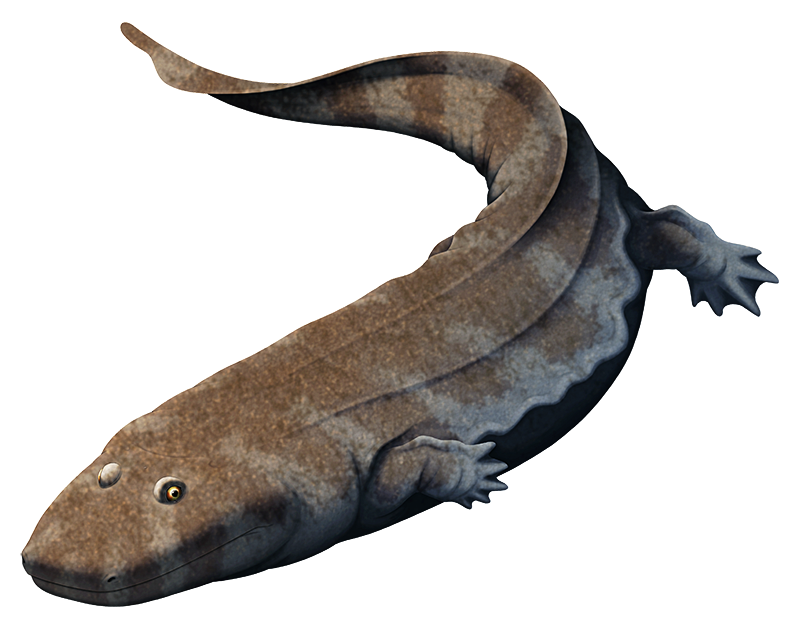
.png)