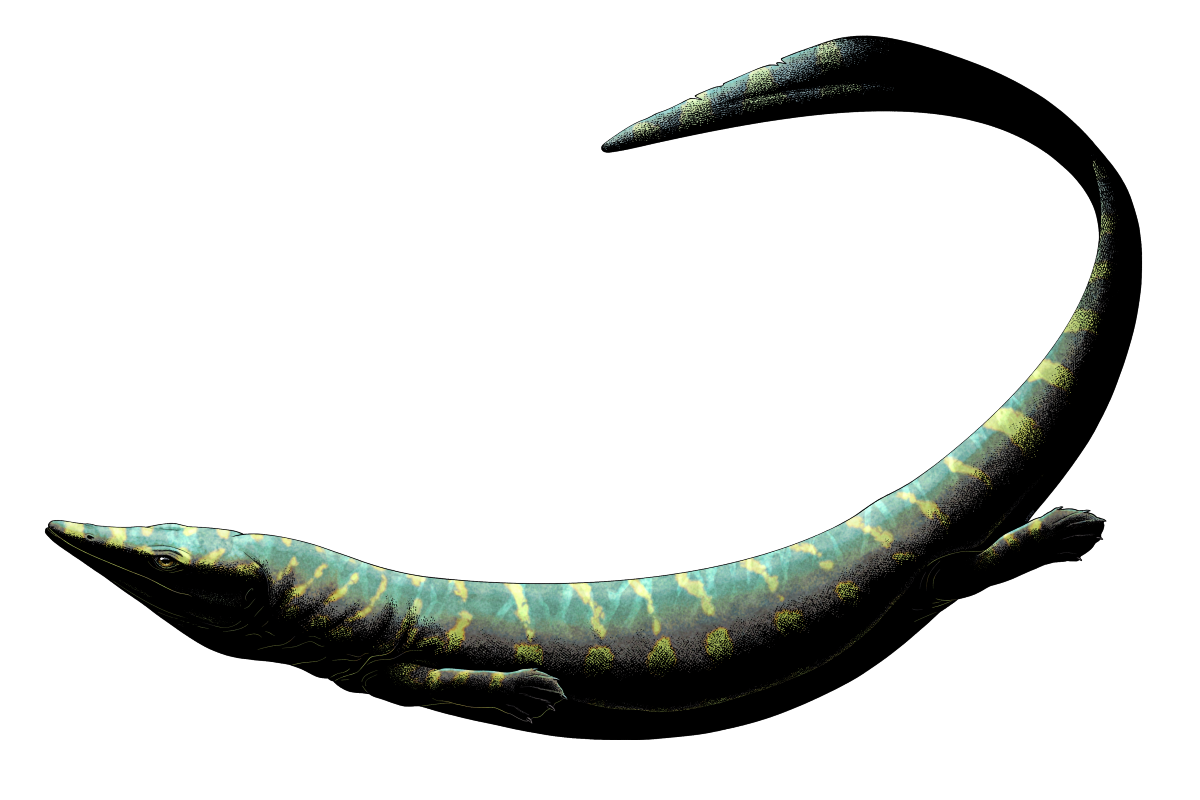
Tyrannoroter

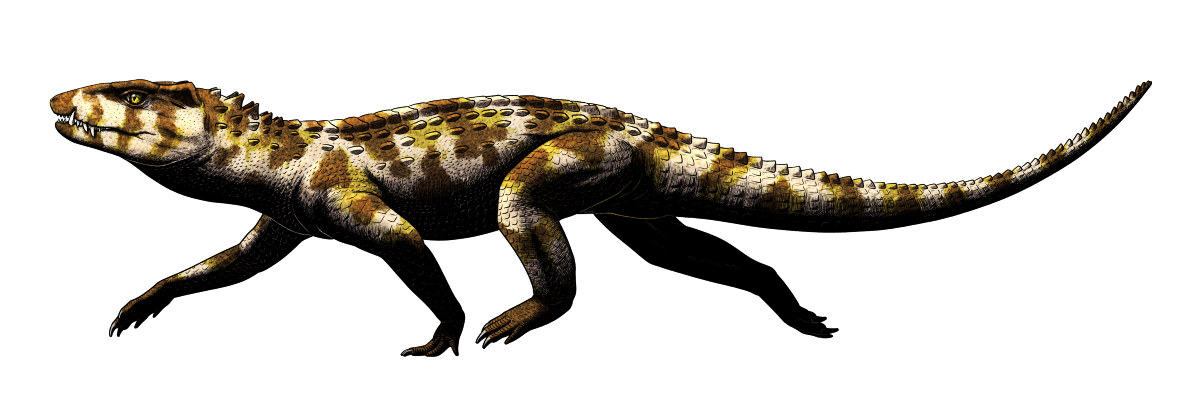
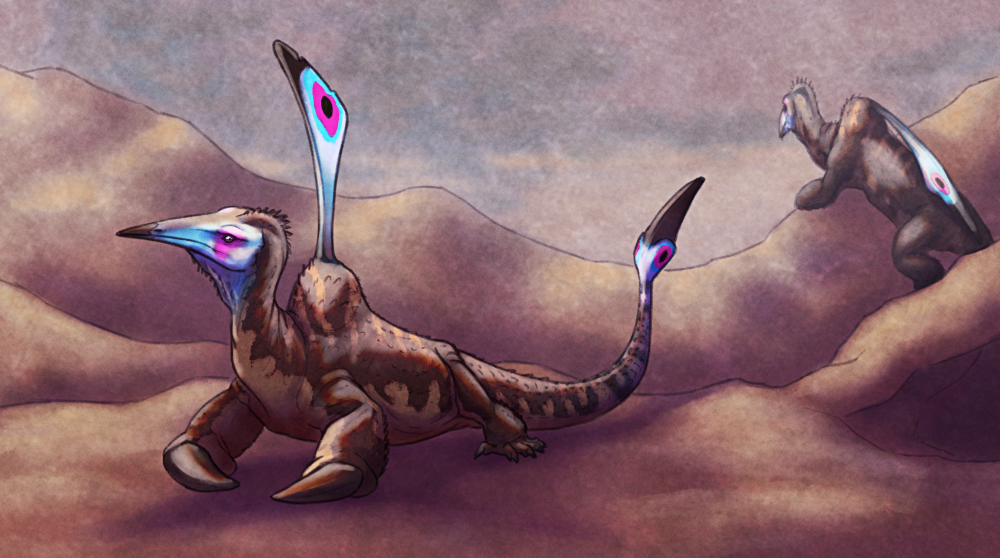
Tyrannoroter heberti lived in a lush tropical coal forest covering what is now Nova Scotia, Canada during the late Carboniferous, about 307 million years ago.

It was a member of the pantylid family in the recumbirostran lineage, a group of tetrapods whose evolutionary relationships are still a little uncertain. Traditionally they were classified as lepospondyl “amphibians”, but more recently some studies have found them to be either very early sauropsids or convergently reptile-like stem-amniotes.

Known only from a partial skull and jaw, based on the proportions of its pantylid relatives Tyrannoroter was probably around 30cm long (~1′) and would have resembled a squat lizard with a large blunt triangular head.

It would have had small bony scales within its skin, with interlocking polygonal “armor” on the underside of its jaw and chest, and irregular pebbly scales on other parts of its body. It may also have had claws on its toes, and potentially was capable of burrowing using a combination of its stout limbs and its shovel-like snout.

The roof of its mouth and the inside of its jaw were covered in extensive “batteries” of blunt teeth that show evidence of shearing and grinding motions – suggesting it may have been primarily processing tough plant matter, and making it one of the earliest known herbivorous tetrapods.

Continue reading “Tyrannoroter”

Arsinoitherium

Arsinoitherium zitteli was a large herbivorous mammal living in what is now northern Africa during the late Eocene and early Oligocene, about 36-30 million years ago.

Despite looking like a double-horned rhino this resemblance was only superficial, and for most of the 20th century it was actually the only known representative of an entire order of mammals – the embrithopods – with its wider evolutionary relationships being unknown. Since the 1970s, however, more members of this group have been discovered and embrithopods are now understood to be afrotheres, a very early offshoot of the tethythere lineage, with their closest living relatives being modern elephants and sirenians.

Arsinoitherium was by far the most abundant embrithopod, with numerous fossil remains making it one of the most completely known African fossil mammals. It stood around 1.8m tall at the shoulder (6′), similar in size to modern white rhinos, and would have been a massively-built slow-moving animal with elephant-like columnar limbs.

Its pair of enormous nose horns (and smaller brow horns) were structurally more similar to those of bovids than rhinos, with large hollow bony cores that probably bore thick keratinous sheaths that would have increased their apparent size even more. Both males and females appear to have had these horns, and muscle attachments at the back of the skull suggest Arsinoitherium could powerfully swing its head upwards – possibly wrestling with each other in combat over territories, competing for mates, or in establishing dominance hierarchies.

Continue reading “Arsinoitherium”

Manipulonyx

Manipulonyx reshetovi was an alvarezsaurid theropod dinosaur that lived during the Late Cretaceous, about 70 million years ago, in what is now Mongolia.

Although only known from a partial skeleton, based on its close relatives it would have been about 50cm long (~1’8″), with a narrow snout, a coat of fluffy down-like feathers, long slender legs, and short stout arms with massively enlarged thumb claws. 

Notably the fossil specimen has the best preserved hands known from the parvicursorine subfamily of alvarezsaurs, revealing a surprising arrangement of three ossified conical spikes around the thumb. These hand spikes were positioned pointing forwards, backwards, and inwards, and may have improved the ability to grip with just one functional finger.

“Spike-like” hand bones were also previously reported in 2009 in another parvicursorine, Ceratonykus, suggesting that these structures weren’t unique to Manipulonyx.

The paper describing Manipulonyx proposes that alvarezsaurs were ovivores, using their hands to carry and then break open eggs, but I’m personally very skeptical of this idea. I think the myrmecophagy interpretation for these little dinosaurs is still much more likely – they probably did opportunistically raid eggs when they could get them, like many modern predators do, but being specialized for just egg-eating is a big claim that definitely needs more evidence.

Continue reading “Manipulonyx”

Flandriacetus

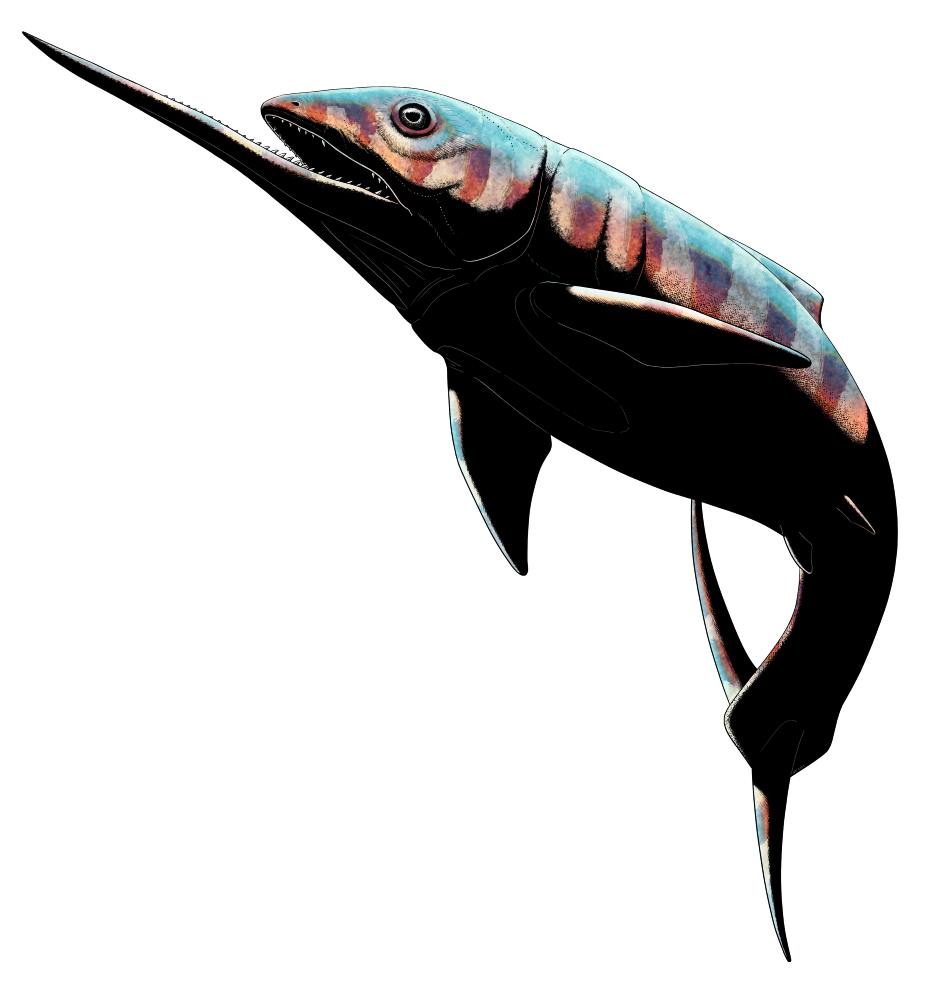
Flandriacetus gijseni was an early beaked whale that lived during the late Miocene, about 8 million years ago, in nearshore marine waters covering what is now the Netherlands.

Around 4m long (~13′), it had a long snout lined with small sharp teeth – unlike modern beaked whales which are mostly toothless – and much like its close relative Messapicetus it probably led a more dolphin-like lifestyle feeding on small fish near the surface.

It’s currently the youngest known example of a long-snouted stem beaked whale, a holdover from a time when these cetaceans were much more ecologically diverse than they are today.

Continue reading “Flandriacetus”

Diamantinasaurus

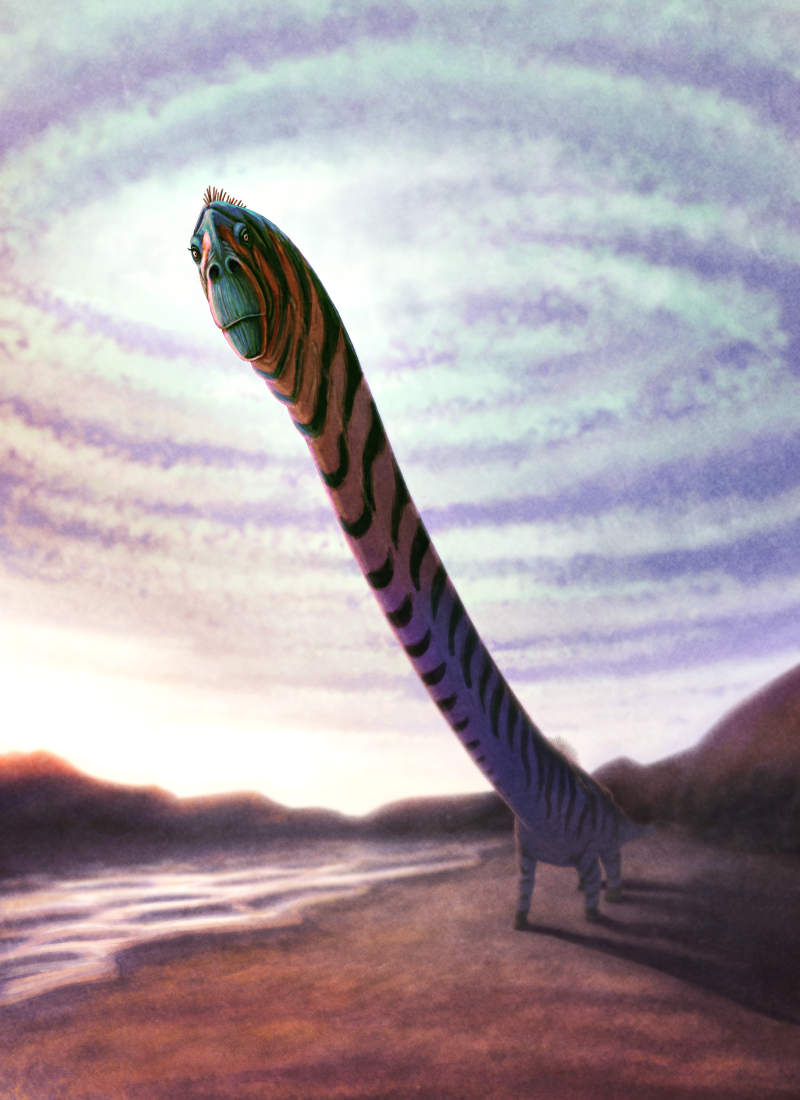
Diamantinasaurus matildae was a sauropod dinosaur that lived in what is now northeastern Australia during the Late Cretaceous, about 94 million years ago.

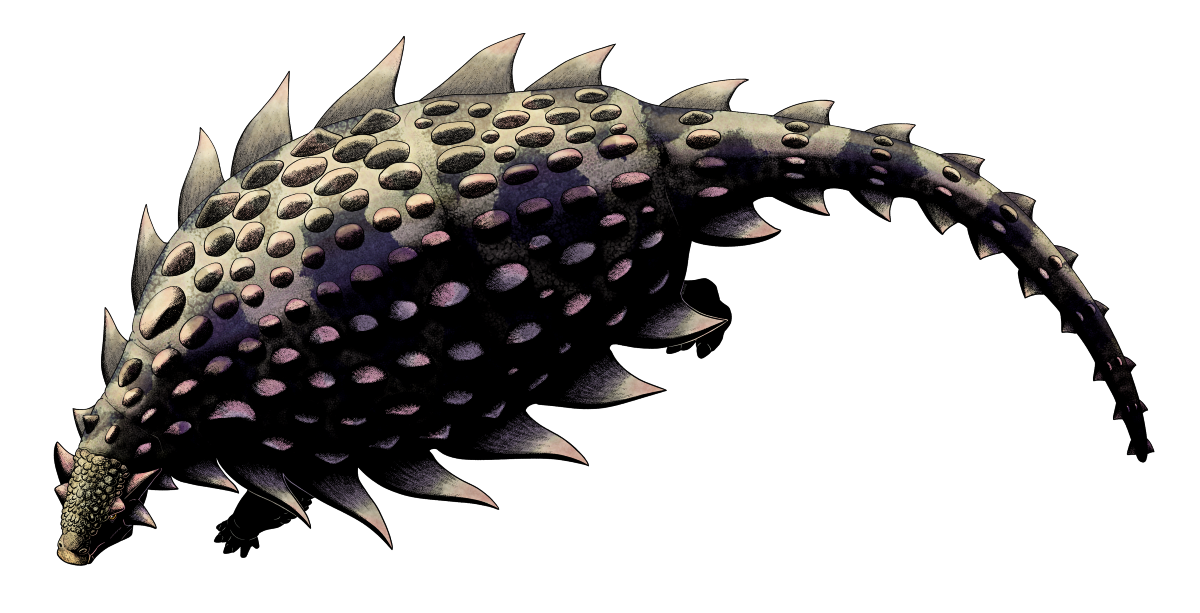
It was either part of an early evolutionary branch of the titanosaurs, or at least very closely related to them.

Growing up to around 15m long (~50′), it’s represented by multiple specimens of varying ages, including one of the most complete individual necks of any sauropod. Unlike later-diverging titanosaurs it still had thumb claws on its hands, and it’s unclear if it had any osteoderm armor.

A patch of preserved skin shows polygonal scales with a rough bumpy surface texture — but based on what’s now known from other types of sauropod it probably had a variety of other scale shapes and sizes across different regions of its body.

Recent discoveries of titanosaurian footprints in Mongolia also suggest that the large claws on these sauropods’ hind feet were mostly buried in soft tissue, with only the tips visible in life.

Fossilized gut contents in one specimen indicate Diamantinasaurus was a generalist herbivore eating a wide range of plant species, browsing from low to high foliage heights, and swallowing its bites without chewing. This particular individual wasn’t fully grown, however, and so it may have been in the process of transitioning from a low-level “juvenile” diet to a higher-level “adult” one.

Continue reading “Diamantinasaurus”

Postschizotherium

Postschizotherium intermedium was a large hyrax that lived during the late Pliocene and early Pleistocene, about 2.5-2.2 million years ago, in what is now northern China.

About 1.5m long (~5′), it had very high-set and sideways projecting eye sockets similar to those of modern hippos, indicating it probably had a similar sort of semi-aquatic lifestyle. The shape of its skull also suggests it may have had a short tapir-like trunk.

Much like modern hippos or capybaras Postschizotherium probably spent much of its time wallowing in bodies of water, and emerging onto land to graze on grasses. Its habitat would have been humid forest and grasslands, alongside other animals such as large horses and bovines, one of the last chalicotheres, woolly rhinos, beavers, macaques, bears, big cats, early lynxes, and scimitar-toothed cats.

Continue reading “Postschizotherium”

Ubaghsicystis

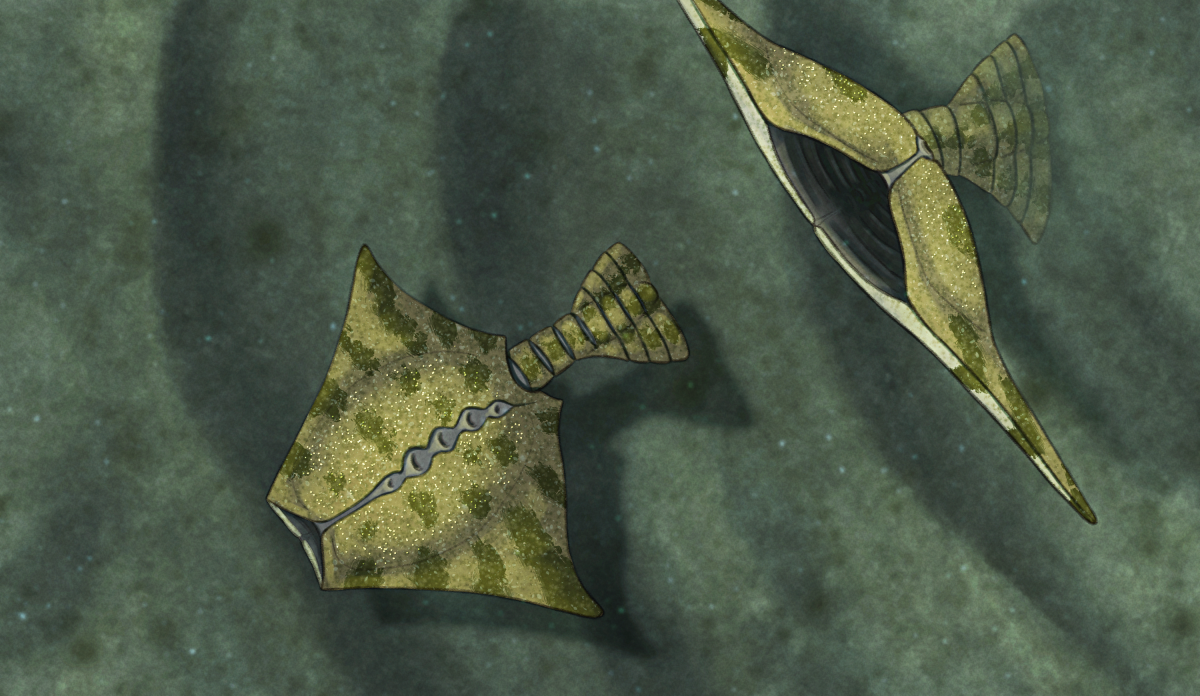
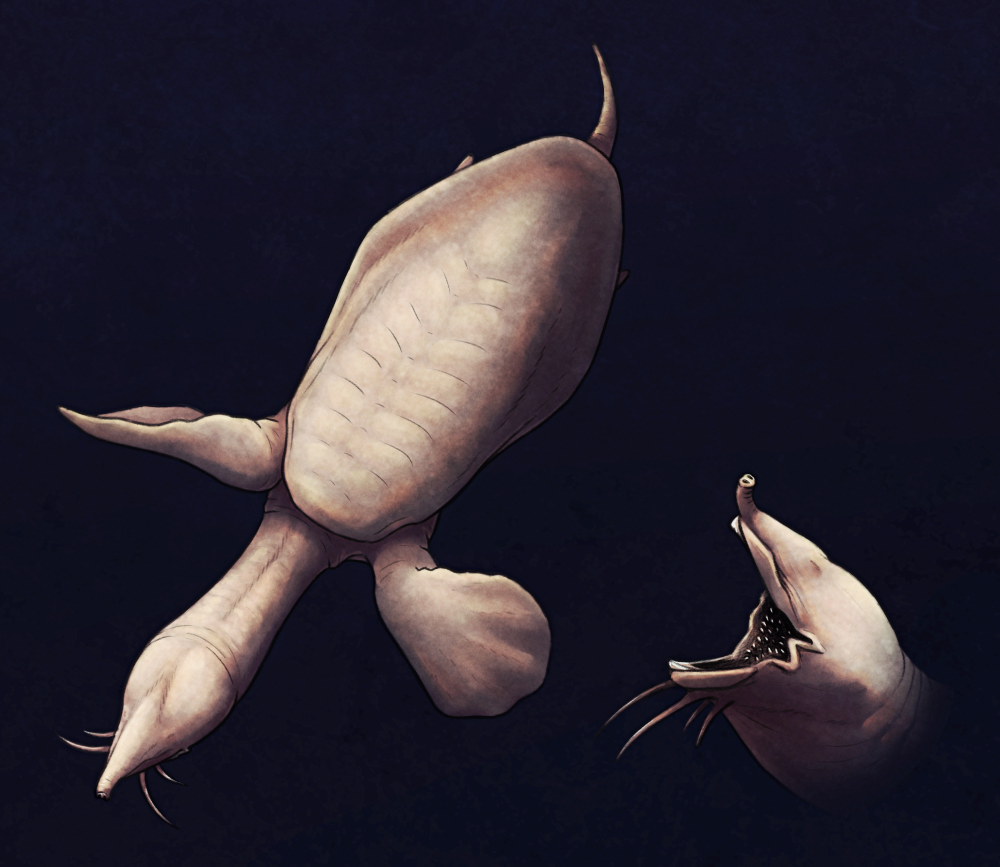
Ubaghsicystis segurae was an echinoderm that lived during the mid Cambrian, about 506-497 million years ago, in what is now Spain. Similar fossils are also known from Morocco, Mexico and Canada, suggesting this genus was quite widespread in marine continental shelf habitats at the time.

It was part of an extinct group known as eocrinoids, which were the earliest known echinoderms to develop stalked bodies and specialized feeding appendages — but despite the name and similar body plan, their resemblance to crinoids was due to convergent evolution rather than any direct relation.

Its globular body was only about 5mm in diameter (~0.2″), with a long stalk at least twice that length ending in a small disc that attached it to the substrate. The upper half of its body was dotted with small holes (called epispires) that probably served a respiratory function, and unlike most other eocrinoids it seems to have had just two slender flexible feeding appendages.

It would have been a suspension feeder, using tube feet to catch food particles floating around in the water, then move it down to its mouth positioned at the base of the two “arms”.

Continue reading “Ubaghsicystis”

Luoxiongichthys

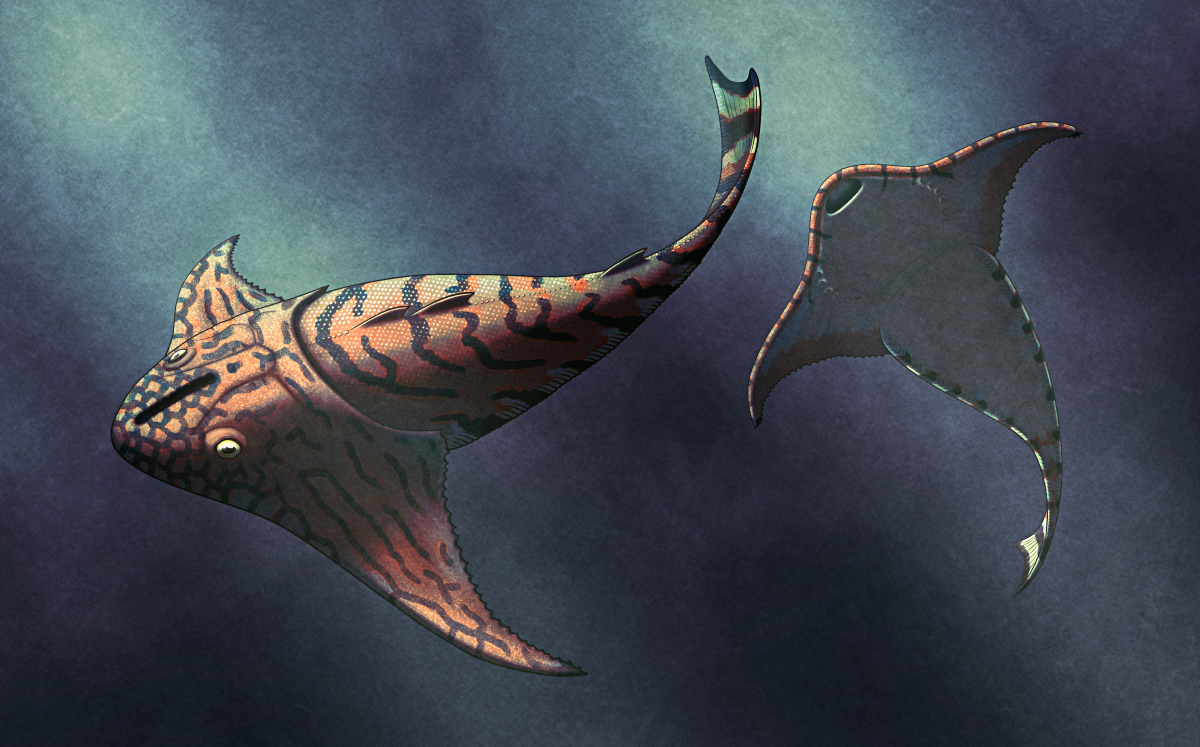
Luoxiongichthys hyperdorsalis was an early ginglymodian ray-finned fish, related to the ancestors of modern gars, living during the Middle Triassic (~244 million years ago) in coastal  tropical marine waters covering what is now southwestern China.

About 15cm long (~6″), it had a large hump on its back shaped like a backwards shark fin. Its deep body was wider at the base, giving it a triangular shape when viewed from the front similar to some modern tropical fish – and suggesting it may have had a similar sort of ecology as a slow but highly maneuverable swimmer feeding on small seabed invertebrates.

Continue reading “Luoxiongichthys”

Austriadactylus

Austriadactylus cristatus was an early pterosaur that lived during the Late Triassic, about 215 million years ago, in what is now Austria and Italy.

It’s one of the most basal (“primitive”) pterosaurs currently known, with its long tail lacking the stiffening bony rods seen in other early “rhamphorhynchoid-grade” forms.

It had a wingspan of around 1.2m (~2′), and a bony crest on its snout that grew taller towards the front. Its jaws contained a mix of two different tooth types – a few long pointed teeth and numerous smaller three-pointed teeth – with wear patterns that suggest its diet primarily consisted of hard-shelled invertebrates.

Continue reading “Austriadactylus”

Megabalaena

Megabalaena sapporoensis was a member of the balaenid baleen whale lineage, related to modern right whales and bowhead whales. Living in marine waters covering what is now northern Japan during the late Miocene, about 9 million years ago, it helps to fill in a significant gap in the fossil record of this group.

Known from a partial skeleton about 12.7m long (~42′), it was much larger than earlier balaenids, but smaller than modern forms. It also had a narrower flipper shape compared to its modern relatives, a less arched jaw, and its neck vertebrae were only partially fused.

Modern right whales are slow-swimming ram feeders, but since Megabalaena was less specialized for this particular filter feeding style it’s unclear what its ecology was.

Continue reading “Megabalaena”