Samotherium

Have you ever seen half a giraffe?

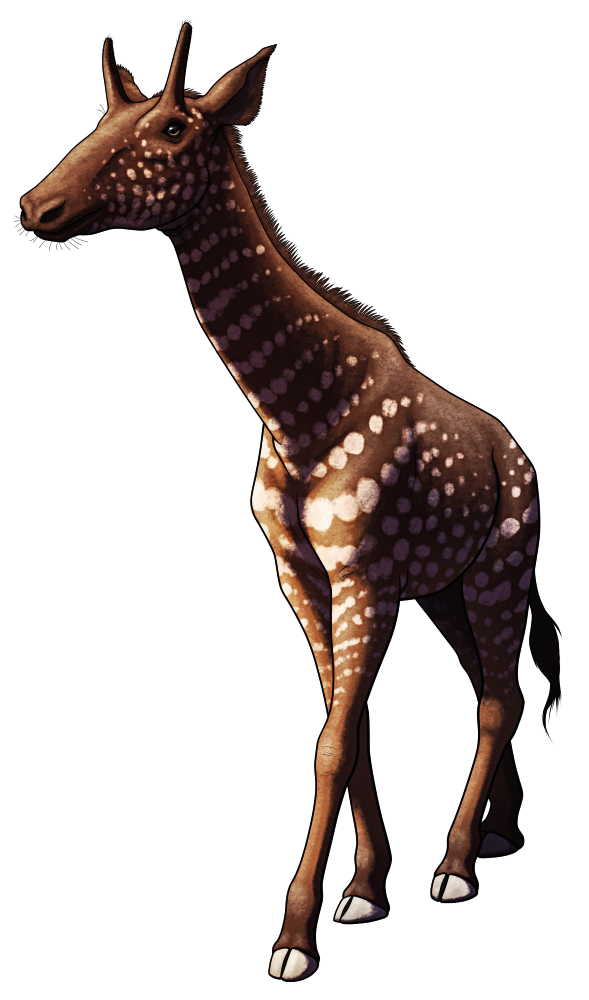
Samotherium boissieri was a giraffid that lived from the mid-Miocene to early Pliocene, about 12-5 million years ago, ranging across what is now Southeastern Europe, North Africa, and the Middle East.

Standing 2.3m tall at the shoulder (~7’6″), and with a total height of around 3-3.5m (9’10”-11’6″), it had long pointed ossicones and a neck that was halfway in both length and bone anatomy between those of its modern relatives the okapi and giraffe.

(But it wasn’t a direct ancestor of modern giraffes, instead being an offshoot of the okapi lineage and most closely related to sivatheres.)

The shape of its snout and microwear on its teeth suggest that it was a seasonal mixed feeder, varying its diet between grazing and browsing at different times of year.

It would have also lived alongside another slightly larger species in the same genus, Samotherium major — but the two appear to have been ecologically partitioned, avoiding direct competition by each preferring slightly different habitats and diets. S. boissieri inhabited more open grasslands, while S. major lived in mixed woodland-grassland and was more of a grazing specialist.

Continue reading “Samotherium”

Kalakocetus

Kalakocetus aurorae was an early cetacean that lived during the Eocene, about 50-48 million years ago, in what is now the northwestern region of the Indian subcontinent.

It represents the (currently) most basal known branch of the whale lineage, with teeth that are transitional between the crushing herbivorous-omnivorous molars of the closely-related raoellids and the shearing carnivorous molars of later archaeocetes.

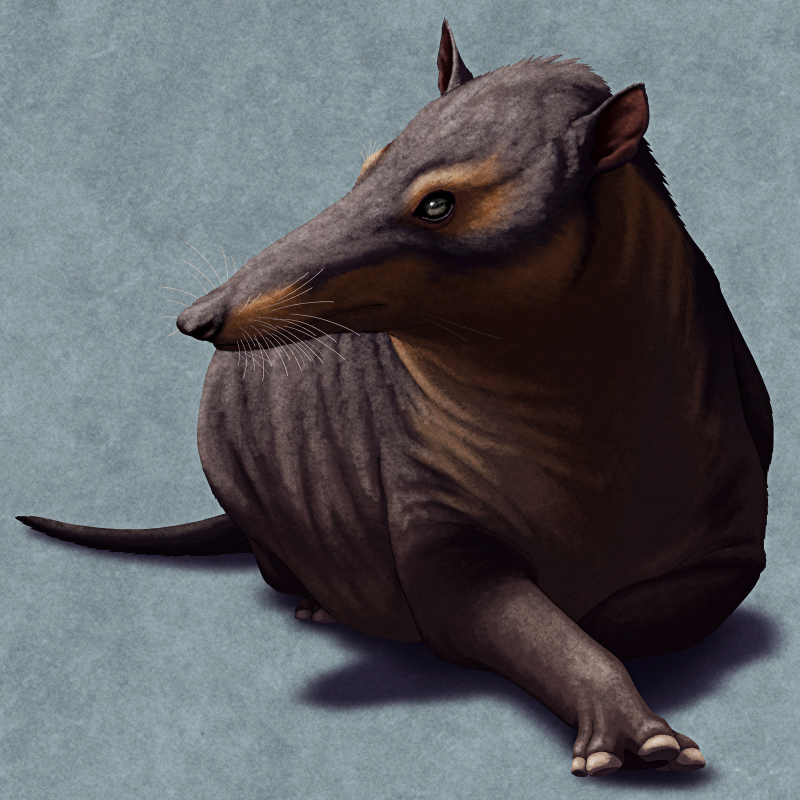
Only known from a lower jaw and teeth, its full life appearance is unknown — but based on the body proportions of other early cetaceans it would have been a roughly cat-sized animal, around 60cm long (~2′), possibly resembling a smaller version of its better-known relative Pakicetus. It was also probably similarly semiaquatic, wading into rivers to hunt fish and other small freshwater prey.

Continue reading “Kalakocetus”

Flandriacetus

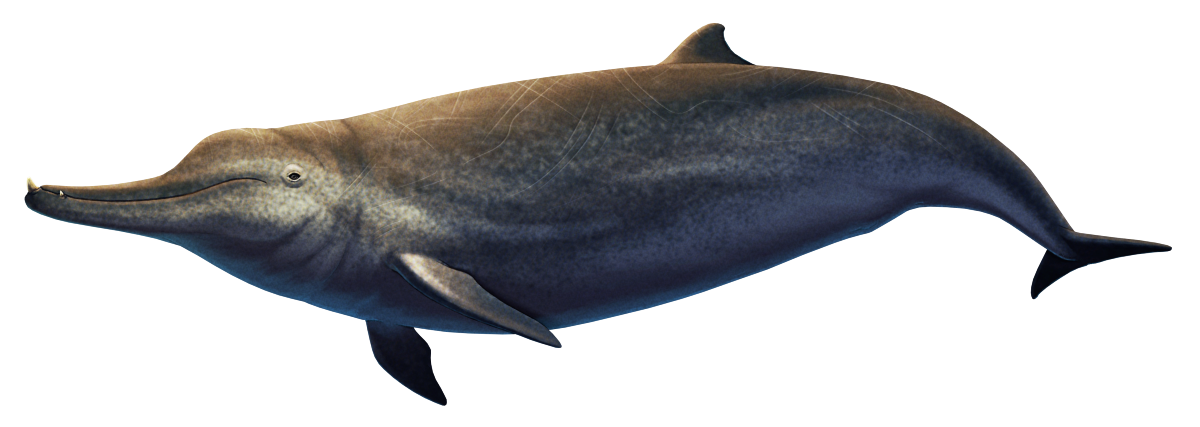
Flandriacetus gijseni was an early beaked whale that lived during the late Miocene, about 8 million years ago, in nearshore marine waters covering what is now the Netherlands.

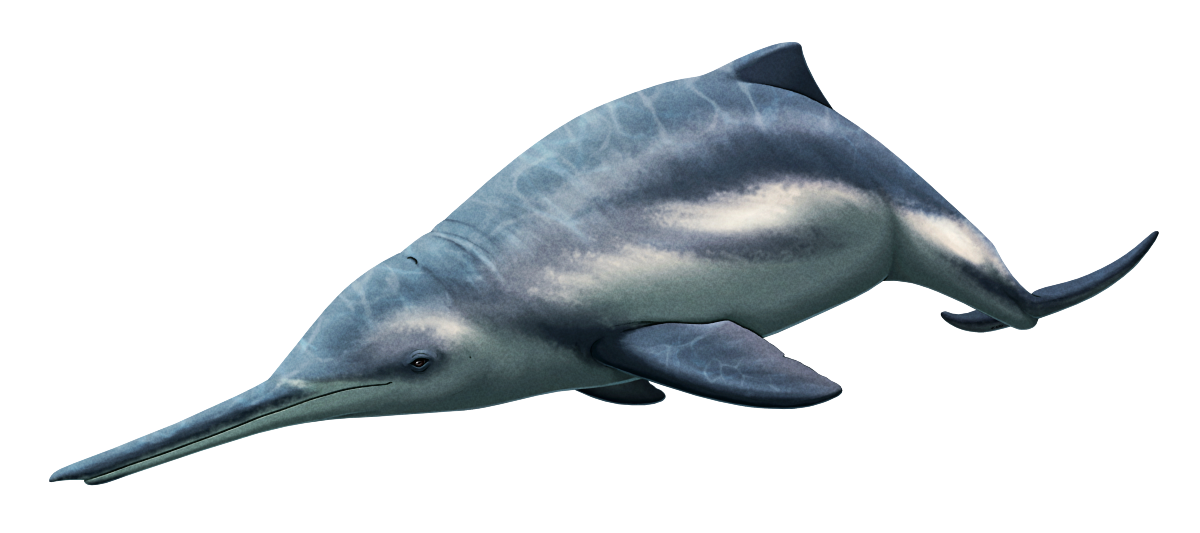
Around 4m long (~13′), it had a long snout lined with small sharp teeth – unlike modern beaked whales which are mostly toothless – and much like its close relative Messapicetus it probably led a more dolphin-like lifestyle feeding on small fish near the surface.

It’s currently the youngest known example of a long-snouted stem beaked whale, a holdover from a time when these cetaceans were much more ecologically diverse than they are today.

Continue reading “Flandriacetus”

Megabalaena

Megabalaena sapporoensis was a member of the balaenid baleen whale lineage, related to modern right whales and bowhead whales. Living in marine waters covering what is now northern Japan during the late Miocene, about 9 million years ago, it helps to fill in a significant gap in the fossil record of this group.

Known from a partial skeleton about 12.7m long (~42′), it was much larger than earlier balaenids, but smaller than modern forms. It also had a narrower flipper shape compared to its modern relatives, a less arched jaw, and its neck vertebrae were only partially fused.

Modern right whales are slow-swimming ram feeders, but since Megabalaena was less specialized for this particular filter feeding style it’s unclear what its ecology was.

Continue reading “Megabalaena”

Albireo

Albireonids were an early branch of the delphinoid whales, with their closest living relatives being modern oceanic dolphins, narwhals and belugas, and porpoises. Known from temperate latitudes of the North Pacific Ocean between the late Miocene and the late Pliocene, about 9-2.5 million years ago, their fossil remains are very rare in coastal deposits and they seem to have primarily been offshore open ocean animals.

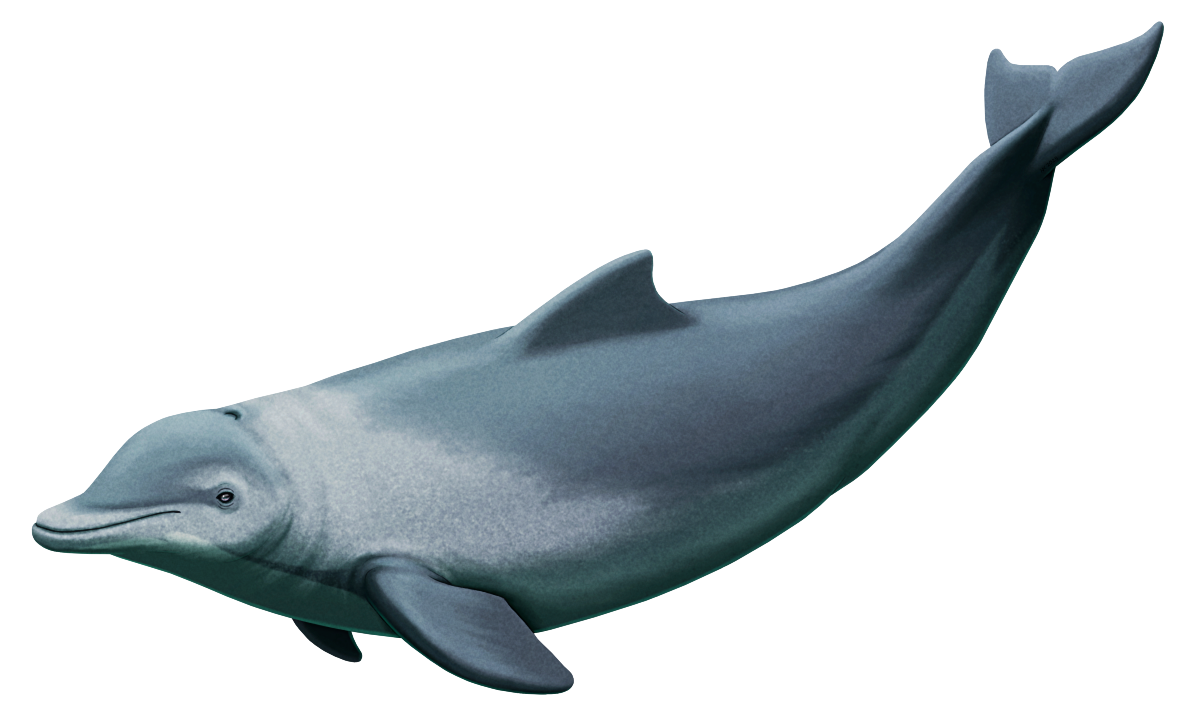
Albireo whistleri is the best known member of this family, represented by a near-complete skeleton from what is now Isla de Cedros in Baja California, Mexico, dating to the late Miocene between about 8 and 6 million years ago. It was a rather small dolphin, around 2.5m long (~8’2″), with a stocky body, fairly broad flippers, and skull anatomy with some convergent similarities with the modern Dall’s porpoise.

Interestingly these dolphins also seem to have frequently had pathological neck vertebrae, with both Albireo whisteri and the younger species Albireo savagei from California, USA, showing unusually asymmetrical atlas bones – but on opposite sides to each other. This might be due to illness or injury earlier in life, or possibly be evidence of some sort of “handedness” with individuals preferring to perform some actions more with one side of their body than the other.

Continue reading “Albireo”

Romaleodelphis

Romaleodelphis pollerspoecki was a dolphin-like toothed whale related to the ancestors of both modern oceanic dolphins and beaked whales, living in coastal waters covering what is now Austria during the early Miocene about 22 million years ago.

Although only known from a single fossil skull, this cetacean was probably around 3m long (~9’10”). It had a long snout lined with over 100 small pointed uniformly-shaped teeth, and the bony walls of its inner ears were well-preserved enough to show that it was able to hear narrow-band high frequency sounds – a specific form of echolocation that has convergently evolved multiple times in various modern and extinct toothed whale lineages.

Based on the presence of ancient river-mouth deposits in the area where Romaleodelphis was found, it may potentially have been capable of traversing between marine, brackish, and freshwater environments similar to the modern franciscana.

Continue reading “Romaleodelphis”

Spectember 2024 #02: Swimming Swine

An anonymous submitter asked for a “buoyant ungulate that runs atop the sea”:

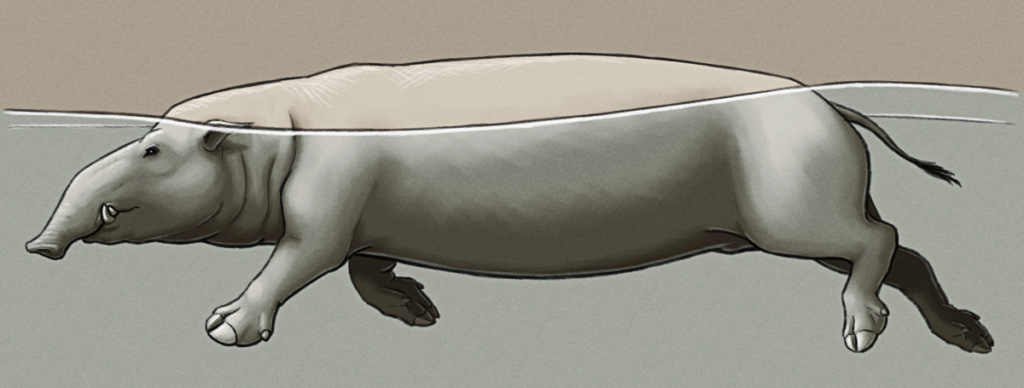
A shaded sketch of a speculative semi-aquatic descendant of feral pigs. It's a long-bodied chunky hippo-like animal with short legs, wide paddle-like hooves, and a tapir-like head with a a short trunk, small high-set eyes, and small ears.

Pontoporcus plotus is a 1.5m long (~5′) amphibious pig descended from a feral population of domestic pigs left on a small tropical island. After inadvertently wreaking havoc on much of the local ecosystem, its ancestors eventually turned to a more marine-based lifestyle foraging along beaches and in coastal waters.

Naturally highly buoyant, Pontoporcus actually floats so well that it’s mostly limited to the water’s surface, unable to dive to any significant degree. But despite this it’s a fairly good swimmer, using broad hooves with wide fleshy pads to paddle itself along in an aquatic trotting- or running-like gait.

It forages both on land and in the water, mainly eating soft vegetation and marine plants, but much like its ancestors it will also opportunistically feed on whatever smaller animals it can catch or scavenge. Its semi-prehensile trunk-like snout is used to grasp at food items, to probe and root around in soft sediment, and as a snorkel.

Its hairless skin is very susceptible to sunburn, but it secretes a thick oily red-brown substance (similar to modern hippo “blood sweat”) that acts as a natural protective sunscreen.

These pigs are accomplished island-hoppers, regularly traversing the relatively shallow seas all along their island chain – but their natural flotation and long fat bodies also make them prime targets for large aquatic predators attacking from below, so these journeys tend to involve groups of Pontoporcus “running” along the sea surface aiming for their next destination as fast as they possibly can.

Aureia

Aureia rerehua was a toothed whale that lived during the late Oligocene and early Miocene, around 23-22 million years ago, in shallow coastal waters covering most of what is now Aotearoa New Zealand.

It was closely related to the waipatiids – a group traditionally classified as platanistoids (the South Asian river dolphin lineage), but more recently proposed as instead representing a separate earlier branch of the toothed whale evolutionary tree.

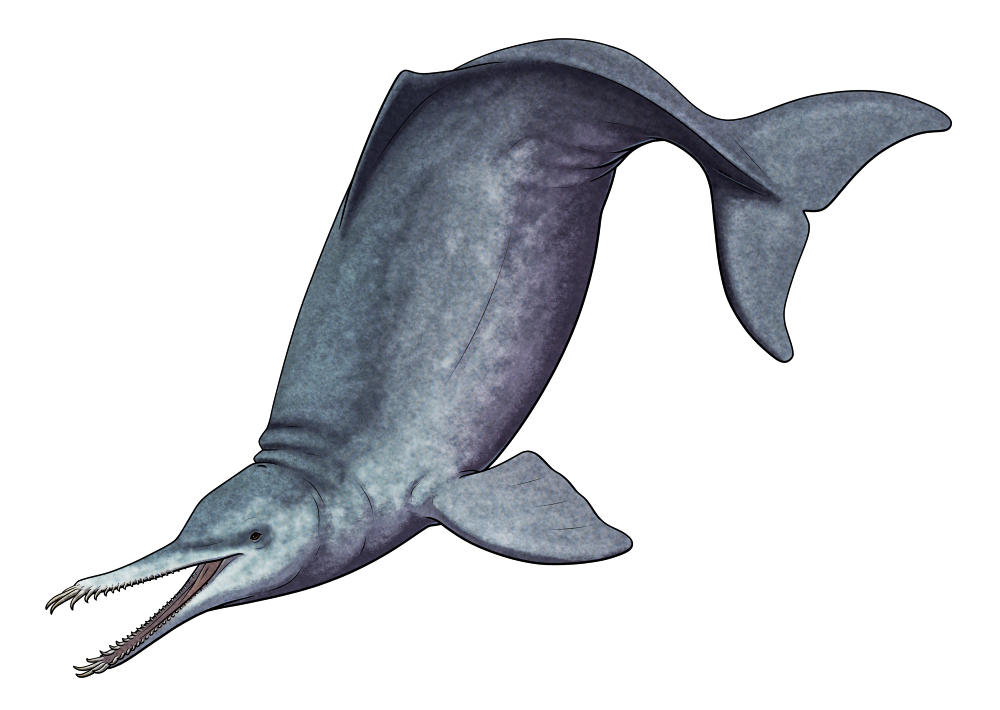
About 2m long (~6’6″), Aureia had distinctive tusk-like teeth that splayed outwards from its snout, interlocking when its mouth was closed. Along with a flexible neck and its fairly delicately-built skull and jaws, this suggests it was specialized for catching small prey in a “fish trap” of teeth, a unique feeding strategy for a toothed whale.

Along with different feeding specializations in other close relatives like Nihohae, Aureia shows us how multiple species of these ancient Aotearoan cetaceans were able to coexist in the same place and time by diversifying into different novel ecological niches.

Continue reading “Aureia”

Ninoziphius

Ninoziphius platyrostris was an early beaked whale that lived during the late Miocene (~6 million years ago) in warm coastal waters covering what is now southwestern Peru. Its ancestors appear to have branched off from all other beaked whales very early in the group’s history, indicating a “ghost lineage” going back to at least 17 million years ago.

About 4.4m long (~14’5″), it was less specialized for suction feeding and deep diving than modern beaked whales. Also unlike most modern species its jaws were lined with numerous interlocking teeth, with heavy wear suggesting it may have hunted close to the seafloor, where disturbed sand and grit would have regularly ended up in its mouth along with its prey and steadily ground down its teeth during its lifetime.

Males had a pair of stout tusks at the tip of their upward-curving lower jaw, with possibly a second smaller set of tusks behind them, which were probably used for fighting each other like in modern beaked whales.

Its shallow water habitat and more abrasive diet suggest Ninoziphius’ lifestyle was much more like modern dolphins than modern beaked whales, and other early beaked whales like Messapicetus similarly seem to have occupied dolphin-like ecological niches.

These dolphin-like forms disappeared around the same time that true dolphins began to diversify, possibly struggling to compete for the same food sources, while other beaked whales that had begun to specialize for deep sea diving survived and thrived. Interestingly this ecological shift seems to have happened twice, in two separate beaked whale lineages – although only one of them still survives today – with bizarre bony “internal antlers” even independently evolving in both groups.

Continue reading “Ninoziphius”

Spectember/Spectober 2023 #10: Tree Goat

An anonymous submitter asked for an “arboreal goat with grasping sloth-like claws”:

A shaded sketch of a speculative tree-climbing descendant of goats. It's a hairy sloth-like animal, clinging to a tree trunk with long chunky limbs that end in large hooked claw-like hooves. Its head is proportionally small, with fleshy giraffe-like lips, forward-facing eyes, and small stubby horns.

Cluraix cephalula is a distant descendant of feral goats in a tropical forest environment, representing a small tree-climbing offshoot of a specialized chalicothere-like lineage.

About 70cm long (~2’4″), it clambers around in the high tree canopies, with its forward-facing eyes providing good depth perception in this complex three-dimensional habitat. Its long hooked claw-hooves are used both to cling onto branches and to hook-and-pull clumps of foliage towards itself, stripping the leaves with its flexible fleshy lips.