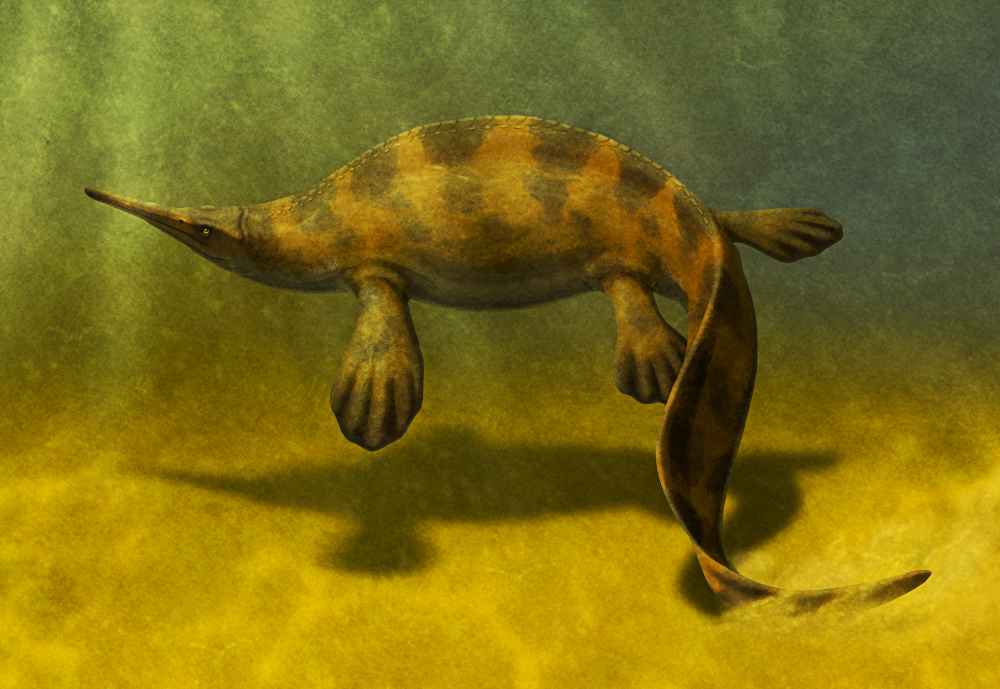
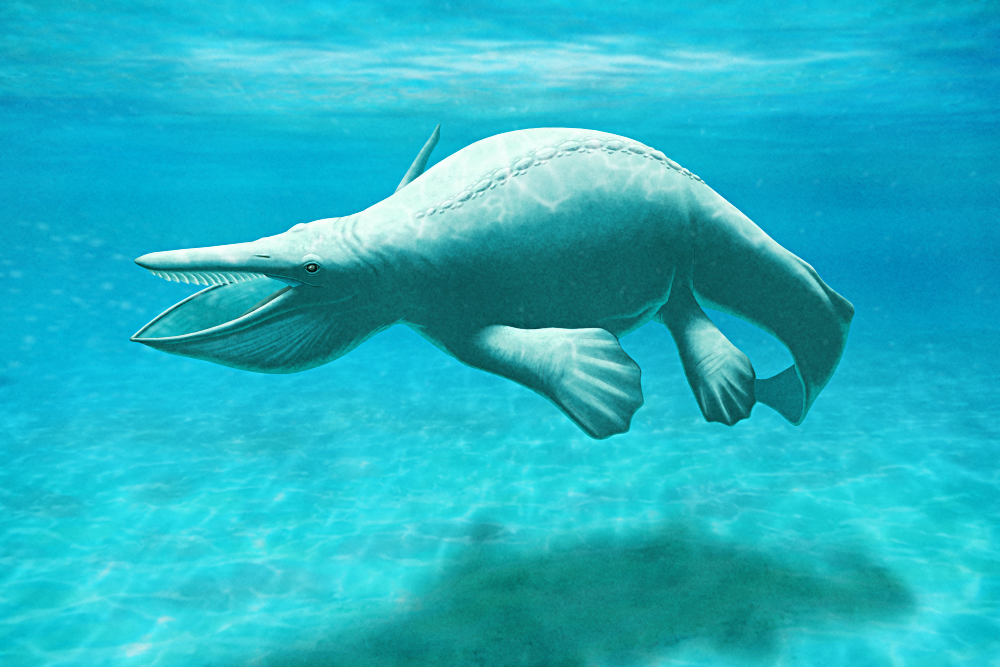
It was part of a group known as hupehsuchians, early cousins of ichthyosaurs that had toothless jaws, paddle-shaped limbs, eel-like tails, and distinctive bony armor along their backs.
Around 1.2m long (~4′), Lentamanusuchus had particularly broad flippers with extra bones in its hands, a transitional state between its ancestors and later polydactylous hupehsuchians.
Hupehsuchians were small marine reptiles closely related to ichthyosaurs, known only from the Early Triassic of southwestern China about 249-247 million years ago. They had toothless snouts, streamlined bodies, paddle-like limbs, and long flattened tails, along with a unique pattern of armor along their backs made up of overlapping layers of bony osteoderms.
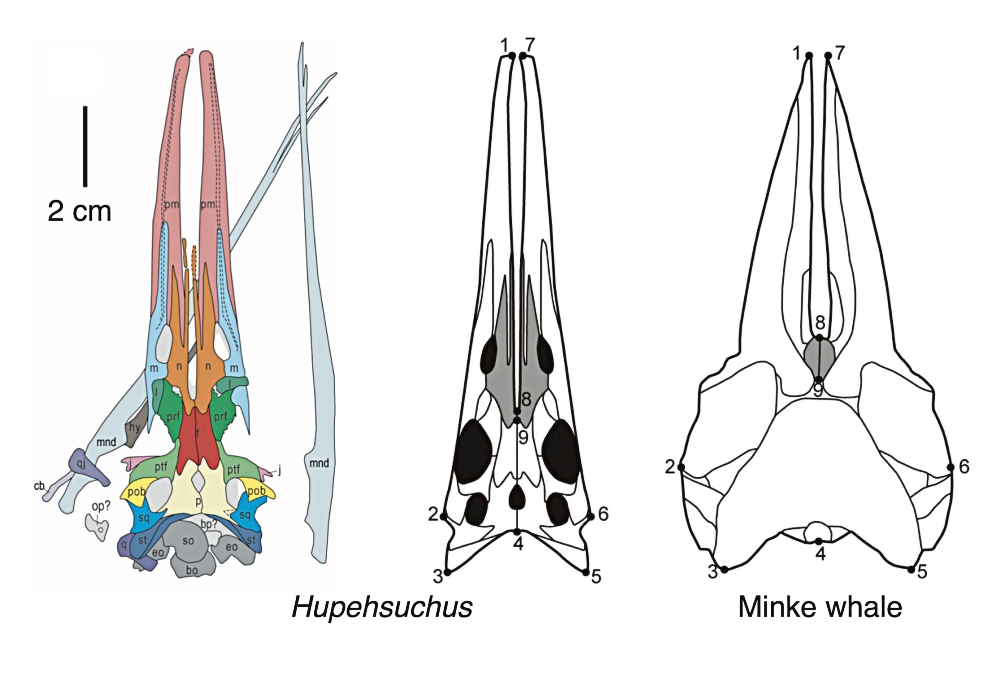
Hupehsuchus skull compared to a modern minke whale From fig 2 & fig 3 of Fang et al (2023). First filter feeding in the Early Triassic: cranial morphological convergence between Hupehsuchus and baleen whales. BMC Ecol Evo 23, 36. https://doi.org/10.1186/s12862-023-02143-9
Grooves in the bones along the outer edges of its upper jaws may be evidence of filtering structures similar to baleen, although with no soft-tissue preservation we don’t know exactly what this would have looked like. Its slender flexible lower jaws probably also supported a large expandable throat pouch, allowing it to filter plankton out of larger volumes of water.