
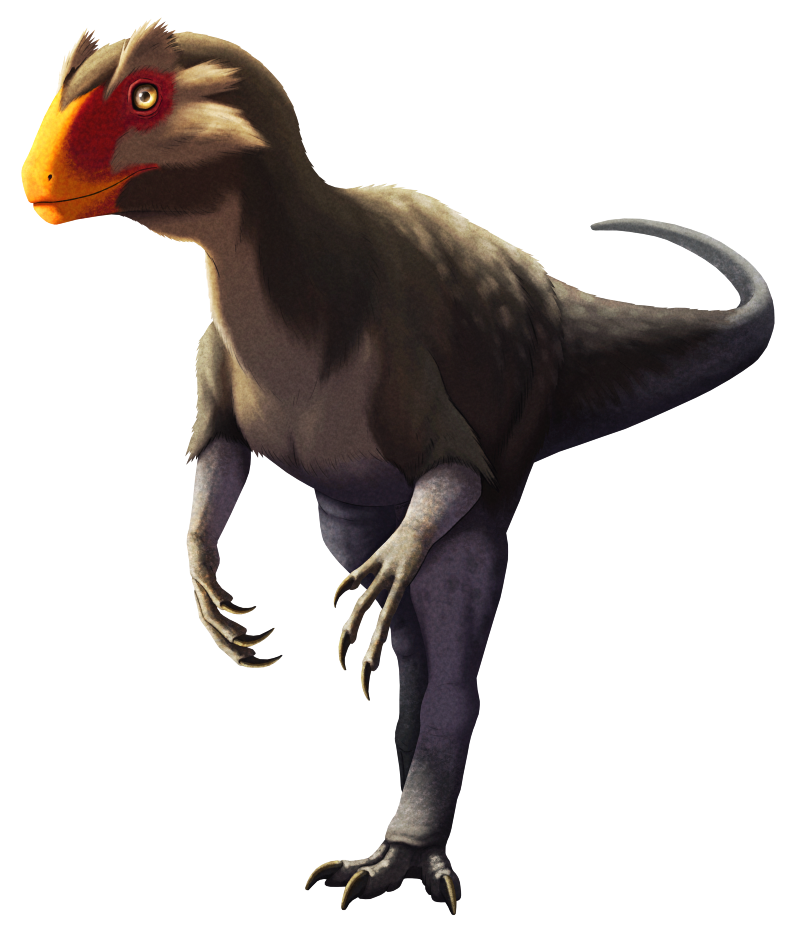
Ptychotherates bucculentus was a herrerasaurian dinosaur that lived during the Late Triassic, about 205 million years ago, in what is now New Mexico, USA.
Probably around 2m long (~6’6″), it had a short deep skull and massive cheekbones – unusual features for an early saurischian, and convergently similar to those of some later theropods.
Along with its close relatives Tawa, Chindesaurus, and Daemonosaurus (a grouping collectively known as “morphoraptorans”) it represents one of the latest-surviving known herrerasaurians, suggesting that these early-diverging carnivorous dinosaurs persisted in low-latitude regions until much closer to the end of the Triassic than previously thought.
References:
- de Lazaro, Enrico. “New Triassic Dinosaur Species Identified in New Mexico.” Sci News, 17 Apr. 2026, https://www.sci.news/paleontology/ptychotherates-bucculentus-14703.html
- Srivastava, Simba, and Sterling J. Nesbitt. “A new taxon of saurischian dinosaur from the Coelophysis Quarry of New Mexico, USA (Triassic: latest Norian or Rhaetian) highlights herrerasaurian diversity in the latest Triassic.” Papers in Palaeontology 12.2 (2026): e70069. https://doi.org/10.1002/spp2.70069
- Wikipedia contributors. “Ptychotherates” Wikipedia, 25 Apr. 2026, https://en.wikipedia.org/wiki/Ptychotherates