Galahadosuchus

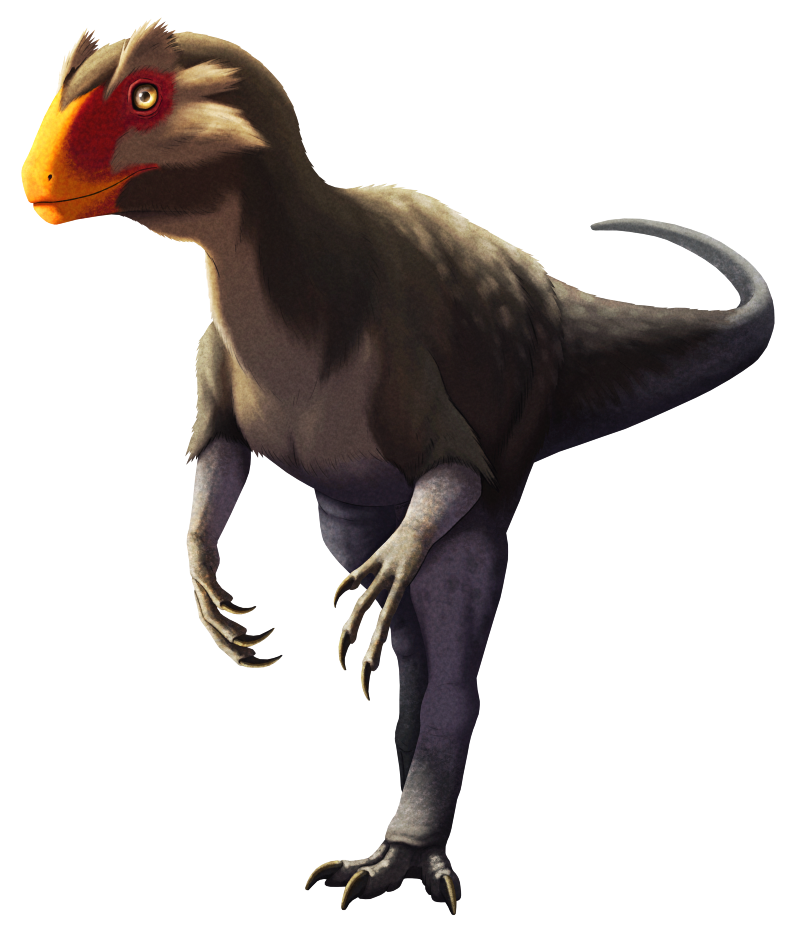
Galahadosuchus jonesi was a small early crocodylomorph that lived during the late Triassic of what is now southwest England, around 215 million years ago.

About 60cm long (~2′), it had a fully upright quadrupedal posture, slender digitigrade limbs, a long tail, and a paired row of interlocking osteoderms running along its back.

Its habitat at the time was part of an archipelago of small tropical islands, in a forested karst environment full of sinkholes and caves. It would have been a fast and agile runner, and like its close relative Terrestrisuchus it was probably a generalist pursuit predator feeding on prey such as invertebrates and smaller reptiles.

Continue reading “Galahadosuchus”

Xenocranium

Xenocranium pileorivale lived during the late Eocene, about 35 million years ago, in what is now the Midwestern and Mountain states regions of the USA.

Despite its very mole-like appearance, this little mammal was a member of an extinct lineage known as palaeanodonts — and its closest living relatives are actually pangolins.

Around 15cm long (~6″), Xenocranium was highly adapted for a subterranean burrowing lifestyle, with an upturned shovel-shaped snout bearing a pad of thickened skin, and short powerful limbs with large digging claws. Its eyes were very reduced, functionally blind, and may not have even been visible in life. Its sense of hearing was also specialized for the sort of low-frequency sounds that carry well through the ground.

It was probably a head-lift digger, using upward motions of its snout and downward strokes with its forelimbs to excavate tunnels while foraging for worms and underground insects.

Continue reading “Xenocranium”

suruasomsalE sdrawkcaB ehT :6202 slooF lirpA

.suruytalp suruasomsalE ,ruasoiselp derevocsid-ylwen a fo noitcurtsnocer dna noitpircsed a dehsilbup epoC reknirD drawdE tsigolotnoelap naciremA ,9681 nI

.dne gnorw eht no saw daeh eht :melborp gib a saw ereht tuB

.noisluporp fo snaem yramirp eht saw “liat” gnol eht demussa epoC dna dnuof neeb dah lairetam bmil on ecnis ,sreppilf dnih evah t’ndid osla tI

.dlrow eht dnuora seugaelloc ot tuo tnes d’eh seipoc tnirperp eht fo tsom gnicalper dna gnillacer neve ,riaffa elohw eht pu revoc ot tpmetta ot hguone dessarrabme saw eh smees ti dna ,etad dna eltit emas eht htiw noitide detcerroc a dehsilbup yldeirruh epoC .(sgnilleter retal etipsed ,hsraM selrahC leinhtO lavir sraW enoB sih ton dna) ydieL hpesoJ rotnem s’epoC yb tuo detniop ,dezingocer neeb dah ekatsim eht raey txen eht yB


April fools! Let’s turn that text the right way around:

April Fools 2026: The Backwards Elasmosaurus

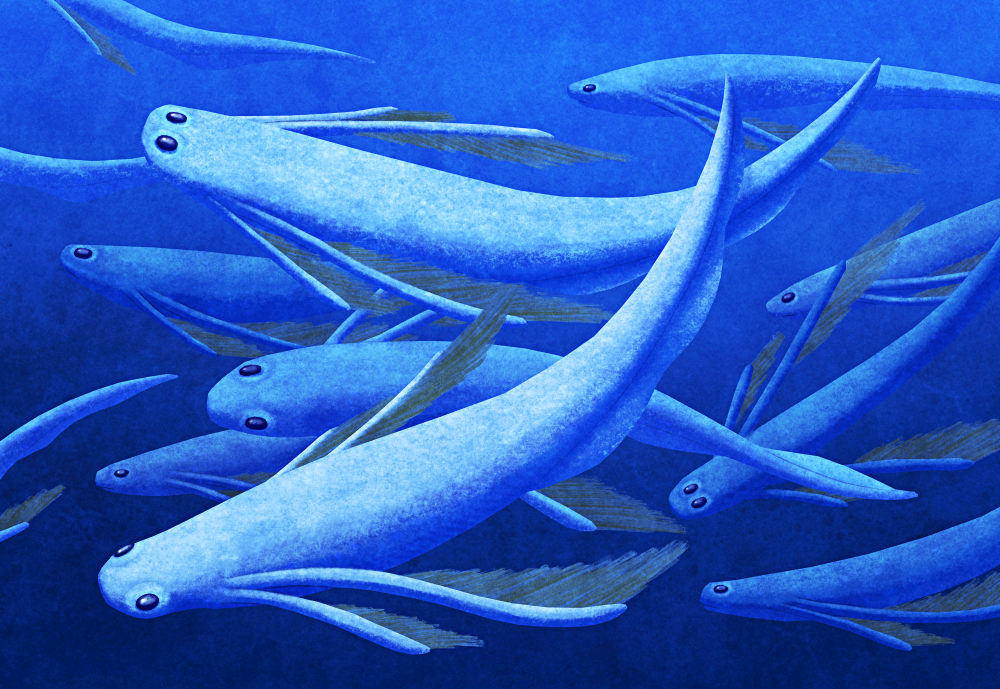
In 1869, American paleontologist Edward Drinker Cope published a description and reconstruction of a newly-discovered plesiosaur, Elasmosaurus platyurus.

But there was a big problem: the head was on the wrong end.

It also didn’t have hind flippers, since no limb material had been found and Cope assumed the long “tail” was the primary means of propulsion.

By the next year the mistake had been recognized, pointed out by Cope’s mentor Joseph Leidy (and not his Bone Wars rival Othniel Charles Marsh, despite later retellings). Cope hurriedly published a corrected edition with the same title and date, and it seems he was embarrassed enough to attempt to cover up the whole affair, even recalling and replacing most of the preprint copies he’d sent out to colleagues around the world.

Continue reading “suruasomsalE sdrawkcaB ehT :6202 slooF lirpA”