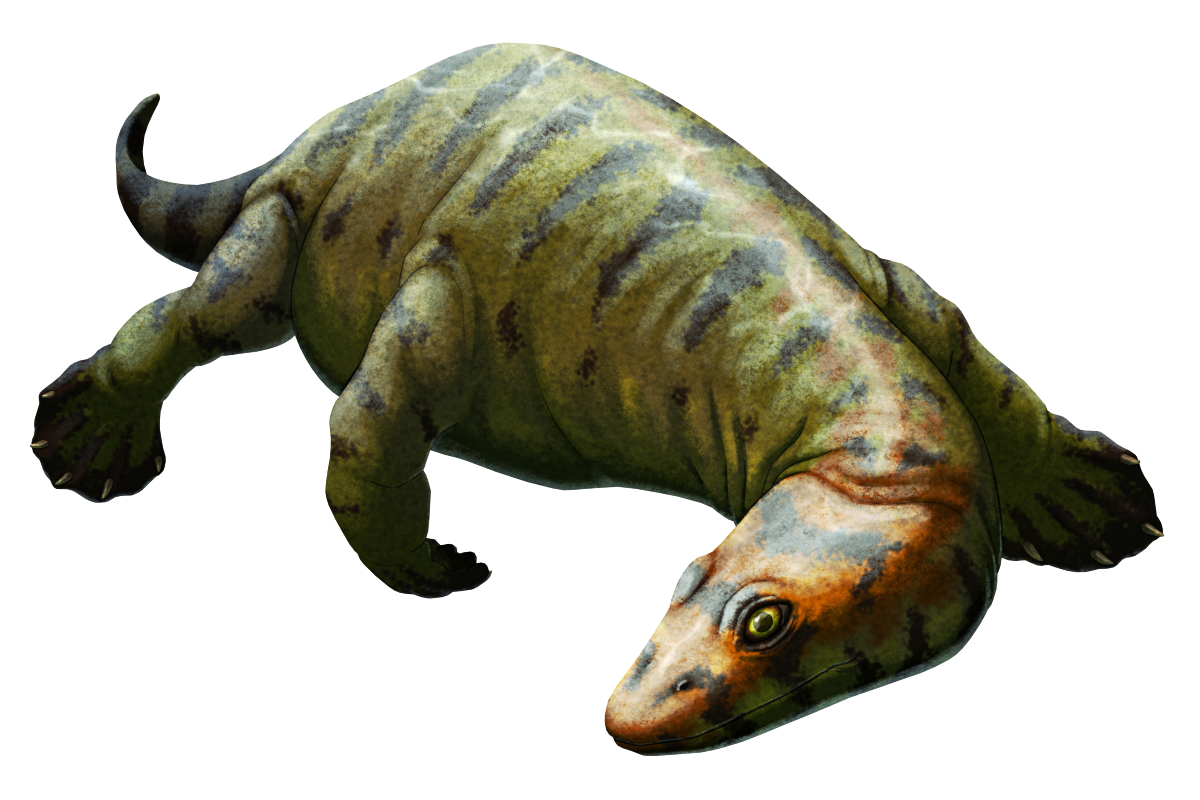
Beneziphius

Beneziphius cetariensis was an early beaked whale that lived off the coast of what is now the northwest Iberian peninsula.

It’s only known from a partial skull that was fished up by bottom trawling nets from the seafloor, so its exact age isn’t known, but based on related species it’s estimated to date to somewhere between the mid-Miocene and early Pliocene, around 13-5 million years ago.

About 4m long (~13′), it had a fairly short narrow snout and was functionally toothless, with evidence of only small vestigial teeth that would have been fully embedded in its gums. Males of this species probably had a pair of tusk-like “battle teeth” at the tip of their lower jaw, similar to some other beaked whales, which would have been used in fights against each other.

The back of Beneziphius’ skull was also proportionally tall, and although not as elaborate as some other fossil species this may still have functioned like “internal antlers” — display structures visible only via echolocation.

Continue reading “Beneziphius”
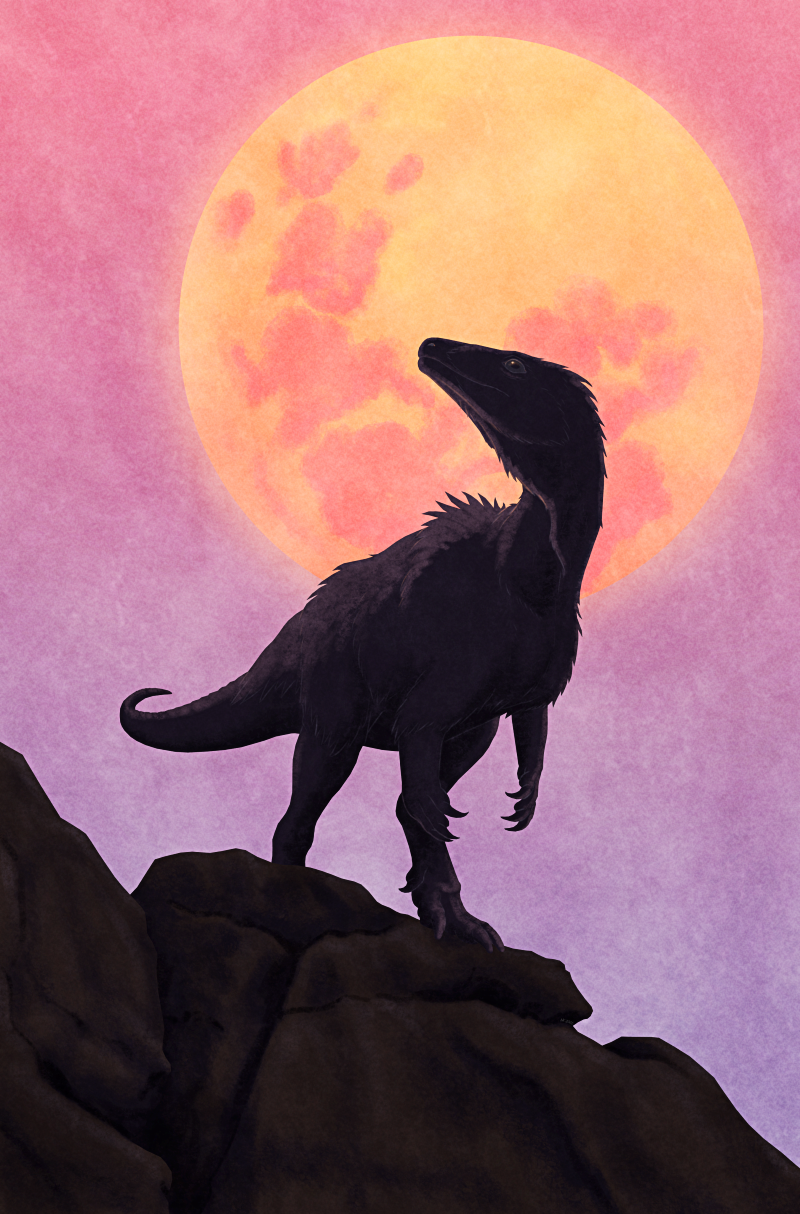
Eoraptor

It’s Moon Day, so let’s look at a dinosaur from the moon!

…Well, not literally. But Eoraptor lunensis name means “dawn thief from the moon”, in reference to it being discovered in the Valle de la Luna (Valley of the Moon) of Ischigualasto Provincial Park, Argentina.

Living during the Late Triassic, around 231-229 million years ago, Eoraptor was one of the earliest known of all dinosaurs. Originally classified as an early theropod, it’s now thought to actually be a very early offshoot of the sauropodomorph lineage, closely related to other South American forms like Buriolestes and Pampadromeus.

It measured around 1.2m long (~4′), with leg proportions that indicate it was a fast runner. Its jaws contained both leaf-shaped and serrated pointed teeth, suggesting it may have been an opportunistic omnivore, feeding mainly on plant matter but occasionally supplementing its diet with smaller prey.

Unlike later dinosaurs it also still had vestigial palatal teeth on the roof of its mouth.

Eoraptor would have lived in a warm humid climate alongside several other early dinosaur species such as Herrerasaurus and Eodromaeus — but this was at a time before the dinosaurs had become the dominant terrestrial vertebrates, so other animals like rhynchosaurs, aetosaurs, rauisuchians, cynodonts and dicynodonts were also very abundant in the Ischigualasto ecosystem.

Continue reading “Eoraptor”

Gorgonavis

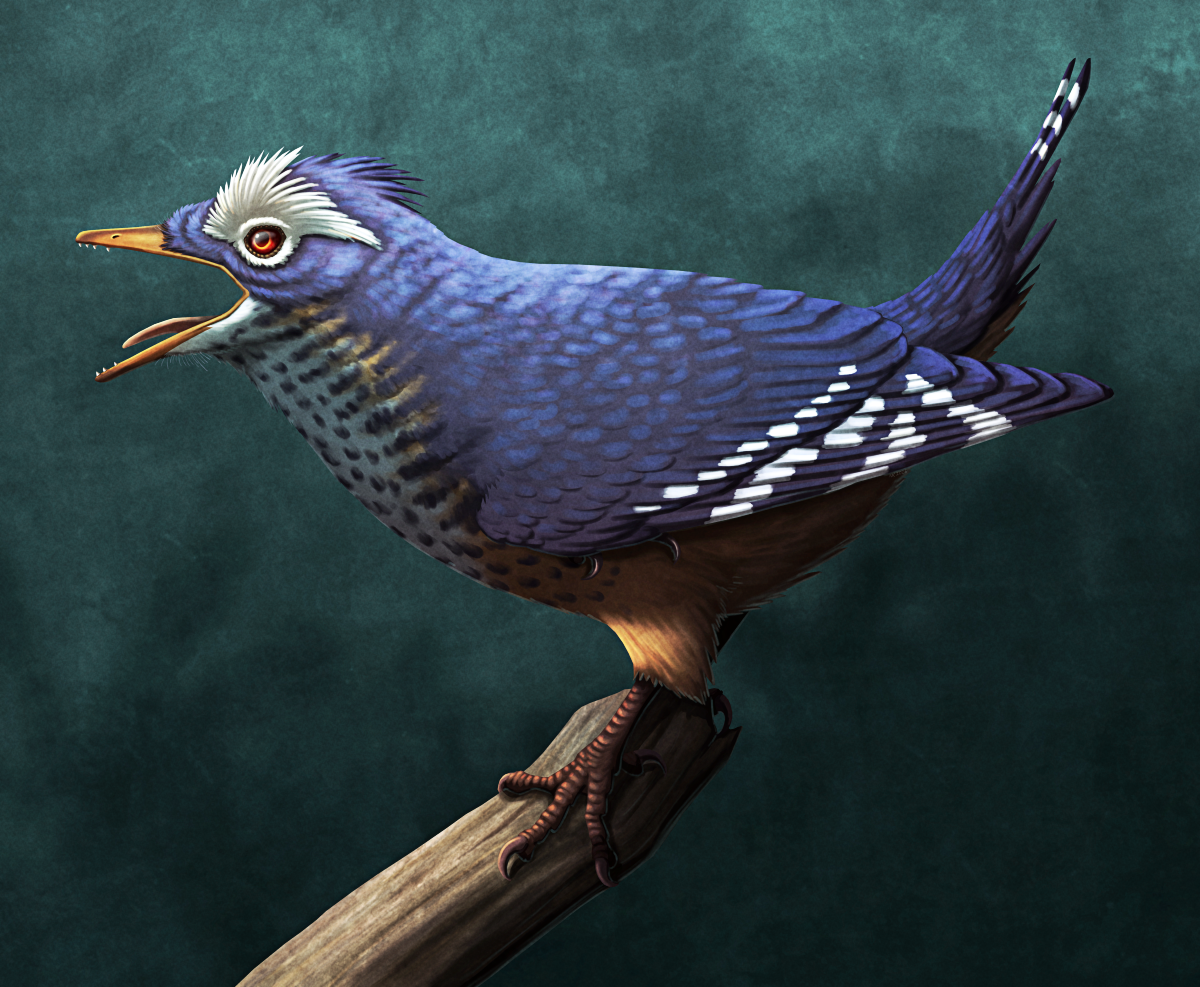
Gorgonavis alcyone was an enantiornithean bird that lived in what is now Spain during the early Cretaceous, about 129-126 million years ago.

Enantiornitheans were a diverse and abundant group of Mesozoic birds that retained claws on their wings and often had toothy snouts instead of beaks, and many also had ribbon-like display feathers on their tails instead of lift-generating fans. While they externally looked a lot like modern birds they weren’t ancestral to any living forms — instead they represented a separate “cousin” lineage to euornitheans that convergently evolved similar features and lifestyles.

Although known only from an isolated skull, Gorgonavis would probably have been around 14cm long (~5.5″) with an estimated wingspan of 30cm (~12″). It seems to have been a close relative of long-snouted enantiornitheans like Longipteryx, having similar elongated jaws with teeth only at the tips. 

If it was a longipterygid it would be the oldest known member of that group and the only one currently known outside of China, suggesting that particular family was much more widespread than previously thought.

Longipterygids were traditionally interpreted as kingfisher-like birds specialized to prey on insects or fish, but two specimens from China with preserved gut contents recently demonstrated that they may actually have been frugivores feeding on the fleshy fruit-like seeds of gymnosperm plants.

Continue reading “Gorgonavis”

Simosaurus

Simosaurus gaillardoti was a marine reptile that lived in shallow tropical seas covering much of what is now Europe and the Middle East, about 242-235 million years ago.

It was part of the nothosaurian lineage, a group of semi-aquatic sauropterygians that were widespread throughout the Triassic seas before the rise of the more fully marine plesiosaurs.

Growing up to around 4m long (~13′), Simosaurus had a flat short-snouted skull and rather thick blunted teeth, along with jaw musculature adapted for a quick strong snapping bite — suggesting it specialized in crushing tough prey like shelled cephalopods and hard-scaled fish.

Continue reading “Simosaurus”