Samotherium

Have you ever seen half a giraffe?

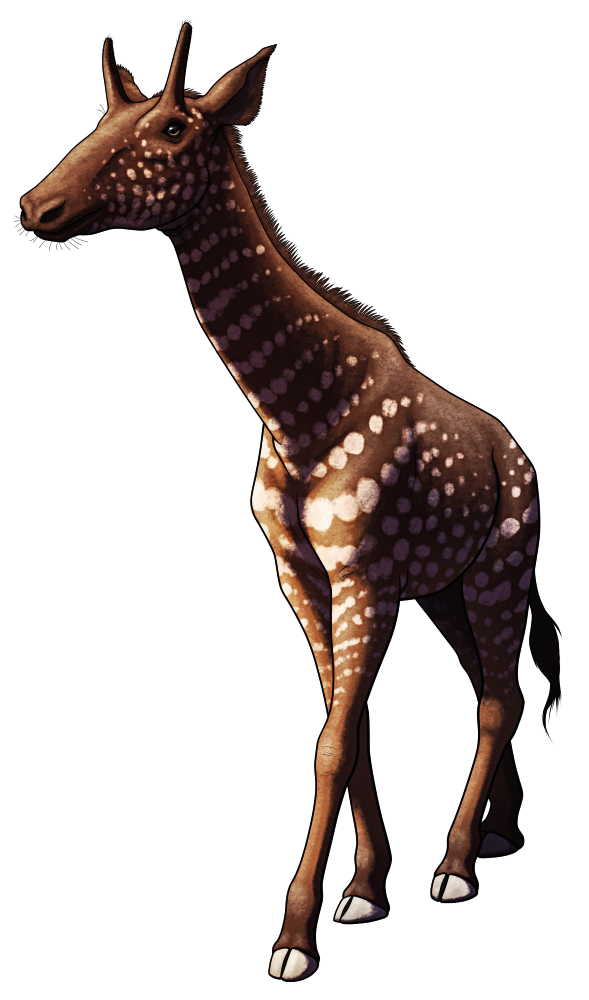
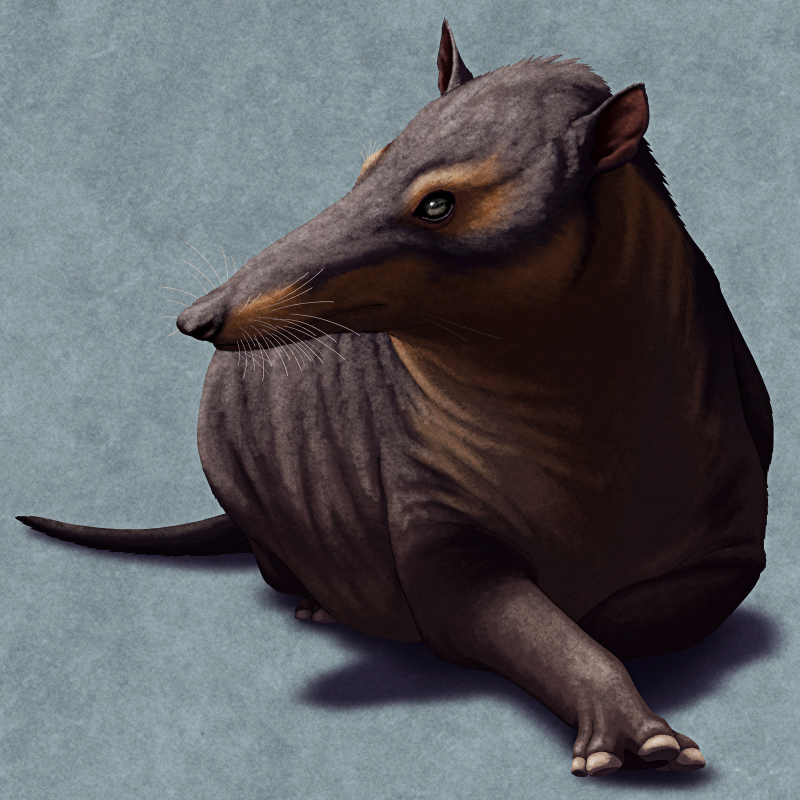
Samotherium boissieri was a giraffid that lived from the mid-Miocene to early Pliocene, about 12-5 million years ago, ranging across what is now Southeastern Europe, North Africa, and the Middle East.

Standing 2.3m tall at the shoulder (~7’6″), and with a total height of around 3-3.5m (9’10”-11’6″), it had long pointed ossicones and a neck that was halfway in both length and bone anatomy between those of its modern relatives the okapi and giraffe.

(But it wasn’t a direct ancestor of modern giraffes, instead being an offshoot of the okapi lineage and most closely related to sivatheres.)

The shape of its snout and microwear on its teeth suggest that it was a seasonal mixed feeder, varying its diet between grazing and browsing at different times of year.

It would have also lived alongside another slightly larger species in the same genus, Samotherium major — but the two appear to have been ecologically partitioned, avoiding direct competition by each preferring slightly different habitats and diets. S. boissieri inhabited more open grasslands, while S. major lived in mixed woodland-grassland and was more of a grazing specialist.

Continue reading “Samotherium”
Shikamaia

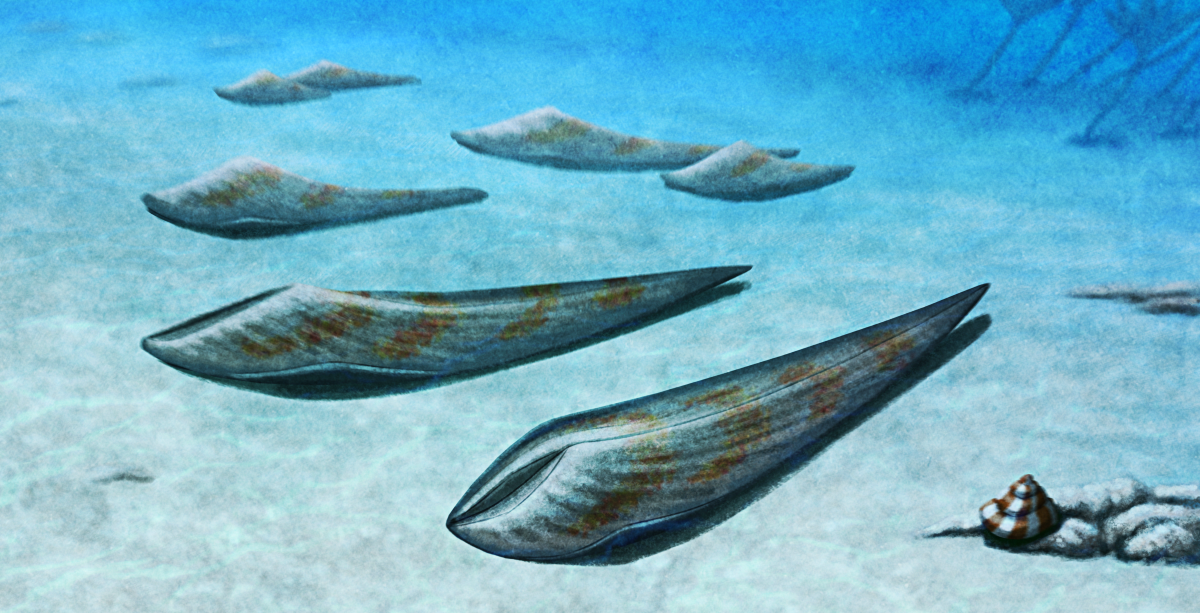
Shikamaia akasakaensis was a giant bivalve that lived during the mid-Permian (~274-267 million years ago), in the shallow tropical waters of a carbonate platform atop an oceanic seamount in the region of what is now Japan.

It had a long flat shell up to about 1m (3’3″) long, with a raised triangular hump at the front and wing-like flanges at the sides — a shape that helped to spread out its weight on the soft seafloor sediment.

Its shell was once thought to have been translucent, allowing it to host symbiotic photosynthetic algae inside its body tissues and providing it with the extra sustenance needed to grow to such a huge size. However, more recent studies suggest its shell was actually opaque to sunlight, so instead it may have hosted chemosynthetic bacteria similar to some modern clams.

…Or, considering that it shared its habitat with some other big invertebrates such as a large species of the marine snail Euconospira and a giant crinoid, Shikamaia could simply have been living in such an incredibly food-rich environment that it was able to attain gigantic sizes purely from normal filter-feeding.

Continue reading “Shikamaia”

Kalakocetus

Kalakocetus aurorae was an early cetacean that lived during the Eocene, about 50-48 million years ago, in what is now the northwestern region of the Indian subcontinent.

It represents the (currently) most basal known branch of the whale lineage, with teeth that are transitional between the crushing herbivorous-omnivorous molars of the closely-related raoellids and the shearing carnivorous molars of later archaeocetes.

Only known from a lower jaw and teeth, its full life appearance is unknown — but based on the body proportions of other early cetaceans it would have been a roughly cat-sized animal, around 60cm long (~2′), possibly resembling a smaller version of its better-known relative Pakicetus. It was also probably similarly semiaquatic, wading into rivers to hunt fish and other small freshwater prey.

Continue reading “Kalakocetus”

Lentamanusuchus

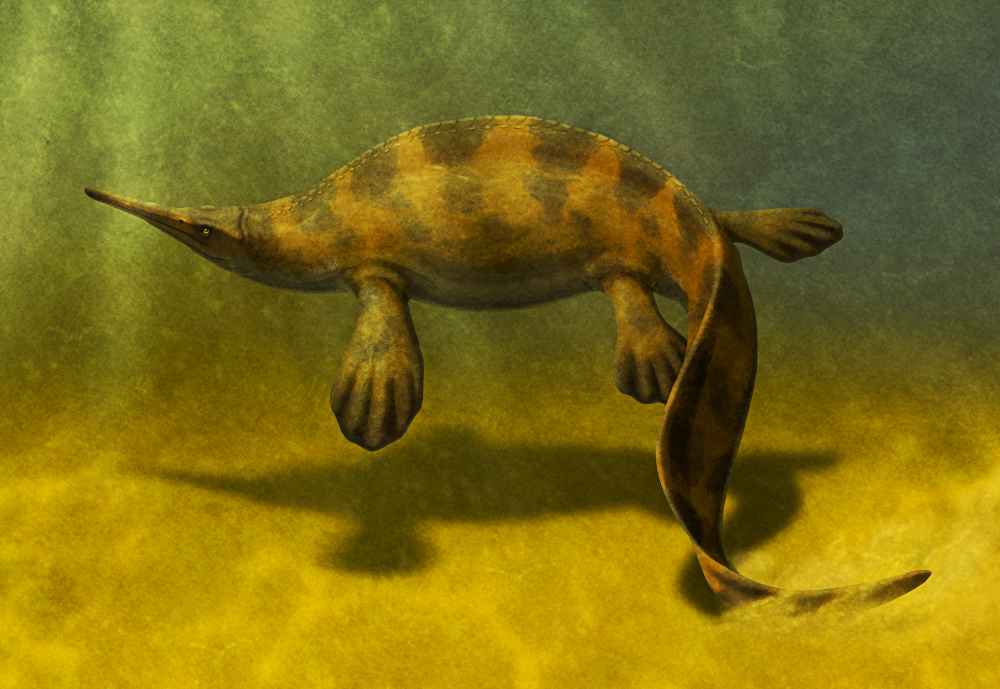
Lentamanusuchus hubeiensis was a small marine reptile that lived during the early Triassic, about 248 million years ago, in shallow tropical seas covering what is now southwestern China.

It was part of a group known as hupehsuchians, early cousins of ichthyosaurs that had toothless jaws, paddle-shaped limbs, eel-like tails, and distinctive bony armor along their backs.

Around 1.2m long (~4′), Lentamanusuchus had particularly broad flippers with extra bones in its hands, a transitional state between its ancestors and later polydactylous hupehsuchians.

Continue reading “Lentamanusuchus”

Ferenceratops

Although ceratopsian dinosaurs were widespread around the northern continents during the Cretaceous, for a long time they appeared to have been completely absent from Europe. A few possible fragments were found – but their identification as ceratopsians was highly disputed, with some paleontologists instead identifying the remains as belonging to ornithopods.

But this year some new fossils have given more support to the ceratopsian interpretation, suggesting that a whole diverse European branch of these dinosaurs was there the whole time. They’d just been misidentified as rhabdodontids due to the convergent anatomy of their teeth, jaws, and limbs.

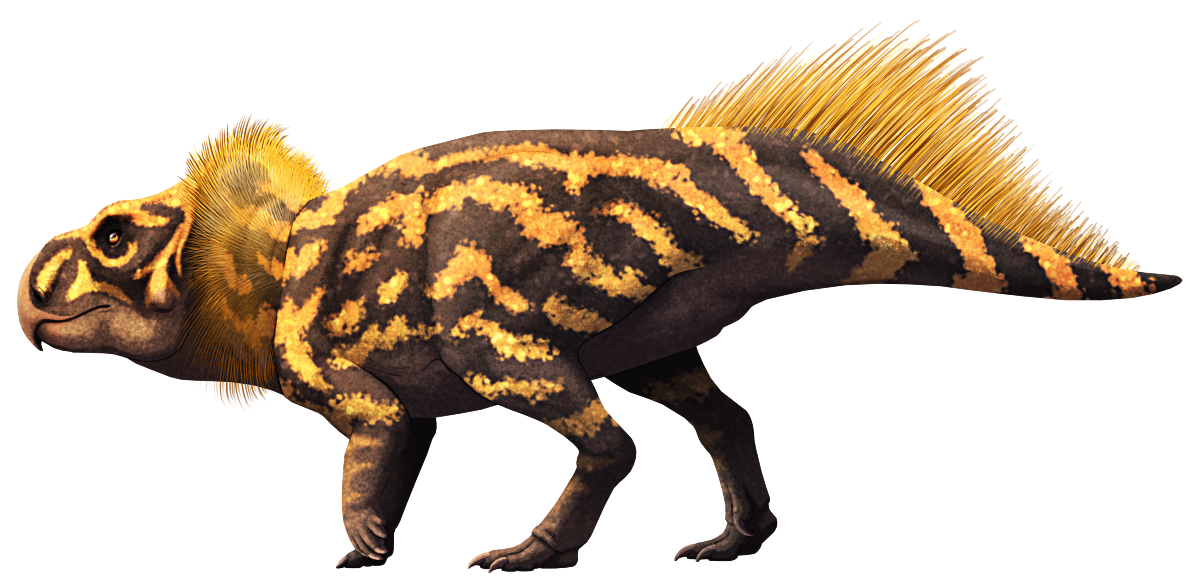
One of these newly-recognized ceratopsians was Ferenceratops shqiperorum (previously known as Zalmoxes shqiperorum), which lived during the late Cretaceous (~72-66 million years ago) on the subtropical Hațeg Island, in the region of what is now Romania

It was a small species, about 2m long (6’6″), and seems to have lacked the elaborate frills and horns seen in many other ceratopsians, despite being closely related to both protoceratopsids and stem-ceratopsids.

Its new genus name references Ferenc, the birth name of Baron Franz Nopcsa, the gay Transylvanian paleobiologist-adventurer-spy who originally found some of its fossil remains.

Continue reading “Ferenceratops”