
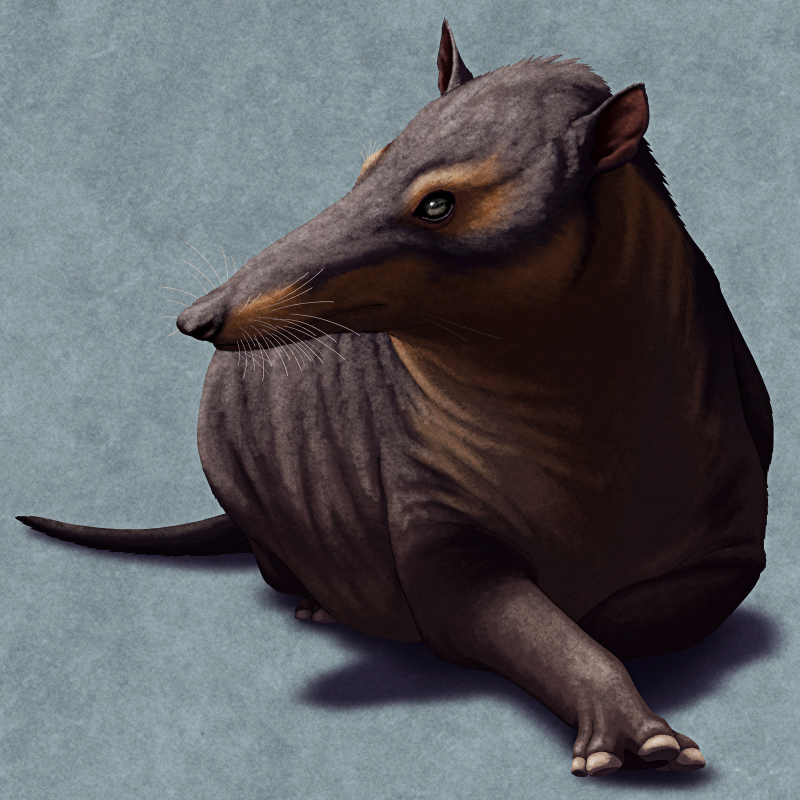
Kalakocetus aurorae was an early cetacean that lived during the Eocene, about 50-48 million years ago, in what is now the northwestern region of the Indian subcontinent.
It represents the (currently) most basal known branch of the whale lineage, with teeth that are transitional between the crushing herbivorous-omnivorous molars of the closely-related raoellids and the shearing carnivorous molars of later archaeocetes.
Only known from a lower jaw and teeth, its full life appearance is unknown — but based on the body proportions of other early cetaceans it would have been a roughly cat-sized animal, around 60cm long (~2′), possibly resembling a smaller version of its better-known relative Pakicetus. It was also probably similarly semiaquatic, wading into rivers to hunt fish and other small freshwater prey.
Continue reading “Kalakocetus”