
Although ceratopsian dinosaurs were widespread around the northern continents during the Cretaceous, for a long time they appeared to have been completely absent from Europe. A few possible fragments were found – but their identification as ceratopsians was highly disputed, with some paleontologists instead identifying the remains as belonging to ornithopods.
But this year some new fossils have given more support to the ceratopsian interpretation, suggesting that a whole diverse European branch of these dinosaurs was there the whole time. They’d just been misidentified as rhabdodontids due to the convergent anatomy of their teeth, jaws, and limbs.
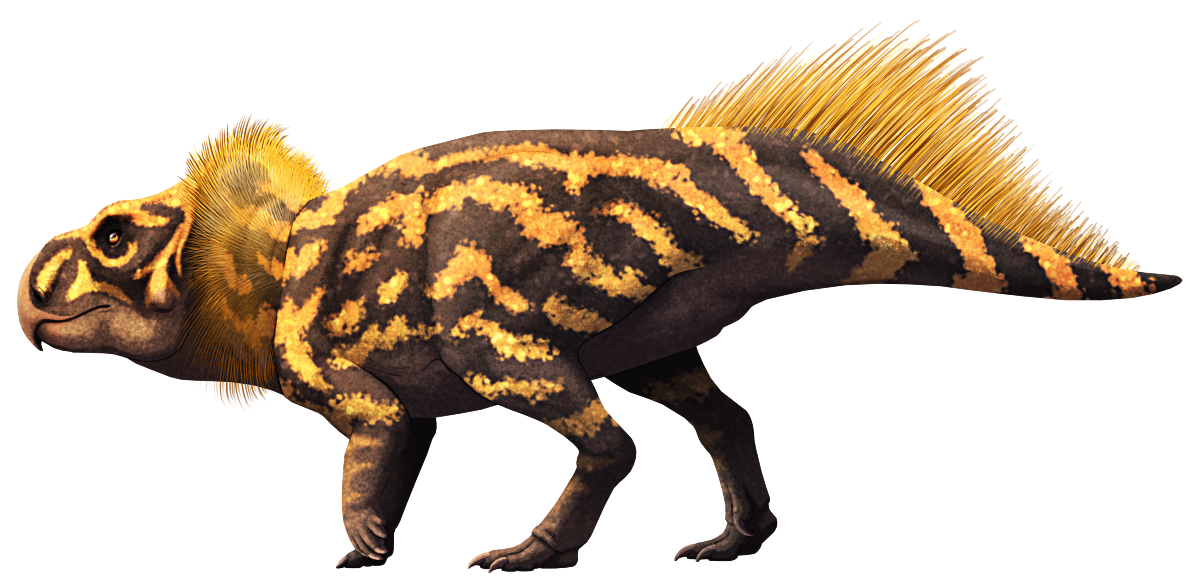
One of these newly-recognized ceratopsians was Ferenceratops shqiperorum (previously known as Zalmoxes shqiperorum), which lived during the late Cretaceous (~72-66 million years ago) on the subtropical Hațeg Island, in the region of what is now Romania.
It was a small species, about 2m long (6’6″), and seems to have lacked the elaborate frills and horns seen in many other ceratopsians, despite being closely related to both protoceratopsids and stem-ceratopsids.
Its new genus name references Ferenc, the birth name of Baron Franz Nopcsa, the gay Transylvanian paleobiologist-adventurer-spy who originally found some of its fossil remains.
Continue reading “Ferenceratops”