Simosaurus

Simosaurus gaillardoti was a marine reptile that lived in shallow tropical seas covering much of what is now Europe and the Middle East, about 242-235 million years ago.

It was part of the nothosaurian lineage, a group of semi-aquatic sauropterygians that were widespread throughout the Triassic seas before the rise of the more fully marine plesiosaurs.

Growing up to around 4m long (~13′), Simosaurus had a flat short-snouted skull and rather thick blunted teeth, along with jaw musculature adapted for a quick strong snapping bite — suggesting it specialized in crushing tough prey like shelled cephalopods and hard-scaled fish.

Continue reading “Simosaurus”

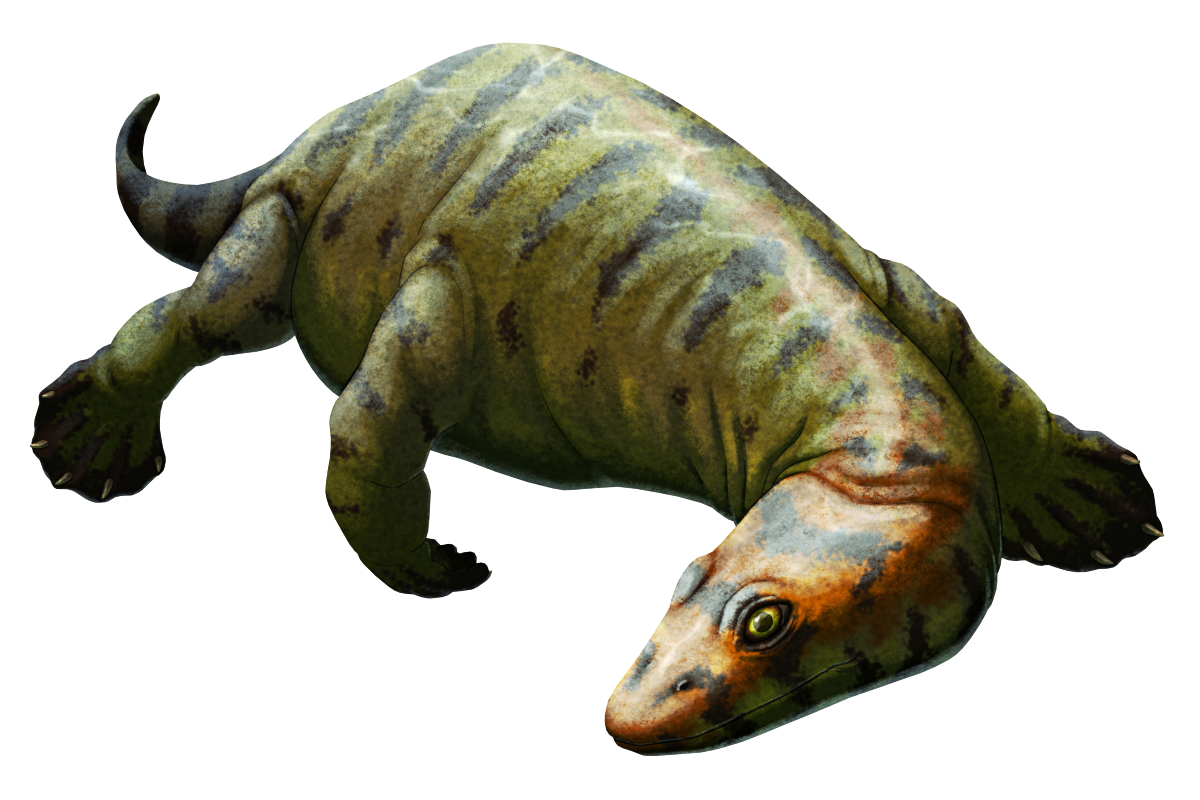
Paludidraco

Paludidraco multidentatus from the Late Triassic of Spain (~237-227 mya).

This 3m long (9′10″) animal was a member of the nothosaurs, a group of semi-aquatic seal-like marine reptiles that were closely related to plesiosaurs (and both were also evolutionary cousins to modern turtles).

It had long slender jaws full of numerous tiny teeth, creating an interlocking comb that was probably used for filter feeding – scooping up mouthfuls of fine-grained sediment from the seafloor and filtering out small invertebrates or soft plant matter.

The bones of its skeleton were also highly thickened and dense, a condition known as pachyostosis that provided ballast to weigh it down in the water. This would have made it a slow and unmaneuverable swimmer, but a very energy-efficient one, using its natural neutral buoyancy to hover or walk along the seabed.

It was essentially a reptilian manatee, filling a similar sort of ecological niche.