Riojasuchus

Pseudosuchians – the evolutionary lineage whose only surviving modern representatives are crocodilians – first originated in the early Triassic and were once an incredibly diverse group. These croc-relatives experimented with fully erect limbs and bipedalism quite a few separate times, and on several occasions ended up evolving remarkably similar body plans to their distant cousins the theropod dinosaurs.

One of the earliest branches of the pseudosuchians to do this were the ornithosuchids, the best known of which is Riojasuchus tenuisceps here.

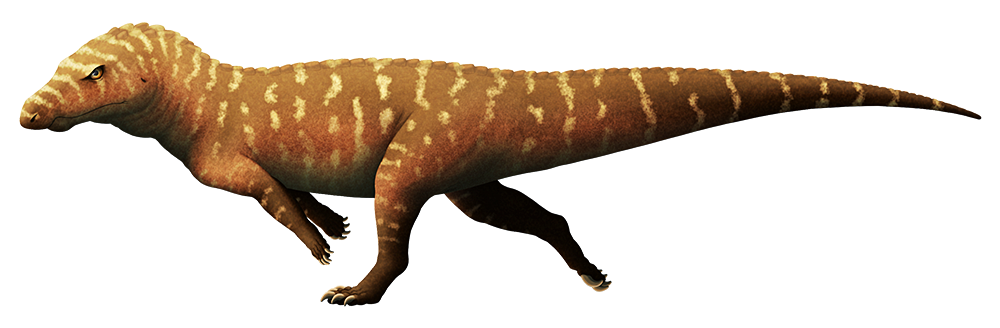
Living in Argentina during the Late Triassic, about 217-215 million years ago, Riojasuchus had a distinctive “hooked” upper jaw and two rows of osteoderm armor plates along its back.

It was only around 1.5m long (4’9″), much smaller than some of the other pseudosuchians and early theropod dinosaurs it lived alongside. Its front limbs were shorter than its hind limbs and it was probably a facultative biped – moving slowly on all fours, but getting up on just its hind legs for bursts of high speed running – which would have helped it avoid being eaten by those larger predators.

Like other ornithosuchids it had very strange ankles, with the bones in the joint articulating with each other the opposite way around compared to any other type of archosaur. The claws on its hind feet were also unusually tall and narrow, especially on the inner toes.

Its jaws were capable of delivering strong but somewhat slow bites, and the relative structural weakness of its narrow notched jaw would have made it difficult for it to deal with large struggling prey. It likely mostly hunted smaller vertebrates, and may also have been an opportunistic scavenger taking bites out of larger predators’ kills whenever it got the chance.

Palaelodus

The closest living relatives to modern flamingos are, surprisingly, the grebes. But this relationship is especially ancient, with their last common ancestor probably living sometime between the end of the Cretaceous and the early Eocene.

Such an ancestor is thought to have been a highly aquatic swimming bird, more grebe-like than flamingo-like, but there are few fossils of intermediate forms between that and the modern wading flamingos – with the exception of a group known as the palaelodids.

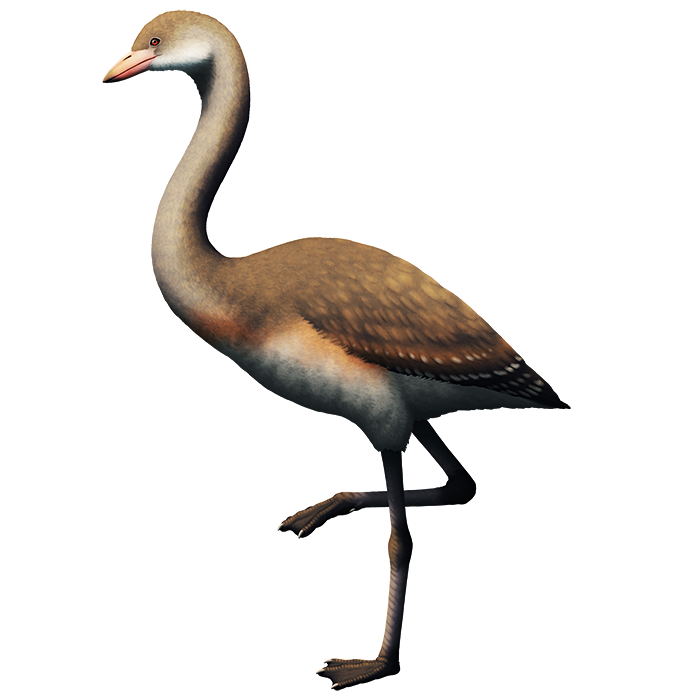
Palaelodus ambiguus here lived about 29-12 million years ago in Europe, from the early Oligocene to the mid-Miocene. It was similar in size to a small flamingo at about 80cm tall (2’7″), but had proportionally shorter legs and appears to have been capable of both wading and swimming in different depths of water, leading to its nickname of “swimming flamingo”.  (Even though modern flamingos do occasionally swim too!)

Its straight pointed beak also suggests it had a much less specialized diet than its modern cousins, probably feeding on small aquatic animals like snails, insect larvae, and fish.

Various other palaelodid species have been found all around the world – even as far as New Zealand – so they seem to have been incredibly common and successful birds during their time. The last definite remains of this group come from the late Miocene, about 7 million years ago, although one Australian fossil may represent a late-surviving relict population that existed until just half a million years ago in the mid-Pleistocene.

Ferrodraco

Fossils of pterosaurs are already rather rare due to their fragile hollow bones — and they’re especially scarce in Australia, with only a handful of fragments known.

But recently a more complete one was discovered in central-western Queensland.

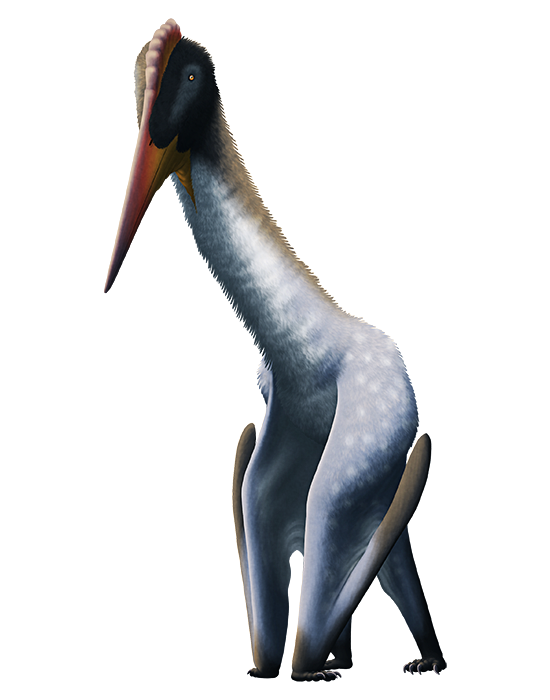
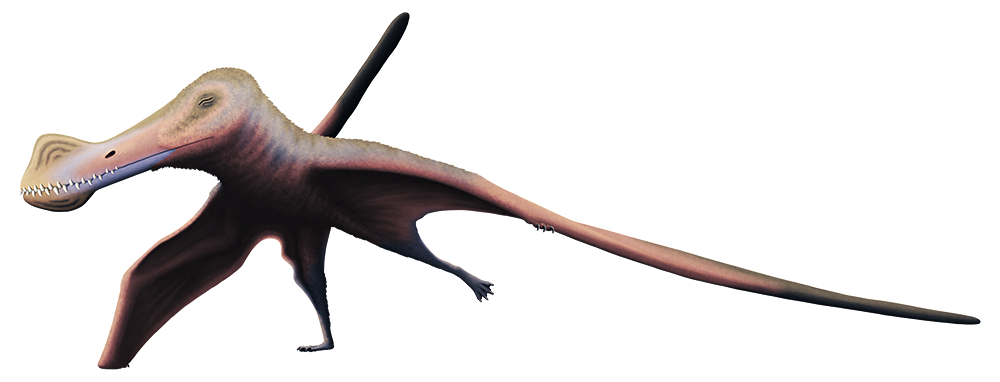
Ferrodraco lentoni (“Lenton‘s iron dragon”) is named after the ironstone that the fossils were found in, and while it’s known only from a partial skull, some pieces of its neck and wings, and various teeth, it’s still by far the best pterosaur specimen ever found in Australia.

Living during the mid-Cretaceous, somewhere between 94 and 90 million years ago, it had a 4m wingspan (~13′) and was also one of the very last of its kind. It was a member of the ornithocheirids, a group characterized by rounded crests at the tips of their long toothy jaws, which were previously thought to have all gone extinct by that time.

Many of Australia’s Cretaceous animals were close relatives of those found in South America, due to an earlier land connection via Antarctica, but surprisingly Ferrodraco wasn’t particularly closely related to any South American ornithocheirids. Instead it seems to have been part of a lineage known from halfway around the world in Europe, suggesting that these pterosaurs were capable of crossing long distances over oceans to disperse between continents.

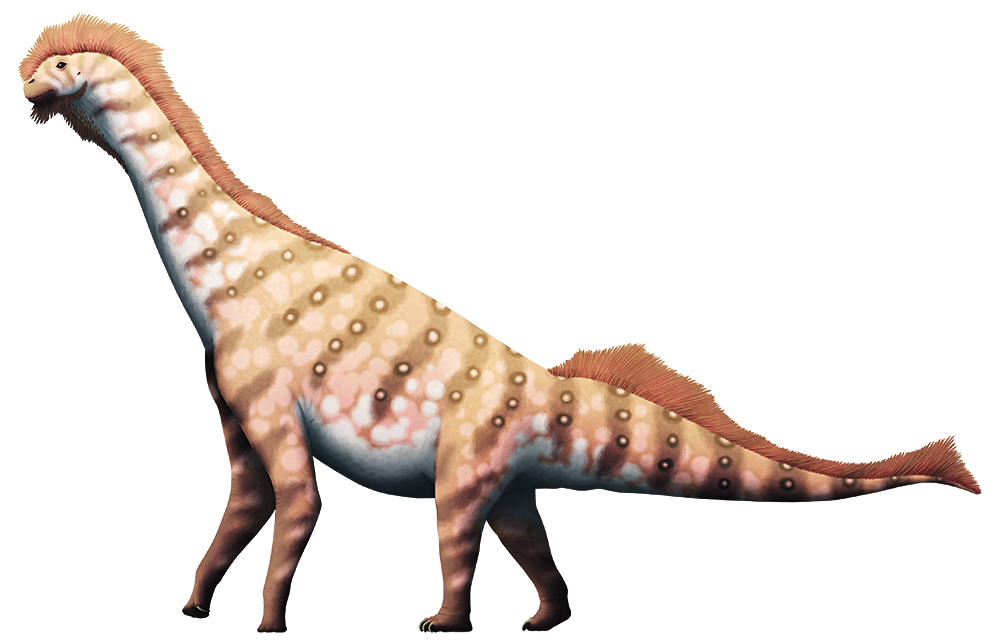
Kaijutitan

Originating from Japanese monster movies like Godzilla, the word “kaiju” is now often used to refer to giant creatures in general – and so it was only a matter of time before a huge sauropod dinosaur was named after the concept.

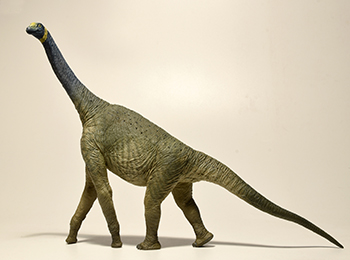
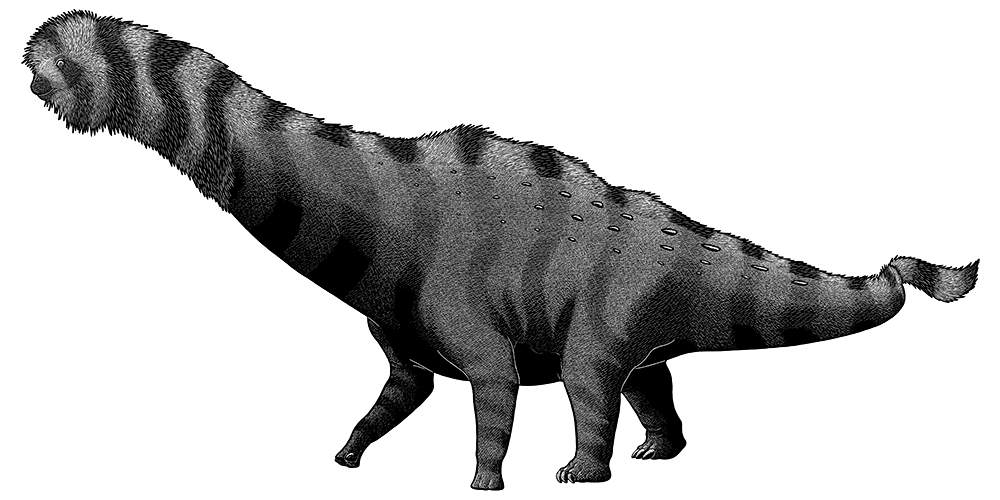
Kaijutitan maui* was a titanosaur living in Argentina during the Late Cretaceous, about 89-86 million years ago. It’s only known from fragmentary remains, so its full size is difficult to estimate, but it was probably somewhere in the region of 20m long (66′). Nowhere close to the largest sauropod, but possibly one of the heaviest since it does seem to have been rather chunkily built, with stout limbs and an estimated weight of 40-60 tonnes (44-66 US tons).

* Not named for the Polynesian hero, apparently, but for the initials of the Museo Argentino Urquiza.

Island Weirdness #59 — Terrestrial Otters & Owls

The Mediterranean island of Crete had very few predators during the Pleistocene, with most being birds of prey. And with the terrestrial carnivore niches in the ecosystem left vacant, it was a semi-aquatic mammal and an owl that ended up taking advantage of that opportunity.

Neither were large enough to threaten the dwarf elephants and hippos, and don’t even seem to have habitually eaten even the smallest of the miniature giant deer. Instead these Cretan predators focused much more on the smaller land vertebrates on the island, preying on birds, shrews, rodents, amphibians, and reptiles.

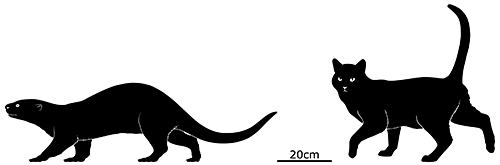
A stylized illustration of an extinct otter. It has a blunt snout and chunky legs.
Lutrogale cretensis

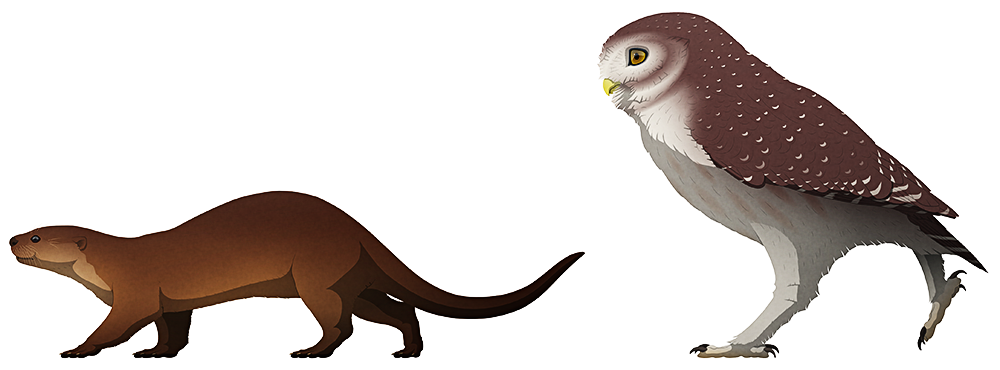
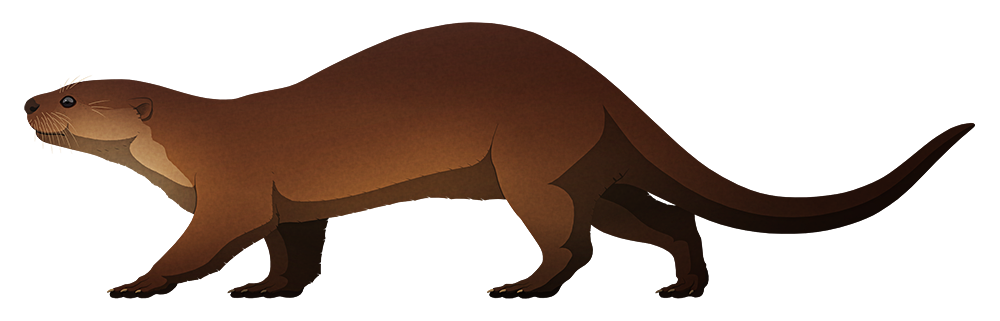
Lutrogale cretensis (previously known as Isolalutra cretensis) was a close relative of the modern smooth-coated otter. It was about the same size as its living cousin, around 1m long (3’3″), but had stronger jaws and chunkier limbs.

Its skeleton shows features associated with walking and running more than swimming, and it seems that this was something of a “land otter” — still able to swim, but spending most of its time on land similar to the modern small-clawed otter.

Shellfish were likely still the main part of its diet, indicated by its crushing teeth. But it probably also regularly ate whatever small terrestrial vertebrates it could catch, since more aquatic otters are already known to prey on those types on animals when they can.


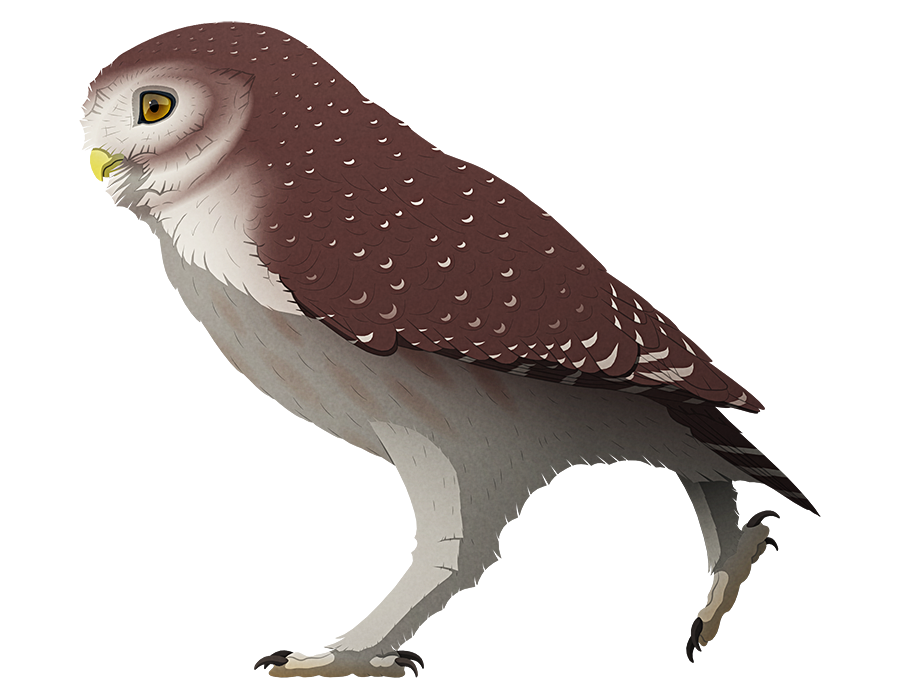
A stylized illustration of an extinct giant little owl. It has longer legs than its modern relatives, almost resembling a large burrowing owl.
Athene cretensis

Athene cretensis was yet another weird island owl, but this time not a descendant of a Strix or Tyto species. Instead this owl was descended from the Eurasian little owl — except it had become much much larger.

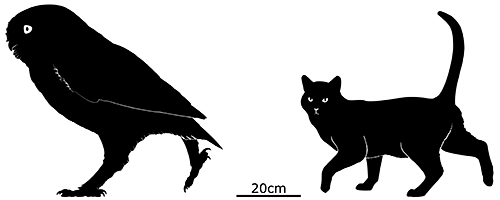
It stood around 60cm tall (2′), over three times bigger than its living relative. Its legs weren’t quite as long as those of the modern burrowing owl, but they were still proportionally much longer than those of little owls and show adaptations for terrestrial movement. Little owls already sometimes chase down prey on foot, and Athene cretensis was probably even more of a ground-based hunter, convergently similar to the Hawaiian stilt-owls and the Cuban terror owls.

Preserved pellets show that it ate small mammals and birds, mainly large mice.

Its wings were still quite large, and it was probably also a good flier — and may even have spread over to some of the Dodecanese islands to the east of Crete, since a wing bone closely resembling that of Athene cretensis has been found on Armathia.

Both of these predators seem to have disappeared around the end of the Pleistocene, at the same time as many of the other native Cretan species about 21,500 years ago. Much like the situation with Candiacervus, this may have been a result of a combination of a rapidly shifting climate and the presence of humans disrupting the already fragile island ecosystem.

Island Weirdness #57 — Cygnus falconeri

The island of Sicily was isolated about 5.3 million years ago when the Mediterranean rapidly refilled. During the next few million years changes in sea level and tectonic uplift allowed repeated colonizations by mainlaind species via the sea strait separating Sicily from Italy, and opened up occasional connections with nearby Malta, resulting in a series of different ecosystems over time.

During the mid-Pleistocene, between about 900,000 and 500,000 years ago, a lack of large land predators on Sicily and Malta allowed a weird mix of endemic species to evolve. Most famous are the tiniest elephants (Palaeoloxodon falconeri), but there were also a couple of giant owls, a small long-legged owl, a giant crane, a big lizard, a giant tortoise, an otter, and giant dormice.

And then there were the swans.

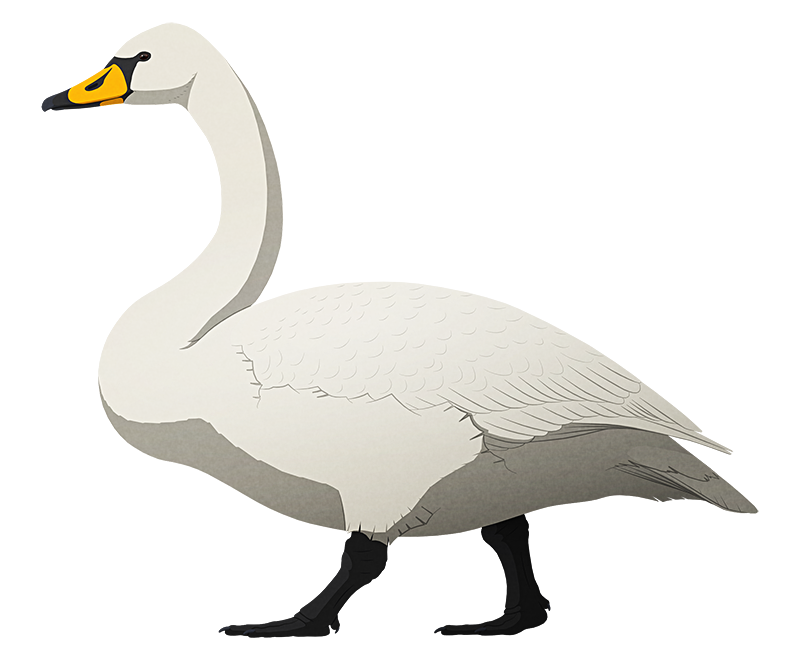
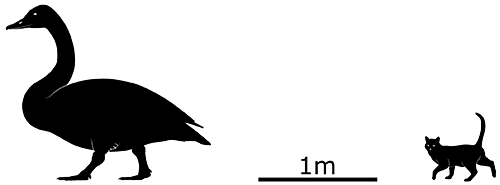
Cygnus falconeri was enormous, at least a third larger than the biggest living swans, at least 1.5m tall (4’11”) — taller than the native elephants, although not nearly as heavy. Its wings were large, with a span of around 3m (9’10”), but at such a hefty size it would have been either a very poor and reluctant flier or functionally flightless.

Its legs were better adapted for walking around on land than for swimming, with shorter toes and possibly reduced webbing. It would have been one of the biggest terrestrial herbivores on Siculo-Malta, probably mainly a grazer but also capable of reaching much higher vegetation than the elephants or tortoises.

It lived alongside another unique swan species, the goose-like dwarf swan Cygnus equitum. Both the giant and dwarf swans probably evolved from the same whooper swan-like ancestor species, but each resulted from separate colonization events — otherwise interbreeding would have probably prevented them from developing such a huge difference in size.

Or an alternative scale comparison to highlight the utter ridiculousness of this island:

A scale comparison between a dwarf elephant and a giant swan. The swan is the taller of the two.
Palaeoloxodon falconeri vs Cygnus falconeri

Between 500,000 and 200,000 years ago multiple sea level fluctuations allowed new species to colonize Siculo-Malta from the mainland, including various large mammalian herbivores and carnivores. With new competition and predators, Cygnus falconeri probably disappeared around the same time as the tiny elephants and most of the other mid-Pleistocene endemic animals.

The dwarf swan, smaller and still a strong flier, may have survived the altered ecosystem for a bit longer, but would have gone extinct during the rapid climate changes at the start of the last glacial period 115,000 years ago.

Island Weirdness #50 — Caracara tellustris

Jamaica is unusual among the Caribbean islands for having had relatively few predatory birds.

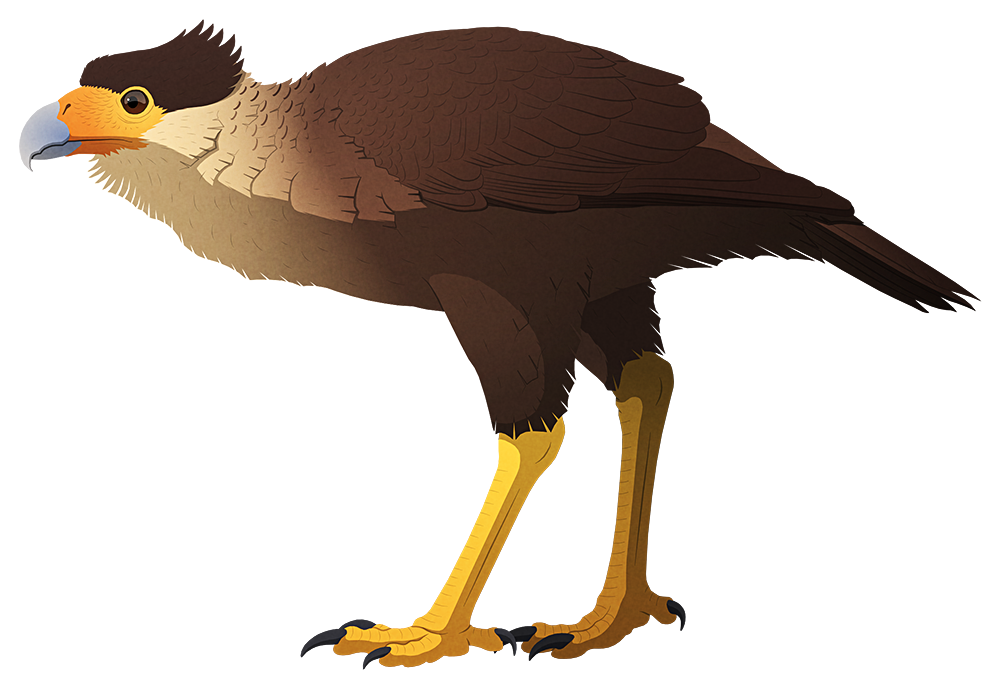
One of the few known fossil species is Caracara tellustris, a close relative of the modern crested caracaras that probably evolved in the mid-Pleistocene between about 1.2 and 0.4 million years ago.

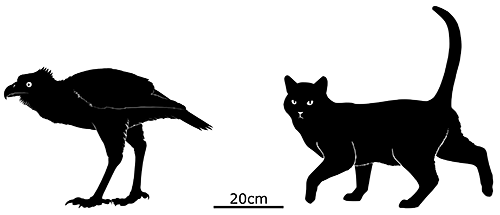
About 60-65cm long (2′-2’2″), it was similar in body size to larger individuals of its living relatives but was heftier built and had slightly longer legs, and its wings were reduced enough that it was either a very weak flier or entirely flightless.

It lived only in the dry scrubland around the southern coast of the island, and probably mainly preyed on reptiles, small rodents, and crabs using its strong legs — a lifestyle very similar to the modern secretarybird. Like other caracaras it would have also opportunistically scavenged on carrion, which there would have been little competition for.

The known remains of Caracara tellustris date to as recently as 100 CE, showing that it existed well into the Holocene and survived through the initial arrival of humans on its island home (about 4000 BCE). This is likely due to its inhospitable hot, arid, and thorny habitat, where it would have been left relatively undisturbed, and it may even have persisted until the time of European colonization in the 1500s.

Unfortunately the scrubland was also very limited in size and the Jamaican caracara would have always been quite a rare species. If it was still around by then it would have faced a combination of introduced predatory mammals and habitat destruction by agriculture, which would have driven it into extinction so quickly its existence was never even noticed by naturalists at the time.

Island Weirdness #49 — Sloth-Monkeys & Fighting Ibises

Jamaica is the third largest island in the Caribbean, and much like Cuba it originated as part of a Late Cretaceous volcanic island arc. It began to subside during the Eocene and was completely submerged for a large portion of the Cenozoic, then was uplifted again in the early-to-mid Miocene, reaching close to its present-day size around 13 million years ago.

Few land mammals ever colonized the island prior to human influence, and most of the known remains are from rodents. But another group did make it onto Jamaica, and became something especially weird.

A stylized illustration of an extinct titi monkey. It has long soft fur and a very long tail.
Xenothrix mcgregori

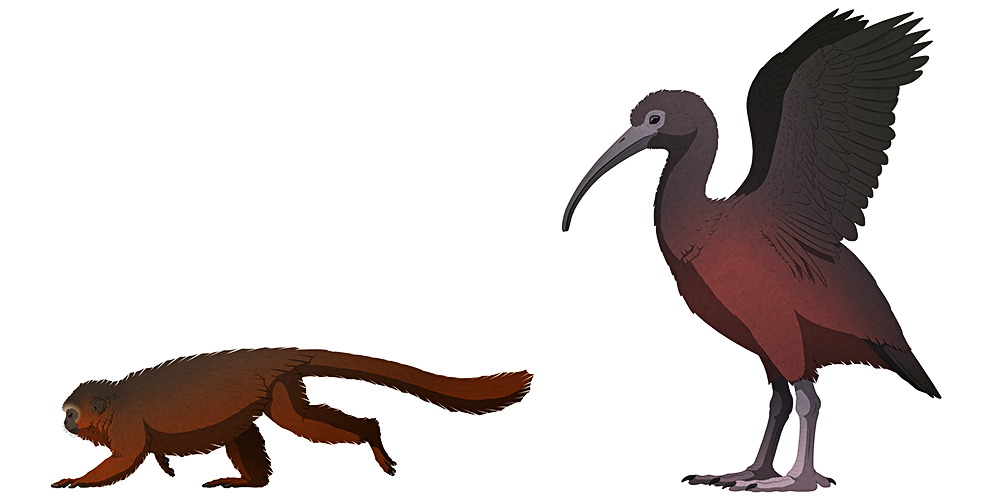
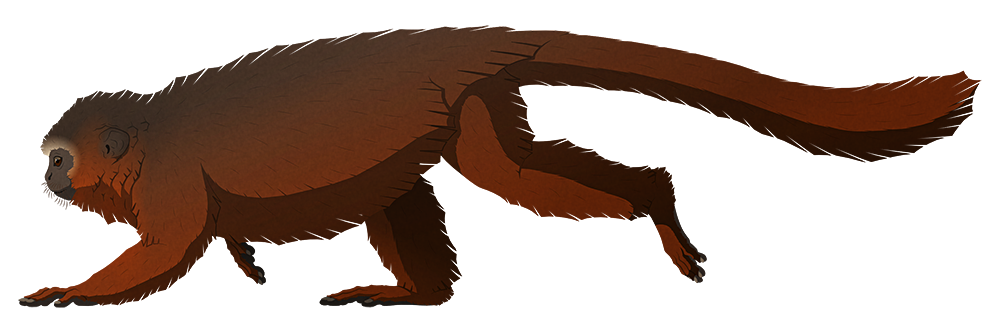
Xenothrix mcgregori is a primate only known from fragmentary remains, but what is known of its skeleton shows a unique combination of features for a New World monkey. It had a reduced number of teeth in its jaws, with enlarged molars, and oddly-shaped heavily-built leg bones that resemble those of slow quadrupedal climbers like lorises.

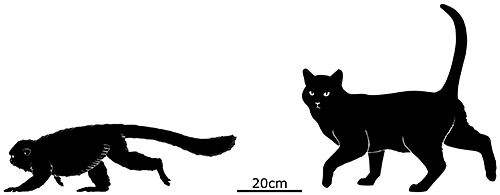
It was probably about 70cm long in total (2’4″), including the tail, and is thought to have lived a lot like a tree sloth, spending most of its time moving slowly around in the trees and possibly even feeding while hanging upside down.

Its anatomy was so ununsual that its evolutionary relationships were a mystery until ancient DNA was recovered from subfossil bones and confirmed it was actually a titi monkey very closely related to the genus Cheracebus. Its ancestors probably arrived on Jamaica in the late Miocene, around 11 million years ago, and it had some close relatives on a couple of other Caribbean islands — the terrestrial Paralouatta on Cuba, and Antillothrix and Insulacebus on Hispaniola — although they likely all independently colonized the Caribbean via different rafting events from South America.


A stylized illustration of an extinct flightless ibis. It has stout legs, and has its wings raised as if threatening to hit something with its heavy club-like arm bones.
Xenicibis xympithecus

Another inhabitant of Jamaica was an equally strange bird.

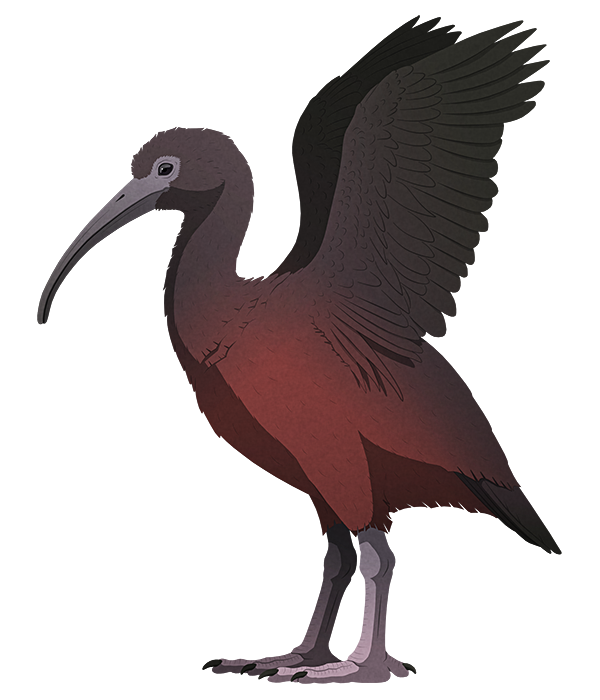
Xenicibis xympithecus was one of only two lineages of ibis ever known to have become completely flightless (the other being Apteribis from Hawaii).

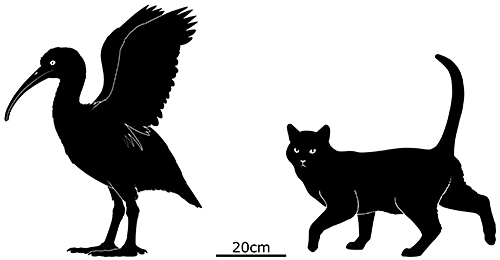
Around 60cm tall (2′), it had some of the most unique wings of any bird. The hollow bones were thickened, its forearm was proportionally short, and the hand was modified into a large heavy “club” — and blunt-force injuries on some of these birds’ remains suggest that they used their wings as weapons when fighting, clobbering each other with powerful blows.

Radiocarbon dating suggests the Xenothrix monkeys survived well into the Holocene, until around 1100 CE. Since various groups of humans had been present on Jamaica since about 4000 BCE the sloth-monkeys must have coexisted with them for several millennia, and their extinction may have been caused by more of a “slow fuse” of gradual habitat destruction than direct exploitation.

Dating on Xenicibis‘ extinction is less precise, with the youngest known remains being somewhere between 10,000 and 2200 years old. It may have still been around when the earliest humans arrived, but unlike the native monkeys it seems like it didn’t last long beyond that point.

Island Weirdness #48 — Chunky Cranes & Terror Owls

Like many other isolated islands ancient Cuba lacked any large land predators, allowing some birds to exploit more terrestrial lifestyles.

A stylized illustration of an extinct flightless sandhill crane. It has a somewhat chunkier beak than its modern relatives, along with smaller wings and thicker legs.
Grus cubensis

The Cuban flightless crane (Grus cubensis, or possibly Antigone cubensis) lived during the Late Pleistocene and Holocene. It was probably a descendant of the sandhill crane — and although an endemic variety of sandhill crane still exists in Cuba today, the two aren’t directly related to each other and instead are the result of two different colonization events.

It was about the same size as modern sandhill cranes, around 60cm tall at the back (2′) with a full height of about 1m (3’3″), but it was much more heavily built. It had stockier legs and a thicker beak, suggesting it may have been specialized for a different ecological niche than its ancestors, and its wings were reduced enough that it was probably completely flightless.


A stylized illustration of an extinct giant owl. It has proportionally short wings and long stilt-like legs.
Ornimegalonyx oteroi

And, once again, there was also a weird owl on this island.

Ornimegalonyx oteroi was closely related to true owls in the genus Strix, and in a great example of convergent evolution did the exact same thing as the Grallistrix stilt-owls — it evolved into a long-legged short-winged ground-based apex predator.

But it was almost twice the size of its Hawaiian cousins, measuring about 1.1m tall (3’7″) and potentially being the largest owl to ever exist. Its remains were so big, in fact, that they were initially mistaken for those of a terror bird.

It was powerfully built and was probably a good runner, mainly preying on giant rodents and dwarf ground sloths. While its wings and flight muscles were reduced it might not have been entirely flightless, and it may have been still been capable of turkey-like short bursts of flight.

Three other species of Ornimegalonyx also stalked ancient Cuba at the same time, varying slightly in size from each other and probably each specializing in a different size class of prey.

Remains of both of these birds have been found in natural petroleum seeps on the northern coast of Cuba that date to as recently as about 6000 years ago, around the same time that humans first arrived. After that point they probably both went extinct very quickly — the flightless cranes were probably actively hunted and eaten into extinction, and the terror owls would have disappeared as their prey species dwindled away due to the same hunting pressures.

Island Weirdness #46 — Tyto pollens

The islands of the Caribbean looked very different during the Pleistocene ice ages, when changing sea levels meant larger areas of land were exposed — and one of the most extreme examples of this was the Bahamas, much larger than they are today, with most of the Bahaman Banks exposed and over 10 times more land area.

Tyto pollens was an enormous barn owl, around 1m tall (3’3″), the size of a large eagle and one of the biggest owls to ever exist. It lived in old-growth pine forests on what is now the Andros Island archipelago and preyed mostly on Bahamian hutias, which were originally the only terrestrial mammals in the Bahamas.

It probably evolved in Cuba, and colonized the Bahamas shortly after the hutias did, sometime in the last 400,000 years during a glacial period when a particularly low seal level meant the islands were only about 30km apart.

It was the main nocturnal predator in the Bahamas, and much like its older Italian relative Tyto gigantea it also had a giant hawk counterpart in the daytime: the huge Titanohierax.

Although many popular online sources refer to Tyto pollens as being flightless, it actually had large robust wings and could probably fly quite well. This might be due to some confusion between it and a completely different giant Caribbean owl, Ornimegalonyx.

The Lucayan people probably reached Andros Island sometime around 1000 CE, and coexisted with the giant owls for several centuries. It was only after European arrival in the 1500s and the felling of their forest habitat that they seem to have vanished.

Local legends of an owl-like creature called the chickcharney may have been inspired by historical encounters with Tyto pollens, and suggest that they were aggressively territorial.