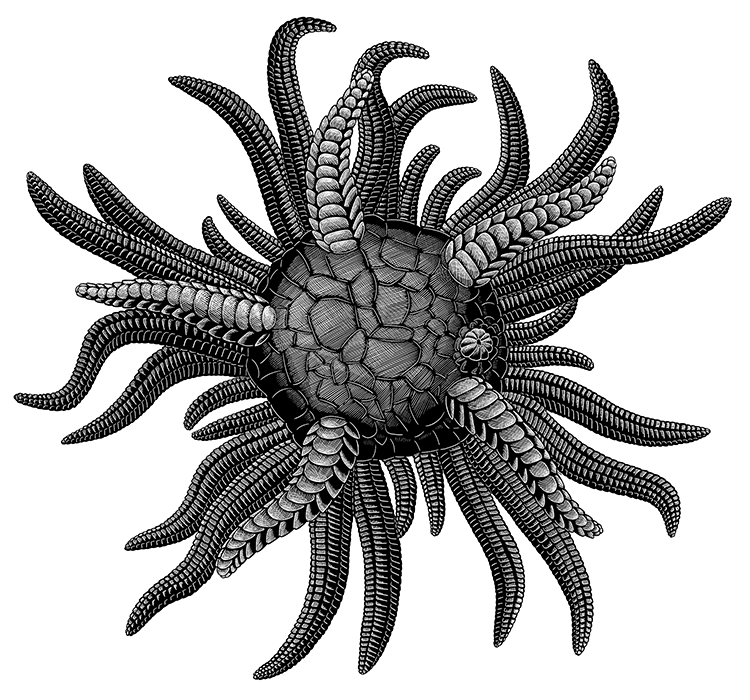
Sollasina cthulhu

Ophiocistioids were a group of weird and poorly-understood echinoderms which lived between the early Ordovician and the late Triassic, about 475 to 233 million years ago. Related to modern sea cucumbers, they were squat dome-shaped creatures with clusters of tentacle-like scaly tube feet, and have been compared to the bizarre fictional monsters of H. P. Lovecraft’s Cthulhu Mythos.

So it’s not really surprising that one of them has been named Sollasina cthulhu.

But unlike its namesake this “monster” was actually tiny, only 3cm across (1.2″). It was discovered in the fine-grained Wenlock limestones of the UK, and dates to the late Silurian, about 430 million years ago. Its exceptionally well-preserved state makes it the first ophiocistioid with known fossilized internal structures, including evidence of its water vascular system.

Unfortunately this high level of detail comes at a cost — the tiny Wenlock fossils are preserved in three dimensions inside hard concretions and are almost impossible to extract or interpret from split-open cross-sections, and highly expensive CT scans don’t give a good enough resolution. So the only way to actually “see” them is to destroy them, grinding away a tiny layer at a time and taking a photograph at each step, then assembling a digital reconstruction from the hundreds of slices.
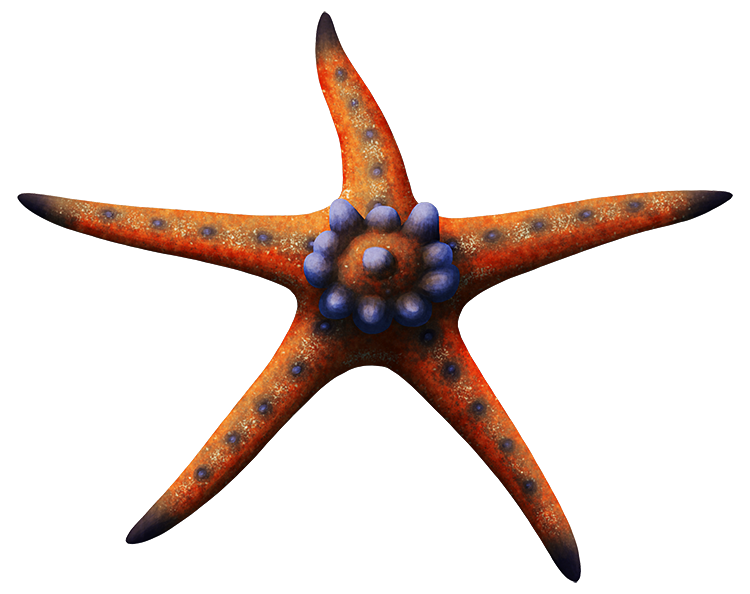
Almost-Living Fossils Month #03 – The Crowned Starfish

Known mainly from around Europe – with a few records from the Atlantic coast of North America and the Caribbean – the stauranderasterids were a family of starfish that first appeared about 190 million years ago in the Early Jurassic.

Not much is known about their life ecology, although they seem to have inhabited shallow tropical seas and like many other starfish would probably have preyed on various slow-moving marine invertebrates. Complete specimens are very rare compared to just isolated elements, making their maximum size difficult to estimate, but they likely grew to at least 5-10cm across (2″-4″).

They had enlarged ossicles forming a bumpy “crown” over their central disc, with five arms that could be either narrow and elongated (such as in Stauranderaster coronatus here) or shorter and club-shaped (like Manfredaster bulbiferus). This gave them some visual similarities to modern starfish like Protoreaster, and since they were both part of a larger grouping of starfish called valvatids it’s unclear whether these features mean that they were very closely related to each other or if it was simply due to convergent evolution.

The stauranderasterids survived until at least the Late Paleocene/Early Eocene (~56 mya), but some possible remains from Cuba date to as recently as the Early Micoene (~23-16 mya).

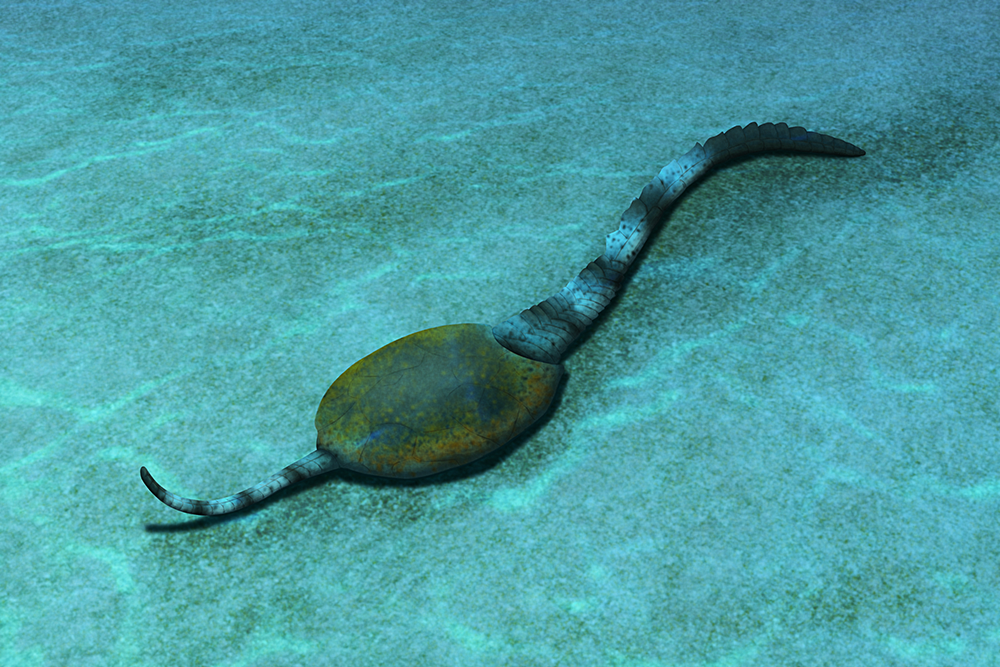
Syringocrinus

Syringocrinus paradoxicus from the Upper Ordovician of North America (~450 mya). Measuring up to around 6cm long (2.3″), it was part of an extinct group of marine animals known as solutes – characterized by irregularly-shaped bodies covered in calcite armor plates, the structure of which suggest they were echinoderms despite their complete lack of any proper symmetry.

It had two appendages, one a short “arm” that was probably used for feeding on food particles suspended in the water, and the other forming a longer stalk-like “tail” that may have served to propel it along the seafloor.

Solutes were once thought to be closely related to the equally weird-looking stylophorans, but some versions of the echinoderm family tree place them much further apart, suggesting their superficial similarities may have been due to convergent evolution instead.