Spectember/Spectober 2025 #05: Strangels

We’re continuing into Spectober with another anonymous request, this one asking for: “Hominids that evolved with 6 limbs, 2 of which are wings. Limb placement is up to you.”

A digital sketch of a speculative six-limbed hominind, pictured in both tree-climbing and gliding poses. It has a monkey-like face with very large eyes, opposable thumbs and first toes, no tail, short fur over its body – and an extra pair of "arms" hanging just behind its shoulders that end in stubby fingerless hands and support a large gliding membrane. In the aerial pose it's shown grabbing hold of its wing-limbs to hold them in place for gliding.

Living several million years in a possible future, Anomalangelus anthropogenis is a bizarre case of a six-limbed primate.

Its additional pair of upper limbs originate from a heritable form of notomelic polymelia, similar to the Developmental Duplications condition seen in our time’s domestic cattle. It has a rather chimeric genome that appears to contain ancestry from several different hominid lineages, suggesting that this strange little creature actually descends from something that was originally genetically engineered.

It’s a tiny dwarfed species, only about 25cm long (~10″), with a highly arboreal omnivorous loris-like lifestyle, spending most of its life clambering around in trees. Although its extra limbs can’t move independently, lacking a lot of functional musculature and nerve connections, they’ve been exapted into brightly-patterned display structures and also serve as attachment for a large gliding membrane – Anomalangelus uses its forelimbs to grab hold of these “wings” while airborne, spreading them out and stabilizing them to form a composite wing.
Island Weirdness #30 – Homo floresiensis

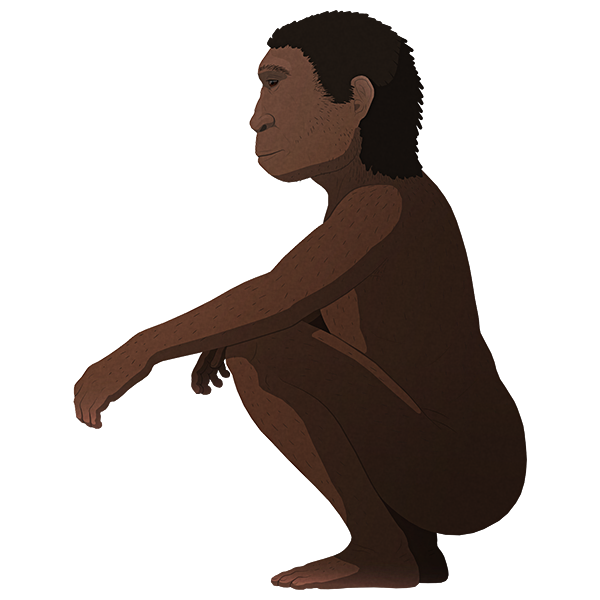
The most surprising resident of ancient Flores would have to be Homo floresiensis, a species of archaic humans nicknamed “hobbits” due to their unusually small stature.

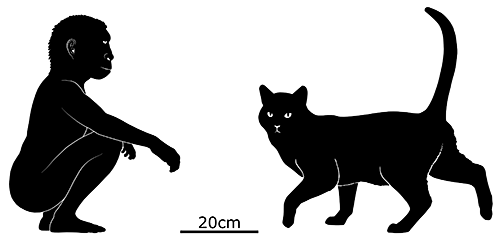
Standing at an adult height of about 1.1m tall (3′7″), they were smaller than any population of modern humans and are thought to represent an unusual case of insular dwarfism.

They also had much smaller brains than would be expected for their size, similarly to the miniature hippos of Madagascar, which was probably an energy-saving adaptation in an island environment with limited resources, since brains are metabolically expensive organs. An area of their brains associated with higher cognition was about the same size as in modern humans, however, so they weren’t necessarily less intelligent – stone tools and butchery marks on dwarf elephant bones suggest they were cooperatively hunting, and there’s also possible evidence of fire use for cooking.

It’s not clear exactly where they belong on the human family tree, and attempts at extracting DNA from the known remains have so far failed. They might be descendants of a population of Homo erectus who arrived on Flores about 1 million years ago, or they may even have been part of a much older unknown lineage that dispersed from Africa over 2 million years ago.

Although they were initially thought to have lived on Flores from 190,000 years ago up to about 12,000 years ago, more accurate dating of the cave where their skeletal remains were discovered suggests they actually disappeared about 50,000 years ago – about the same time that modern humans arrived on the island.