Postschizotherium

Postschizotherium intermedium was a large hyrax that lived during the late Pliocene and early Pleistocene, about 2.5-2.2 million years ago, in what is now northern China.

About 1.5m long (~5′), it had very high-set and sideways projecting eye sockets similar to those of modern hippos, indicating it probably had a similar sort of semi-aquatic lifestyle. The shape of its skull also suggests it may have had a short tapir-like trunk.

Much like modern hippos or capybaras Postschizotherium probably spent much of its time wallowing in bodies of water, and emerging onto land to graze on grasses. Its habitat would have been humid forest and grasslands, alongside other animals such as large horses and bovines, one of the last chalicotheres, woolly rhinos, beavers, macaques, bears, big cats, early lynxes, and scimitar-toothed cats.

Continue reading “Postschizotherium”
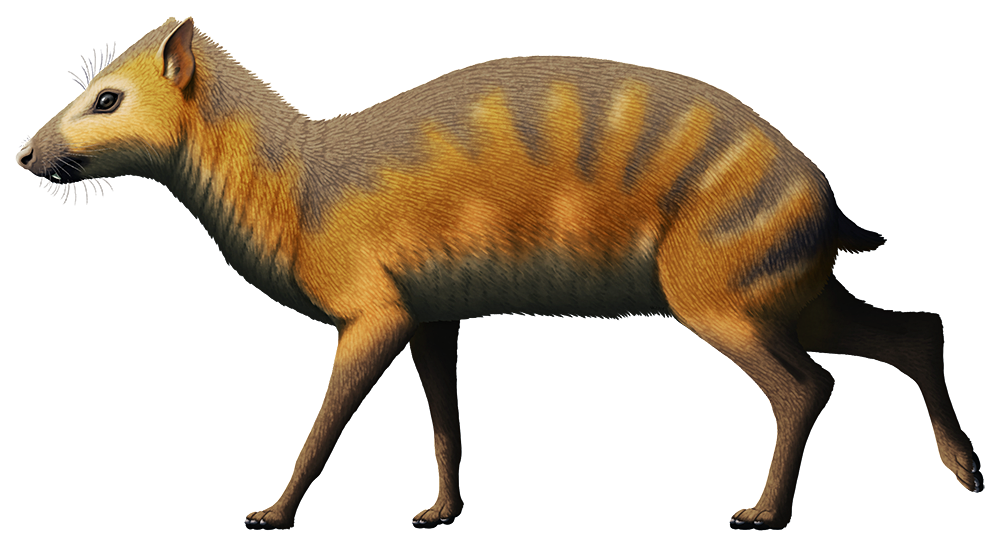
Antilohyrax

This is not a deer.

In Africa during the Eocene and Oligocene, the main terrestrial herbivores were a different type of mammal entirely: hyraxes, the close relatives of elephants and manatees. Although their only modern representatives are small climbing rodent-like animals, hyraxes were once a much more diverse and widespread group, filling a variety of ecological niches and ranging from the size of rats up to the size of rhinos.

Antilohyrax pectidens was a mid-sized example of these diverse hyraxes, standing about 50cm tall at the shoulder (1′8″) and living around 34-28 million years ago in Egypt. It had a deer-like snout and long slender limbs adapted for running and leaping, with leg bones incredibly similar in size and proportion to modern springbok.

Its incisor teeth were comb-shaped and resembled those of colugos, so it was probably a similar sort of selective browser eating soft leaves and shoots.