Aegicetus

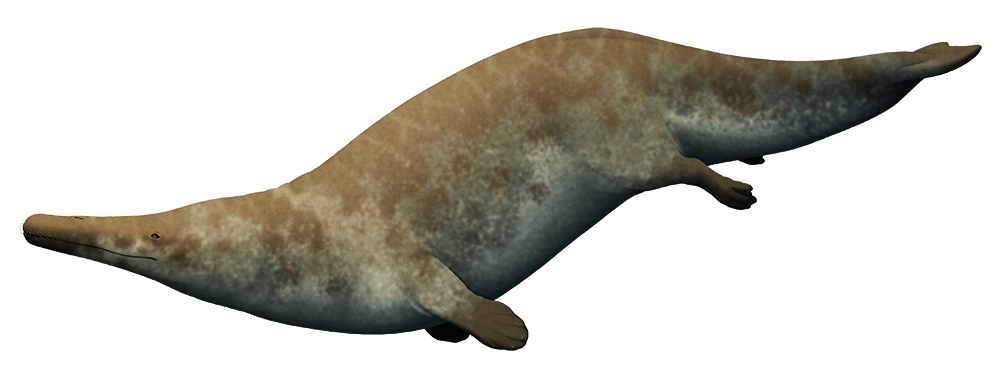
The protocetids were some of the first oceanic cetaceans, occupying a transitional position in the evolution of whales, with four paddle-like limbs and nostrils only partway up their snouts.

Early members of this group swam like otters, using a combination of undulating their bodies and paddling with large hind limbs, but somewhere in the Late Eocene they switched over to propelling themselves entirely with their tails and gave rise to even more whale-like forms like the basilosaurids.

And Aegicetus gehennae was right in the middle of that switch.

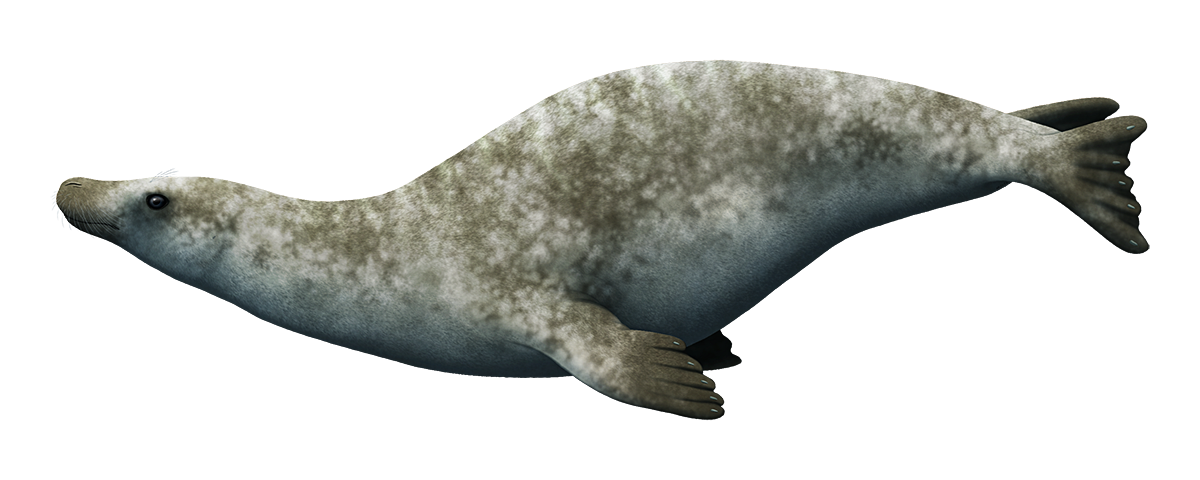
Discovered in the Wadi Al-Hitan (“Valley of the Whales”) fossil site in Egypt, Aegicetus lived around 37-35 million years ago. It was similarly-sized to earlier protocetids like Georgiacetus, measuring about 3.5m long (11’6″), but its hind limbs were proportionally smaller. Its hips were also completely disconnected from its vertebrae, giving it much more flexibility to undulate its body and tail – and preventing it from supporting its weight on land, suggesting that it spent its entire life in the water.

It wasn’t a direct ancestor to more “advanced” cetaceans, since it lived alongside several species of basilosaurids. Instead it seems to represent a late-surviving example of what the earlier protocetid-basilosaurid transitional forms would have looked like.
Spectrovenator

(This is a couple of days late for Halloween, but since this October saw the description of a new dinosaur species with a particularly spooky name, I couldn’t resist putting it into the schedule anyway.)

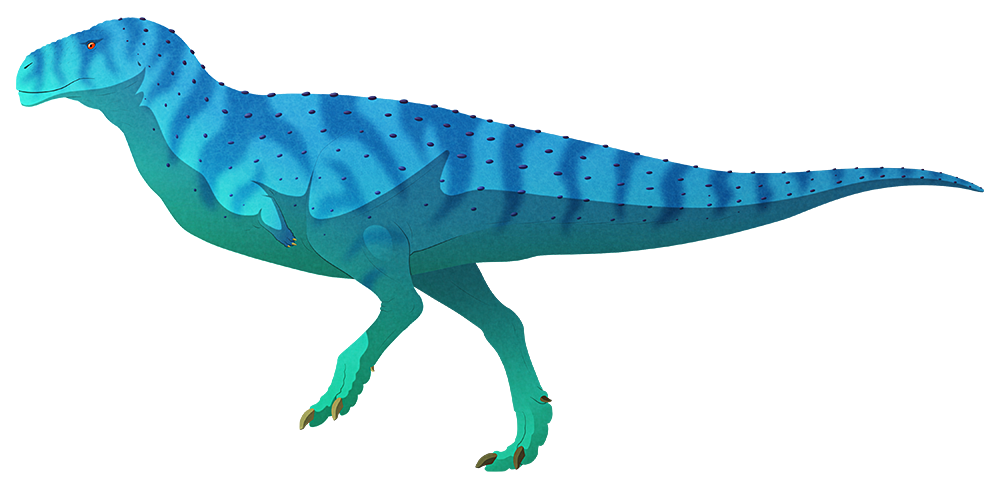
Spectrovenator ragei was an early member of the abelisaurid lineage, living in southeastern Brazil during the Early Cretaceous, about 120 million years ago. It was one of the smallest known abelisaurids, measuring just 2m long (6’6″), and lacked a lot of the skull specializations seen in larger-bodied Late Cretaceous forms like Carnotaurus, suggesting it was more of a generalist predator.

Its genus name translates to “ghost hunter” due to it being found underneath the fossil remains of another dinosaur entirely – a “ghost” unexpectedly appearing when the specimen was being prepared – but it’s extra appropriate since it also helps to fill in a rather sizeable ghost lineage in the fossil record of abelisaurids.

Anzu

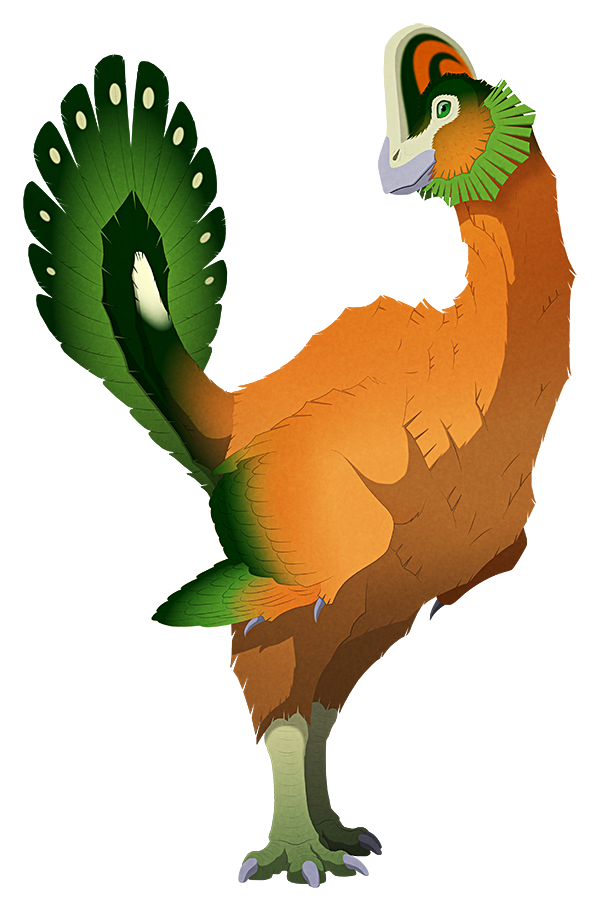
Named after the mythological bird-like Anzû – and also nicknamed “the chicken from hell” – Anzu wyliei was one of the larger known oviraptorosaurs, measuring about 3m long (9’10”).

Its fossils are some of the most complete for a North American member of this dinosaur group, with four different specimens representing about 80% of the whole skeleton.

Living right at the end of the Cretaceous, about 66 million years ago in North Dakota and South Dakota, USA, Anzu inhabited the ancient floodplains of Hell Creek and appears to have been a fairly fast-moving omnivorous generalist. It had a large crest on its head made of rather fragile thin-walled bone, which may have been used for display or sound amplification similar to the casque of modern cassowaries.

Some of the fossil specimens also show evidence of healed injuries, including a broken rib and an arthritic toe.

Kerberos

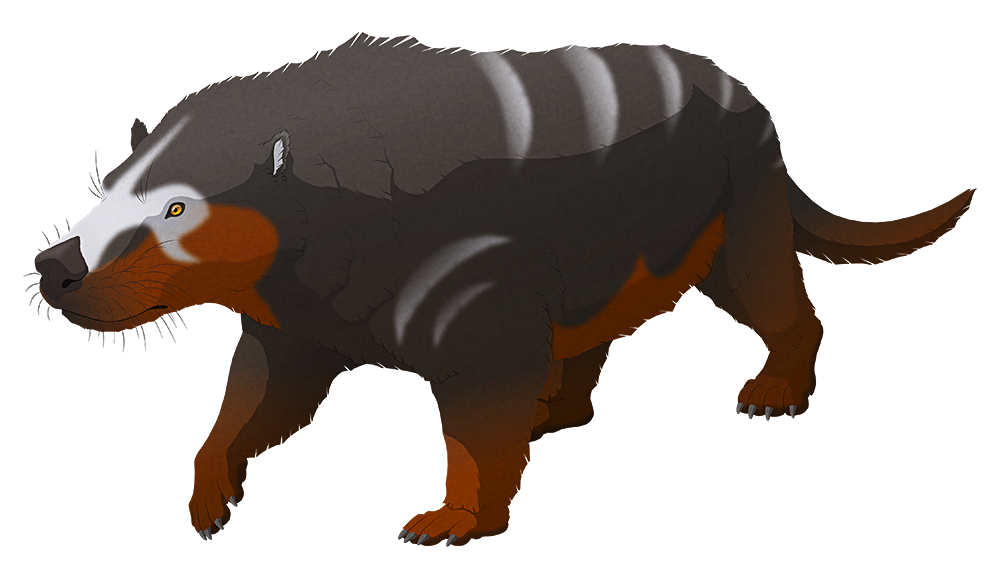
Named after the mythical dog Cerberus, Kerberos langebadreae was a member of an early group of carnivorous placental mammals known as hyainailourids.

These large-headed predators were part of the hyaenodont lineage, evolutionary cousins to modern carnivorans that convergently developed similar shearing carnassial teeth in their jaws. Hyainailourids originated in Africa during the late Paleocene or early Eocene, and repeatedly dispersed into Eurasia and North America before eventually going extinct in the mid-Miocene.

Kerberos was one of the earliest of its kind known from Europe, living in Southern France during the mid-Eocene about 41-38 million years ago. It was close in size to a small American black bear, standing around 65cm tall at the shoulder (2’2″), not nearly as large as some of its later relatives but still making it one of the biggest carnivorous mammals in Europe at the time.

It was a heavily-built animal with a fully plantigrade posture, and would have been an active apex predator hunting similarly-sized early ungulates. While it wasn’t anatomically specialized for fast running it didn’t really need to be – it’s important to remember that modern bears have a similar chunky flat-footed build and yet can move surprisingly quickly.

Its incredibly powerful jaw muscles and premolar teeth adapted for bone-cracking also suggest it ate like a hyena, efficiently consuming entire carcasses.

Tanystropheus hydroides

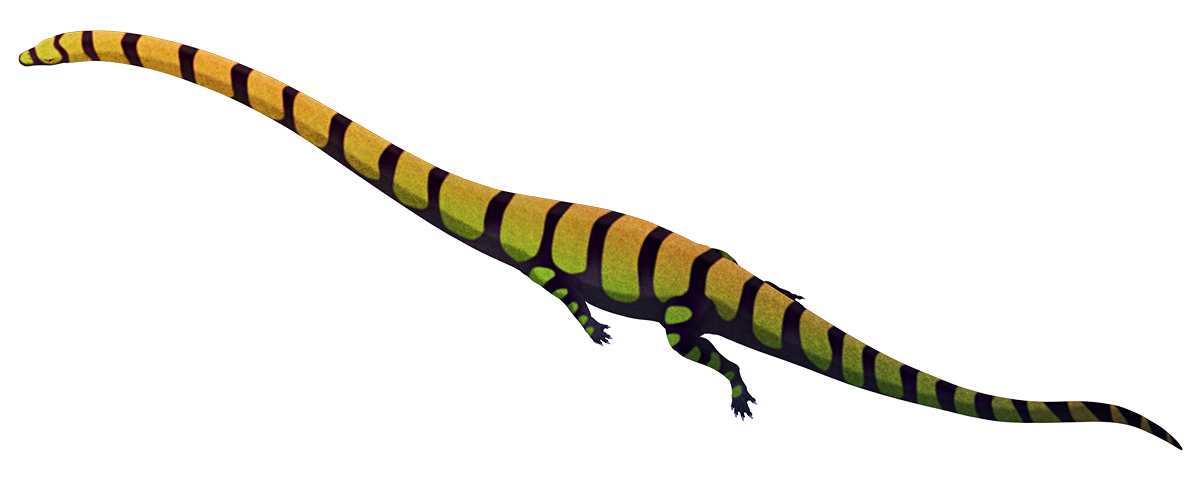
Tanystropheus is one of the classic Triassic weirdos, a bizarre archosauromorph easily recognizable with its ridiculously long neck.

Mainly known from mid-Triassic deposits on the Swiss-Italian border, dating around 247–235 million years ago, fossils of the species Tanystropheus longobardicus have been found in two different “morphs” – small forms less than 2m long (6’6″), and larger ones up to 6m long (19’8″).

For a long time the smaller fossils were thought to be juveniles, but while they certainly had juvenile-looking facial proportions they also had very different teeth compared to the larger forms. They had pointed teeth at the front of their mouths and multi-cusped cheek teeth further back, and the “adults” had jaws containing only the pointed teeth, suggesting very different diets and lifestyles between the two size classes.

Extreme changes in dentition and diet during maturation aren’t unheard of in fossil species, but something particularly odd was going on here. Larger forms over 2m long always had just the pointed teeth, and there were no signs of intermediate tooth arrangements at all.

And a new study using x-ray microtomography has given an answer: they weren’t actually the same species!

Turns out the smaller Tanystropheus longobardicus were all skeletally mature adults, already fully grown at that size. The larger ones were a completely separate species occupying a different ecological niche to their smaller relatives, and have been named Tanystropheus hydroides in reference to the mythical hydra.

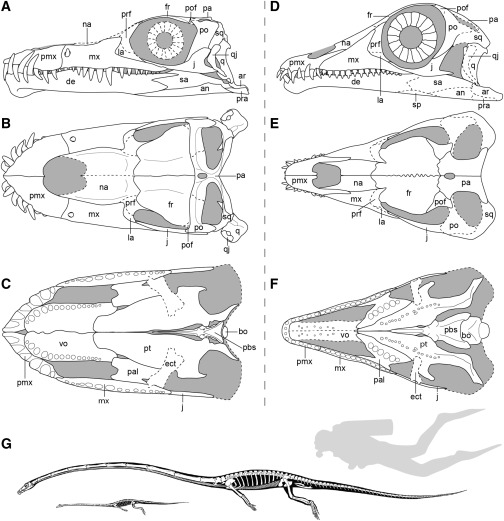
Comparison of the skulls of T. hydroides and T. longobardicus

[ From fig 3 in Spiekman, S. N. et al (2020). Aquatic Habits and Niche Partitioning in the Extraordinarily Long-Necked Triassic Reptile Tanystropheus. Current Biology. https://doi.org/10.1016/j.cub.2020.07.025 ]

While the exact lifestyle of Tanystropheus is an ongoing paleontological argument, Tanystropheus hydroides at least appears to have been much more on the aquatic side of things, with nostrils positioned on the top of its snout and its pointed teeth forming a “fish trap” in its jaws.

Stomach contents suggest it mainly ate fast-moving aquatic prey like fish and cephalopods, but its body wasn’t really adapted for strong swimming and so it couldn’t have been catching them via active pursuit. Instead it was probably an ambush predator hunting in a similar manner to some plesiosaurs, using its incredibly long neck and relatively small head to carefully approach prey species without the rest of its body startling them, and then catching them with fast snapping sideways lunges.

Eons Roundup 8

Once again it’s a PBS Eons commission roundup day!

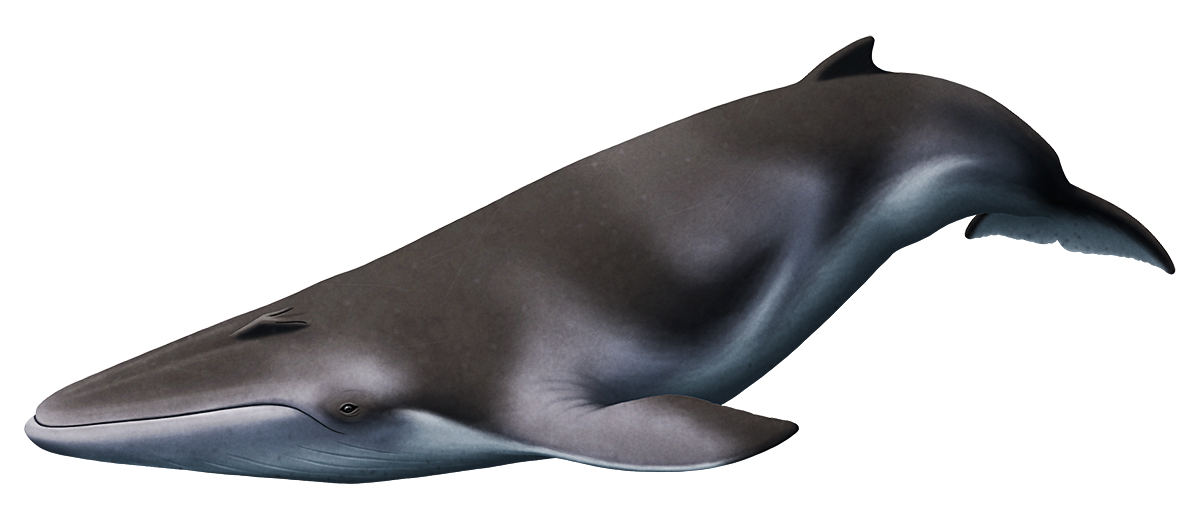
An unnamed Cerro Ballena rorqual whale and the long-necked seal Acrophoca, from “How the Andes Mountains Might Have Killed a Bunch of Whales”
https://www.youtube.com/watch?v=iNk6r5WljGc


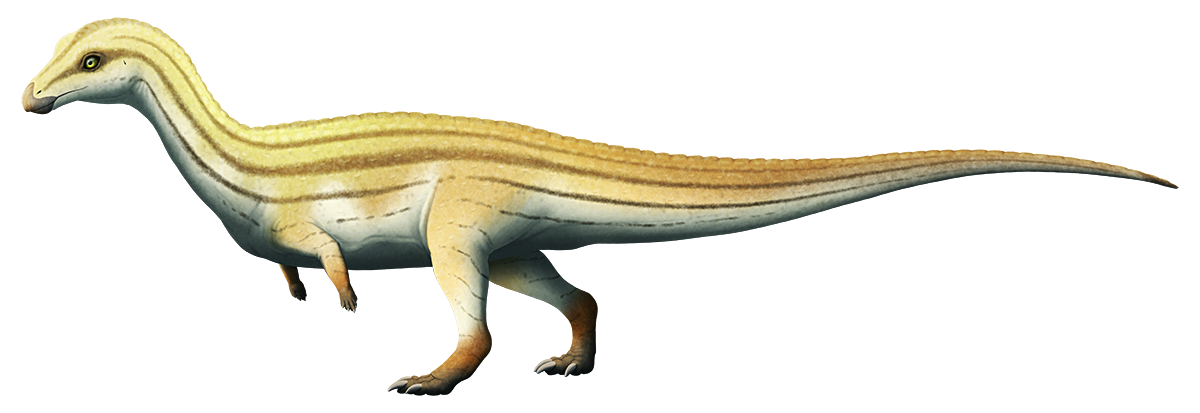
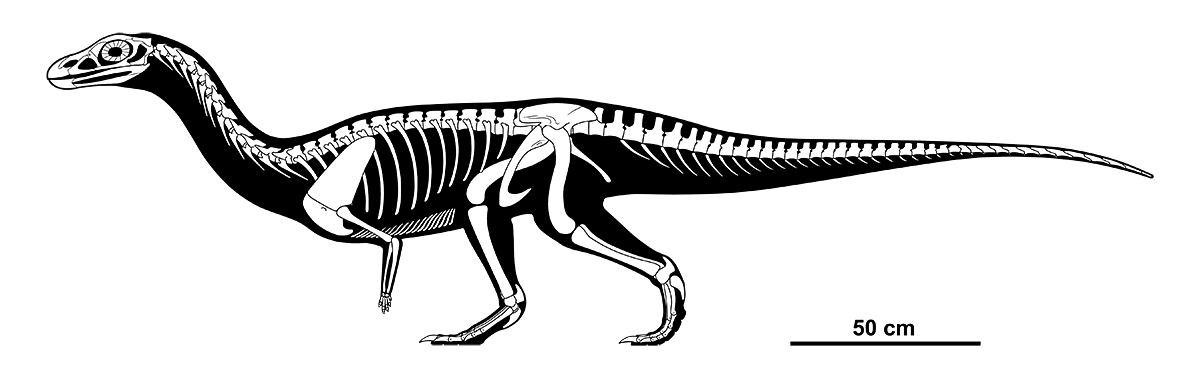
The poposauroid pseudosuchians Shuvosaurus (life restoration) and Effigia (skeletal) from “When Dinosaur Look-Alikes Ruled the Earth”
https://www.youtube.com/watch?v=QsmV34Co32c

Thylacares

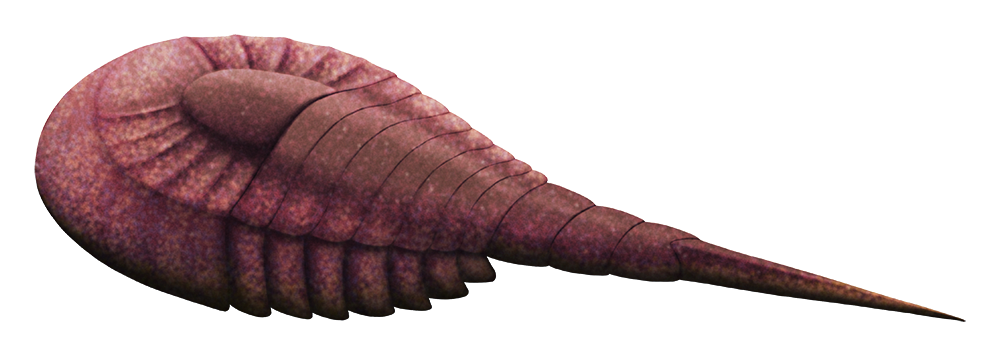
Thylacocephalans were a bizarre group of extinct marine arthropods that often looked like tiny alien creatures – and whose evolutionary relationships are still uncertain. Despite existing in oceans around the world for at least 350 million years, their fossil record is rather spotty and their internal anatomy is often poorly preserved, making it difficult to figure out anything more specific than “probably some sort of crustacean“.

Possible thylacocephalans are known from as far back as the Cambrian, but one of the earliest definite members of the group was Thylacares brandonensis.

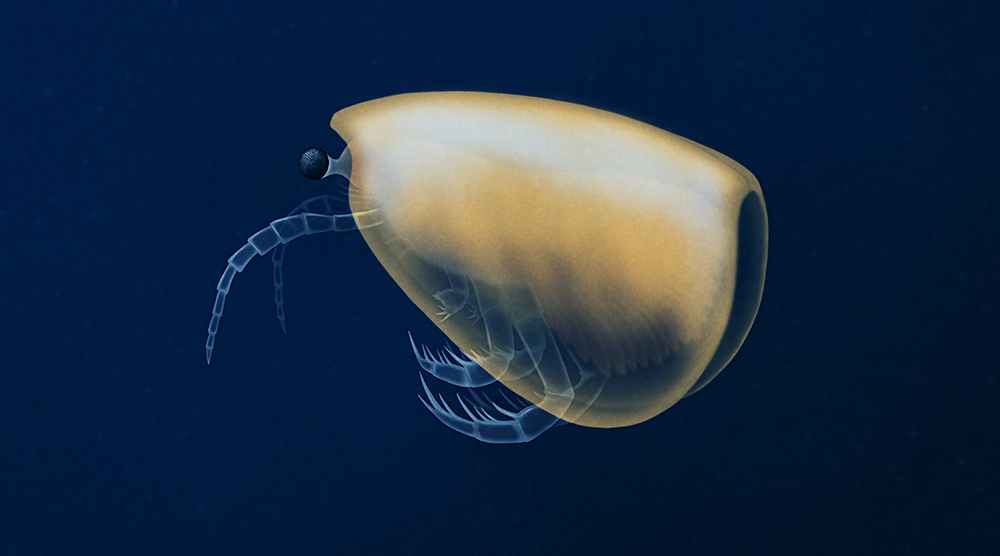
Living during the early Silurian, around 436 million years ago, in the region that today is part of Wisconsin, USA (found in the same fossil formation as last week’s Venustulus), this species measured up to about 7.5cm long (3″). Its body was enclosed by a large bivalved carapace, with protruding stalked eyes and what may have been a pair of antennae, along with smaller raptorial limbs than its later relatives.

While it was less specialized than other thylacocephalans it was probably a similar sort of swimming predator, catching prey with its spiny limbs.

Venustulus

The synziphosurines were ancient marine chelicerate arthropods that were traditionally thought to be early representatives of the horseshoe crab lineage. But more recent studies have shown them to occupy a slightly more basal position on the chelicerate evolutionary tree, instead being related to the common ancestor of sea scorpions, horseshoe crabs, and arachnids.

(Also horseshoe crabs might actually be part of the arachnids, closely related to ricinuleids!)

Venustulus waukeshaensis was one of the earliest known synziphosurines, living in what is now Wisconsin, USA during the early Silurian, about 436 million years ago. It grew to around 8cm long (~3.2″) and had six pairs of appendages on the underside of its body, with the first pair modified into chelicerae and the rest being walking legs.

It also appears to have been blind, lacking any evidence of eyes despite its fossils being fairly well-preserved – suggesting it lived in conditions where vision wasn’t much use, such as dark murky water or burrowing around in seafloor sediment.

Tridensaspis

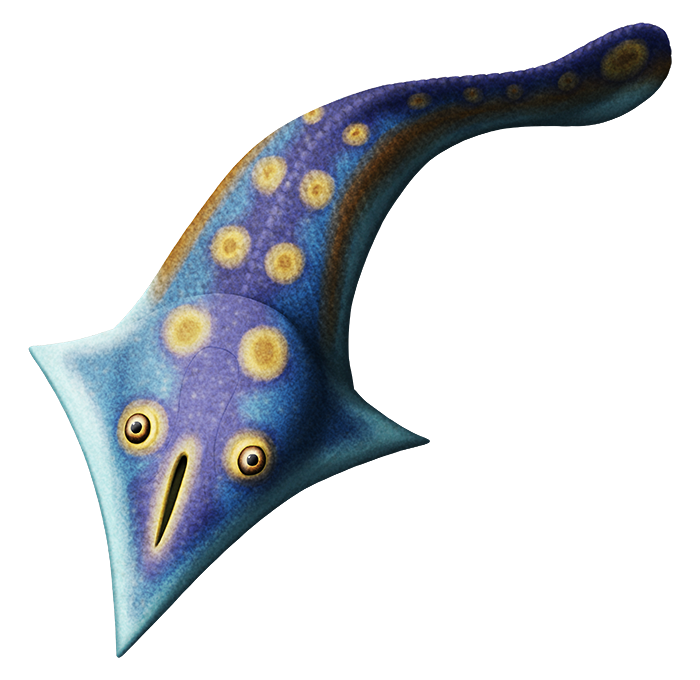
Although the only surviving agnathans in modern times are the lampreys and hagfish, back in the early-to-mid-Paleozoic these “jawless fish” were much more diverse. Many of them were heavily armored with large bony head shields – a feature eventually inherited by early jawed fish like the placoderms – which protected their heads, gills, and some of their internal organs.

And some of the oddest-looking of these armored agnathans was a lineage known as the galeaspids.

Known from southern China, Tibet, and Vietnam, these small fish were bottom-dwellers living in the shallow waters of lagoons and river deltas. Their most distinctive feature was a single large opening on the upper side of their head shields – and despite looking like a particularly goofy mouth this hole was actually a nostril, used for both a sense of smell and as a water intake for their gills. The actual mouth and the gill openings were on the underside of the head.

While early galeaspids had rounded head shields, later forms developed some more unusual shapes, with long spines sticking out to each side and pointed or spatula-shaped snouts.

Tridensaspis magnoculus here lived during the early Devonian in Southwest China, about 407-393 million years ago, and was only about 5cm long (2″). It wasn’t the most extremely pointy of its kind, but still had a weird kite-shaped head shield, a long vertical slit-shaped nostril opening, and rather large upwards-facing eyes.

Lethiscus

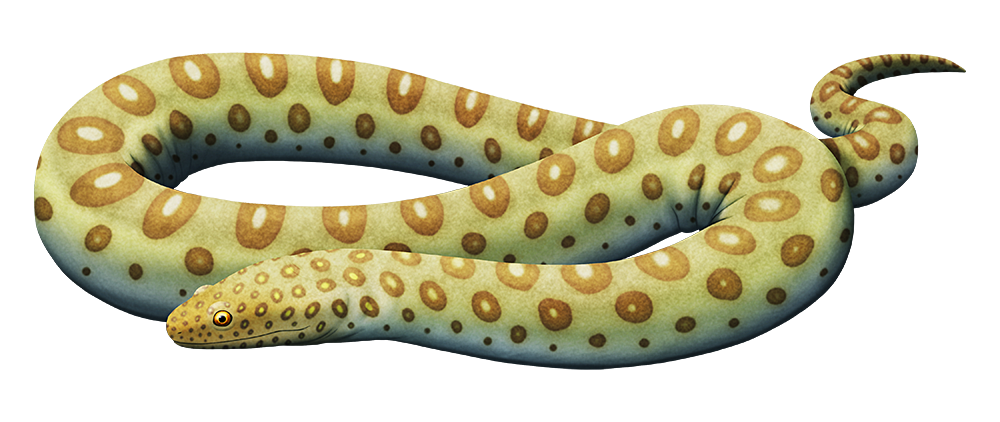
Ever since the earliest tetrapods crawled onto land and developed limbs and digits, some lineages have just… decided the whole “legs” thing was overrated and lost them entirely.

And the earliest known group to do this were the aïstopods. These highly elongated amphibian-like animals had specialized lightly-built skulls with large jaw muscles, and they may have filled a similar ecological niche to modern snakes, hunting small terrestrial invertebrates.

Lethiscus stocki was one of the first members of this snake-like group, living in Scotland during the Early Carboniferous about 340 million years ago. Growing to at least 50cm long (~20″), it was already a very specialized animal despite its basal position among the aïstopods, with eyes set far forward on its face and no trace of vestigial limbs.

CT scans of its skull have shown some surprisingly fish-like anatomy, especially in its braincase, features that were lost very early in tetrapod evolution. This suggests that aïstopods weren’t part of the lepospondyl amphibians like previously thought, but actually originated much much earlier in the tetrapod evolutionary tree – potentially placing them somewhere among the “fishapods” between Ichthyostega and Crassigyrinus.