Cambrian Explosion #32: Rise of the Arthropods

The world of the Cambrian Period was a strange combination of both familiar and alien. The land would have seemed rather barren, populated mainly by microbes and algae, yet the oceans teemed with creatures already identifiable as sponges, comb jellies, jellyfish, acorn worms, vertebrates, echinoderms, arrow worms, annelids, molluscs, and brachiopods – small and primitive-looking in some cases but still recognizable enough.

But at the same time there were “weird wonders” everywhere, things much harder to identify, with shapes so bizarre that their initial discovery was met with laughter.

Animal life was exploring so many different possibilities for body plans and ecologies, and one lineage in particular dominated this explosion of evolutionary experimentation: the arthropods.

Arthropods are represented today by the chelicerates (sea spiders, horseshoe crabs, and arachnids), myriapods (millipedes and centipedes), crustaceans, and insects, and together these groups make up over 80% of all known living animal species and are vital parts of almost every ecosystem on the planet.

Continue reading “Cambrian Explosion #32: Rise of the Arthropods”

Spectember 2021 – Reedstilt Redesign

(This was originally supposed to be a final-day-of-#Spectember bonus post, but it got much longer than I expected so it’s a few days late.)

To finish off this year’s diversion into speculative evolution, instead of pulling from my still-rather-long list of unused submissions I’m doing something a little different – trying to give an idea of how I go through the actual process of designing a speculative species.

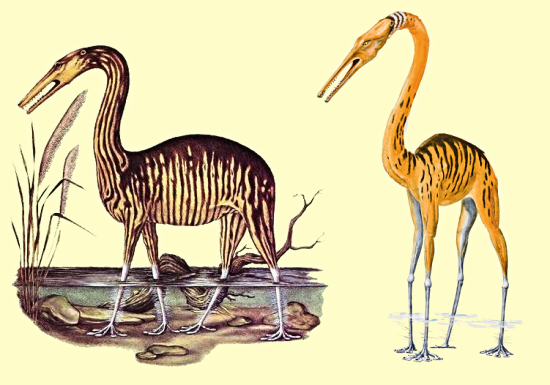
And for today’s example I’m going to do a “redesign” of sorts for a classic Dougal Dixon After Man creature: the reedstilt.

For several reasons:

  • It was on the cover of the old edition of After Man I first discovered as a kid in the local library, it immediately caught my attention, and as a result it’s always been one of my favorite species from the book.
  • But some of its anatomy doesn’t really hold up.
  • I really really Do Not Like the “official” redesign that replaced the original art in the 2018 reprint. It’s shrinkwrapped.
  • I just think it’s neat.
Reedstilt in both original flavor and 2018 revamp style.
Continue reading “Spectember 2021 – Reedstilt Redesign”

Spectember 2021 – Slime Snouters & Megaphone Birds

Today’s #Spectember concept is brought to you by @thecreaturecodex , who wanted to see a depiction of something from The Snouters: Form and Life of the Rhinogrades:

Continue reading “Spectember 2021 – Slime Snouters & Megaphone Birds”

Spectember 2021 – Quadrupedal Pachycephalosaurs

Today’s #Spectember concept comes from an anonymous submitter:

Continue reading “Spectember 2021 – Quadrupedal Pachycephalosaurs”

Spectember 2021 – Marsupial Predators

It’s September, the Cambrian series has been delayed until later this year, so instead let’s get speculative – it’s time for the return of #Spectember! I can’t manage daily content this time around, but I still have plenty of submitted concepts left over from last time.

So let’s get started with some marsupials suggested by someone crediting themselves only as Bruno Drundridge:

Continue reading “Spectember 2021 – Marsupial Predators”

Cambrian Explosion Month #31: Phylum Brachiopoda

While modern brachiopods superficially resemble clams, they’re not actually very closely related to each other. Clams are bivalve molluscs, related to snails and squid, while brachiopods are lophophorates related to bryozoans and horseshoe worms.

Their two shell valves are also arranged very differently – while bivalve shells originate from the left and right sides of their bodies, brachiopods grow theirs on the top and bottom.

They first appear in the fossil record in the early Cambrian, about 530 million years ago, but they may have actually diverged from a tommotiid-like ancestor as far back as the late Ediacaran. Only around 300 species survive today, but during the Paleozoic they were some of the most abundant filter-feeding and reef-building animals with tens of thousands of fossil species known. Different species tended to have strict habitat and temperature preferences, and so their fossils are also useful indicators of how ancient climates changed over time.

Continue reading “Cambrian Explosion Month #31: Phylum Brachiopoda”

Cambrian Explosion Month #30: Phylum(?) Hyolitha

Hyoliths were a group of small shelled animals that first appeared in the fossil record just after the start of the Cambrian, about 536 million years ago. They had conical calcareous shells with a lid-like operculum, and some species also featured long curling spines that made them look like ice-cream cones with mammoth tusks.

They were so odd that for a long time their evolutionary relationships were unknown. They were generally accepted to be lophotrochozoans, but some studies considered them to be part of their own unique phylum while others tended to place them as being closely related to molluscs.

It wasn’t until 2017 that well-preserved soft tissue fossils revealed a tentacled feeding structure that resembled a lophophore – and hyoliths finally found their place in the lophotrochozoan family tree as close relatives of brachiopods and horseshoe worms, possibly even being a stem lineage within the brachiopod phylum.

However, this isn’t universally accepted and some recent studies continue to dispute it. The feeding organ of a different hyolith fossil has been interpreted as not being a lophophore, classifying the group as an early lophotrochozoan stem lineage, while an analysis of shell microstructure has instead suggested realigning them with molluscs. I’m grouping them with brachiopods here, but future discoveries might still make this obsolete.

Continue reading “Cambrian Explosion Month #30: Phylum(?) Hyolitha”

Cambrian Explosion Month #29: Phylum Phoronida & Early Brachiozoans

The last group we’re looking at this month are the brachiozoans, a lineage that includes modern horseshoe worms and brachiopods along with the extinct hyoliths.

Horseshoe worms, or phoronids, are represented by about 15 living species and are usually considered to be their own phylum, but some analyses classify them as a sub-group of brachiopods instead. Like other lophophorates they have a “crown” of filter-feeding tentacles around their mouths, and similarly to some bryozoans they build protective chitinous tubes around their bodies.

There are no definite body fossils of phoronids at all, although there are a few possible trace fossils of their tubes and the enigmatic fossil hederelloids might be related to them.

But some Cambrian fossils might give us a hint about their evolutionary history.

Continue reading “Cambrian Explosion Month #29: Phylum Phoronida & Early Brachiozoans”

Cambrian Explosion Month #28: Phylum …Entoprocta?

The only Cambrian fossil species that seems to be closely related to the entoprocts is Cotyledion, but there are several other enigmatic animals that have also been tentatively allied with the group as members of early stem lineages.

Continue reading “Cambrian Explosion Month #28: Phylum …Entoprocta?”