
Jamaican flightless ibis

The Jamaican ibis (Xenicibis xympithecus) was a bird unique to the Caribbean island of Jamaica. One of only two known types of completely flightless ibises, it was similar in size to a chicken – probably around 75cm long (2′5″) and weighing 2kg (4.4 lbs).

It had some incredibly unusual wing anatomy, with strengthened bones, a proportionally short forearm, and the “hand” section modified into a thick club-like shape. Some remains show evidence of blunt-force injuries, suggesting these birds fought each other by swinging around their heavy wings like baseball bats.

Its bones have found in several cave deposits which are difficult to accurately date, but are likely to be somewhere between 10,000 and 2,200 years old. It’s unclear whether Xenicibis was still around when humans first colonized the island, but if so it was probably driven to extinction soon after.
Turtle-jawed moa-nalo

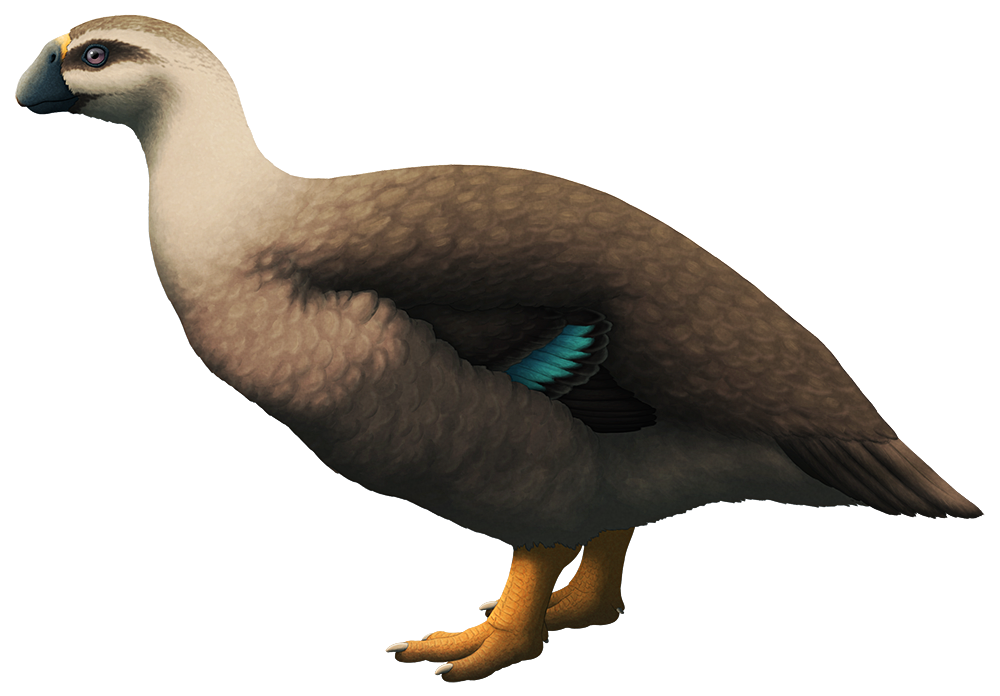
The turtle-jawed moa-nalo (Chelychelynechen quassus) was a large flightless goose-like duck from the Hawaiian island of Kaua‘i. About 90cm tall (3′) and weighing around 7kg (15lbs), these birds and their relatives were descended from dabbling ducks and existed on most of the larger Hawaiian islands for the last 3 million years or so – before going extinct around 1000 years ago following the arrival of Polynesian settlers.

Chelychelynechen had an unusually-shaped bill, tall and broad with vertically-oriented nostrils, convergently similar to the beak of a turtle. It would have occupied the same sort of ecological niche as giant tortoises on other islands, filling the role of large herbivore in the absence of mammals.

Bathornis

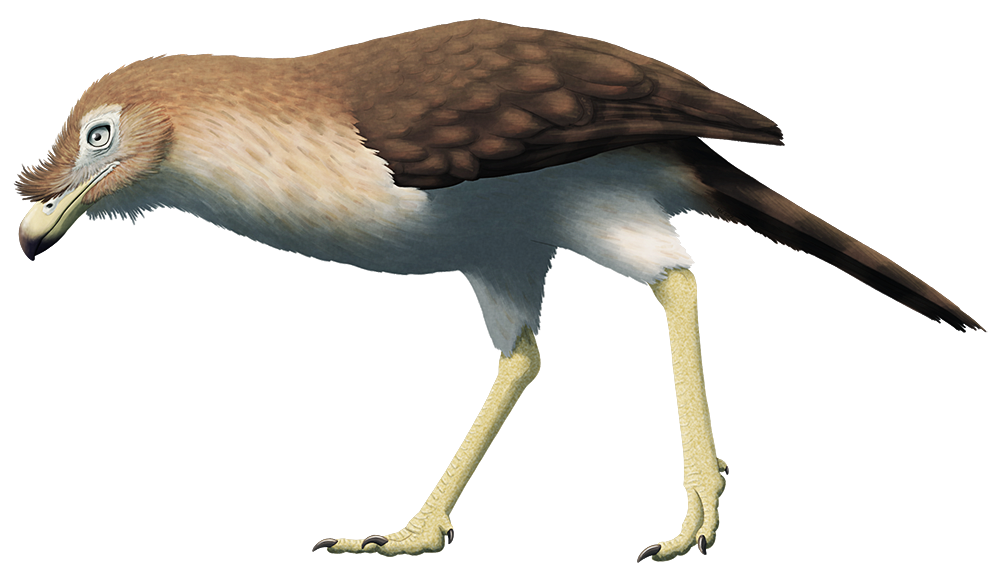
Bathornis grallator, a flightless bird about 75cm tall (2′6″) from the Late Eocene and Early Oligocene of Midwestern USA (~37-34 mya).

It was originally mistaken for a long-legged vulture (under the name Neocathartes) when first discovered in the 1940s, but later studies have shown it was actually one of the smaller members of the bathornithids – close cousins of the more well-known South American “terror birds”, successfully occupying terrestrial predator niches alongside large carnivorous mammals.