

Transcript for the text on the image under the cut:
Continue reading “Spectember #09: Wading Hesperornitheans”Category: science illustration
Spectember #08: Giant Cavy-Ungulates
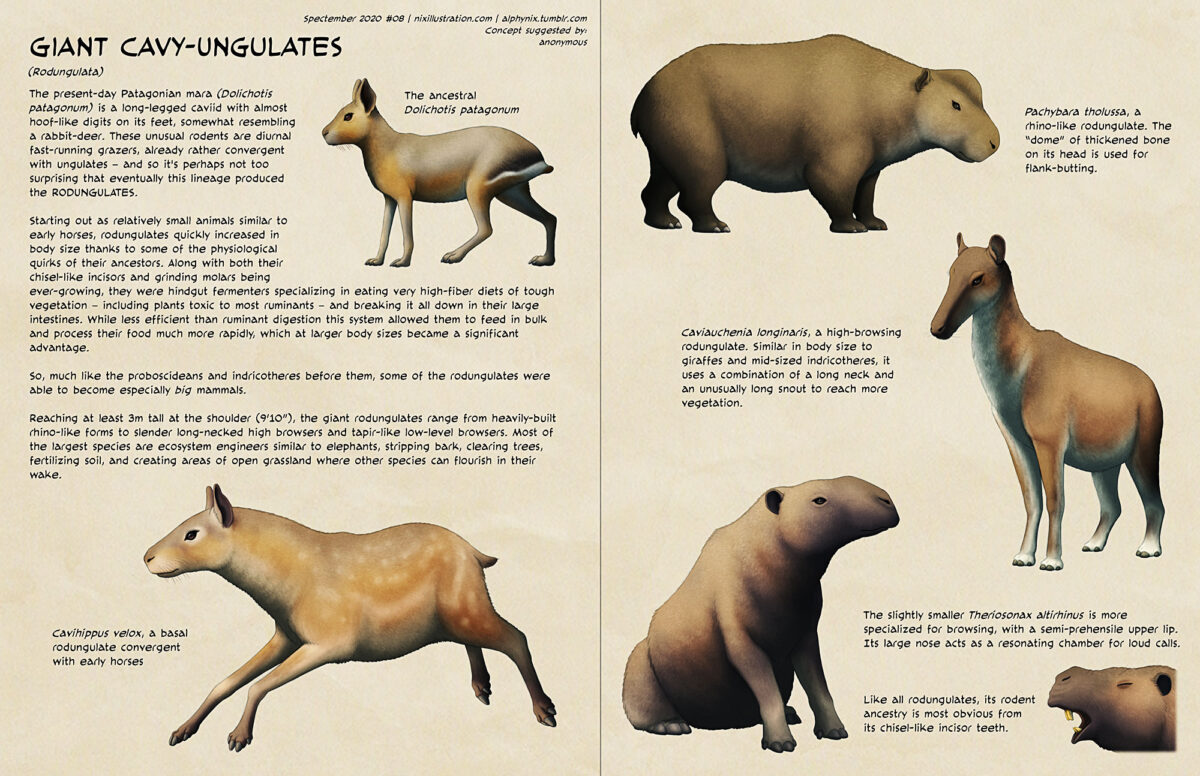
Transcript for the text on the image under the cut:
Continue reading “Spectember #08: Giant Cavy-Ungulates”Spectember #07: Arboreal Crawfish
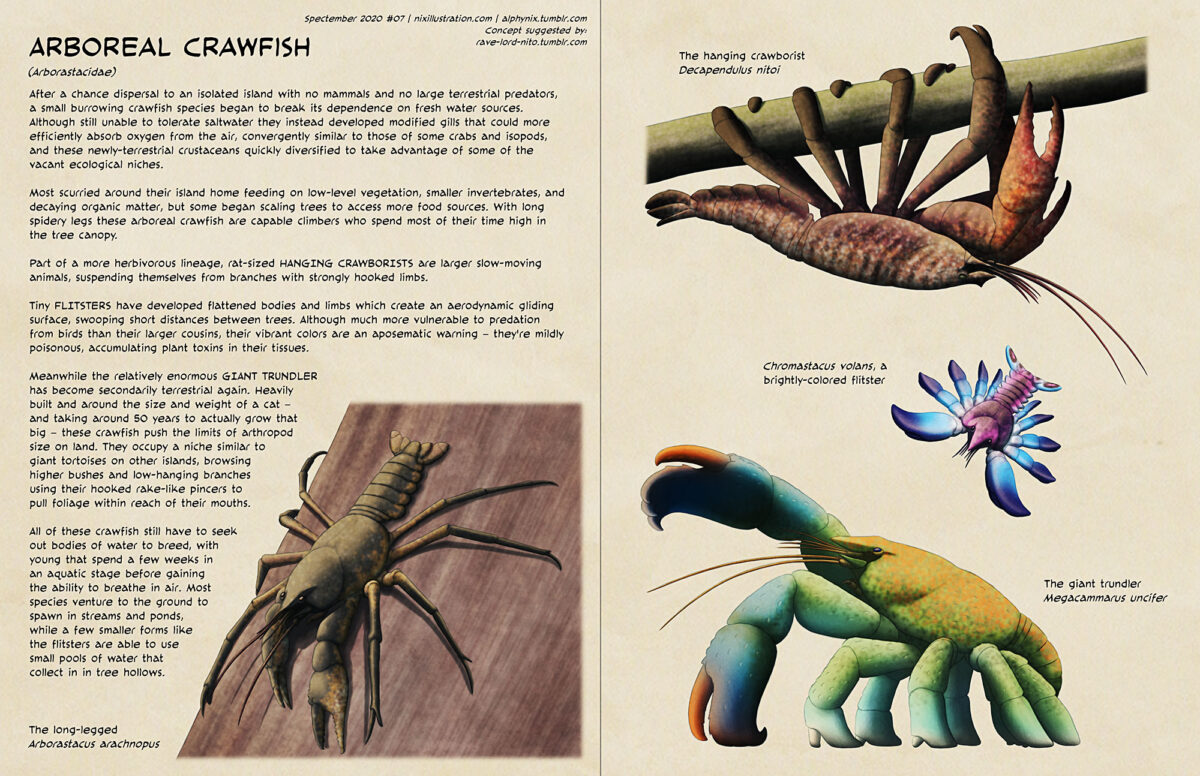
Transcript for the text on the image under the cut:
Continue reading “Spectember #07: Arboreal Crawfish”Spectember #06: Aquatic Afrosoricidans
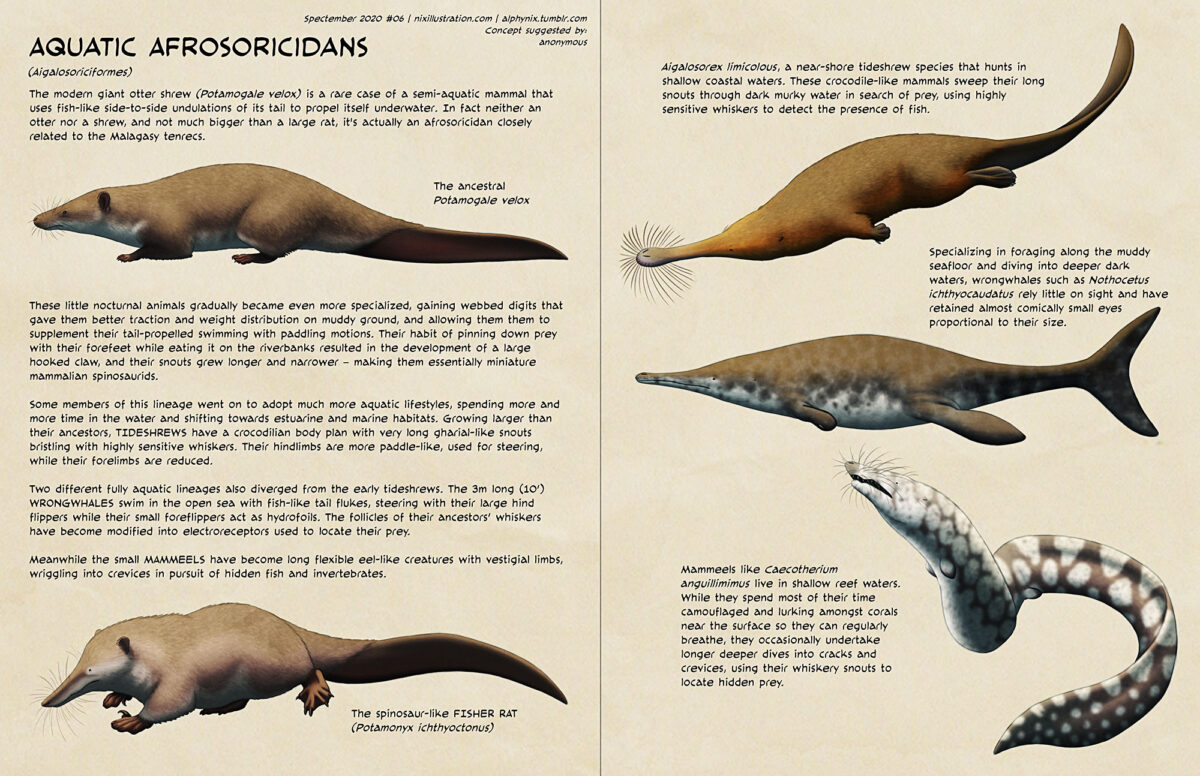
(The submitted prompt here was “some kind of fully aquatic non cetacean or dugong mammal with a different bodyplan”.)
Transcript for the text on the image under the cut:
Continue reading “Spectember #06: Aquatic Afrosoricidans”Spectember #05: Frilled Fliers
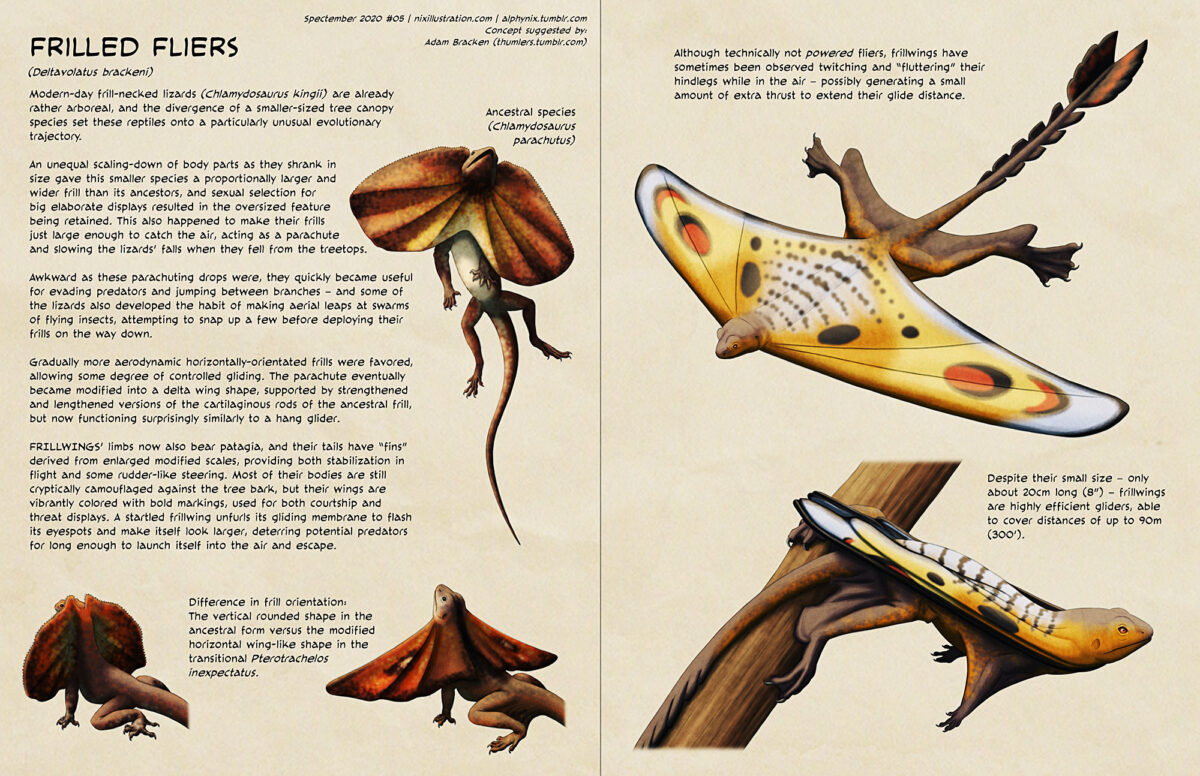
Transcript for the text on the image under the cut:
Continue reading “Spectember #05: Frilled Fliers”Spectember #04: Carnivorous Ceratopsians
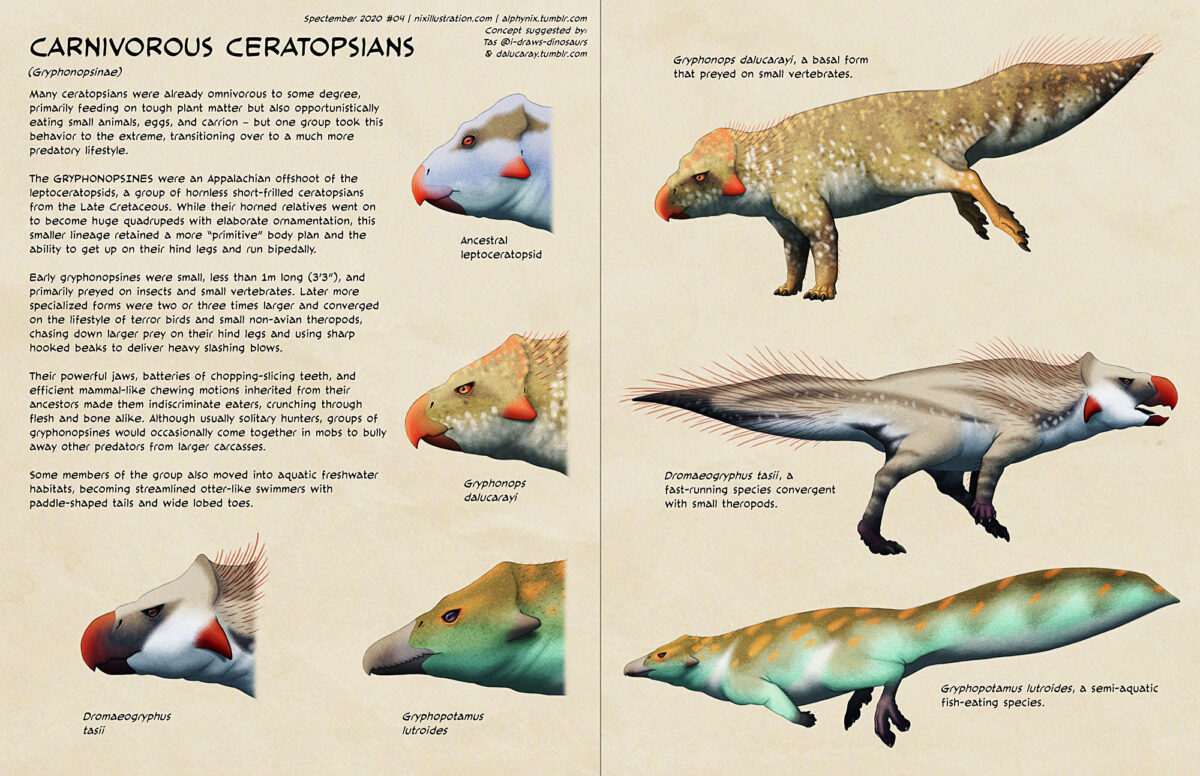
Transcript for the text on the image under the cut:
Continue reading “Spectember #04: Carnivorous Ceratopsians”Spectember #03: Plunge-Diving Bats
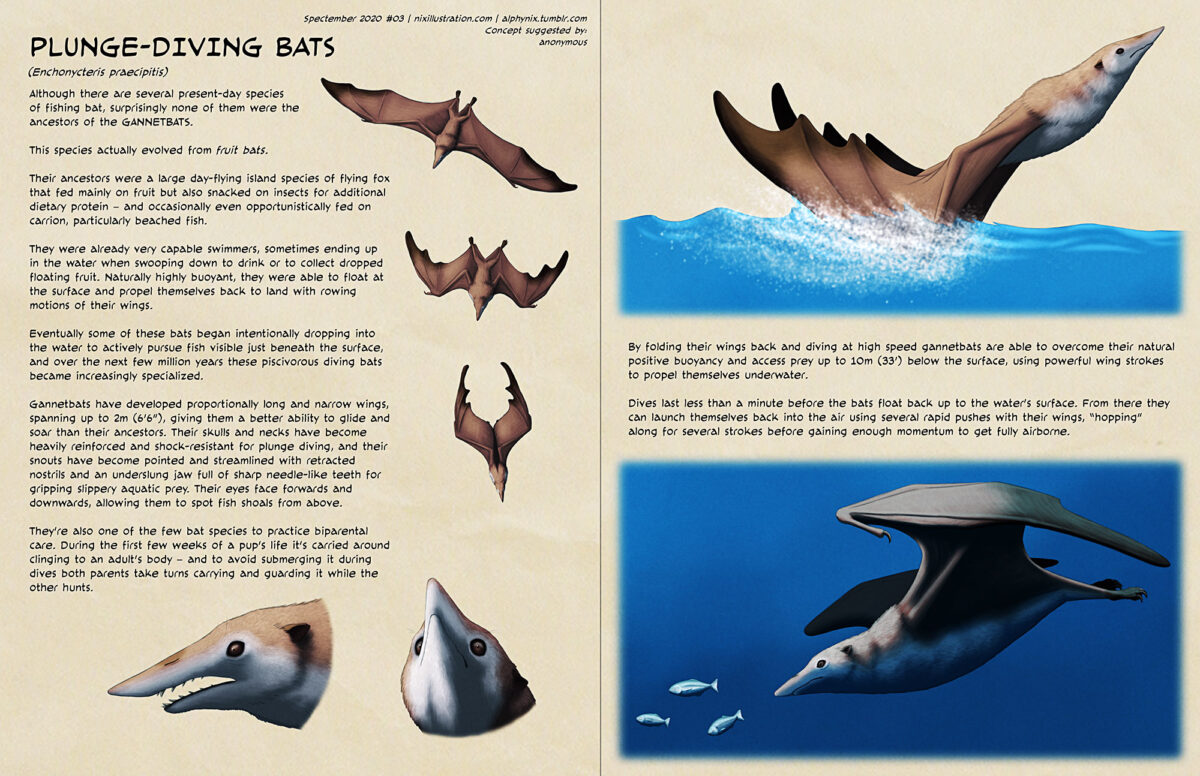
Transcript for the text on the image under the cut:
Continue reading “Spectember #03: Plunge-Diving Bats”Spectember #02: Marine Spinosaurs
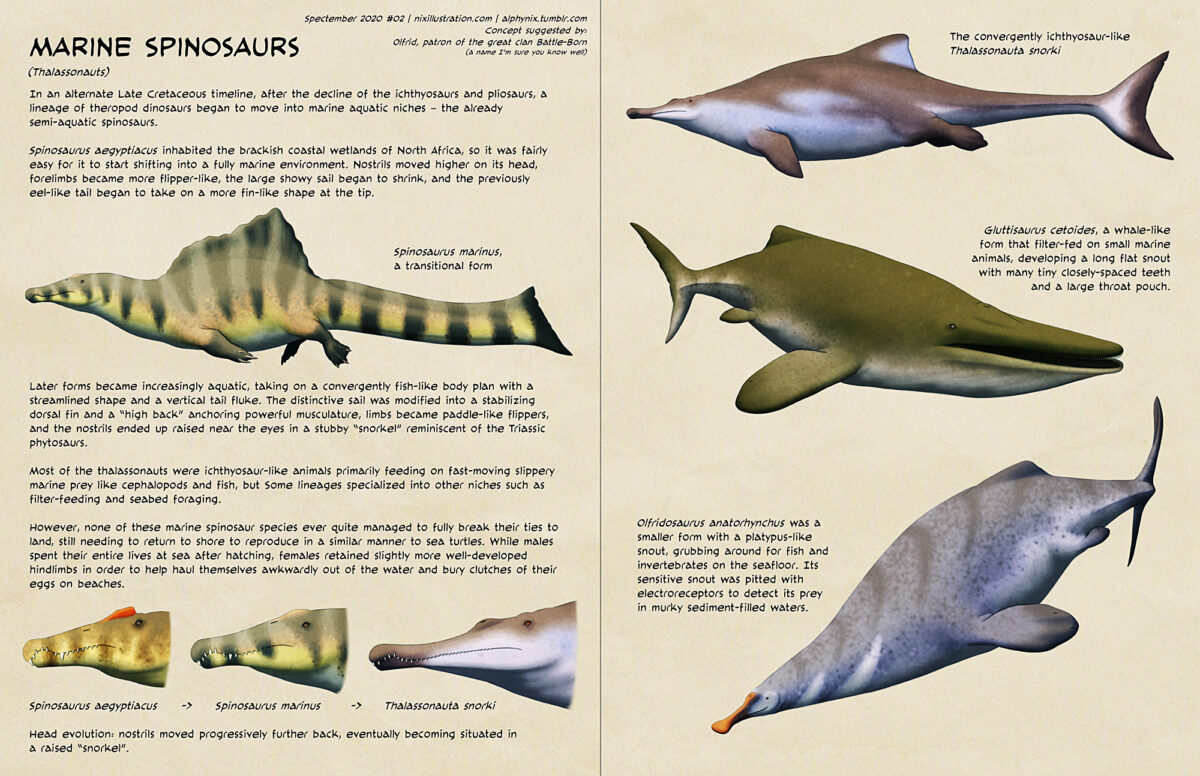
Transcript for the text on the image under the cut:
Continue reading “Spectember #02: Marine Spinosaurs”Spectember #01: Land Dolphins
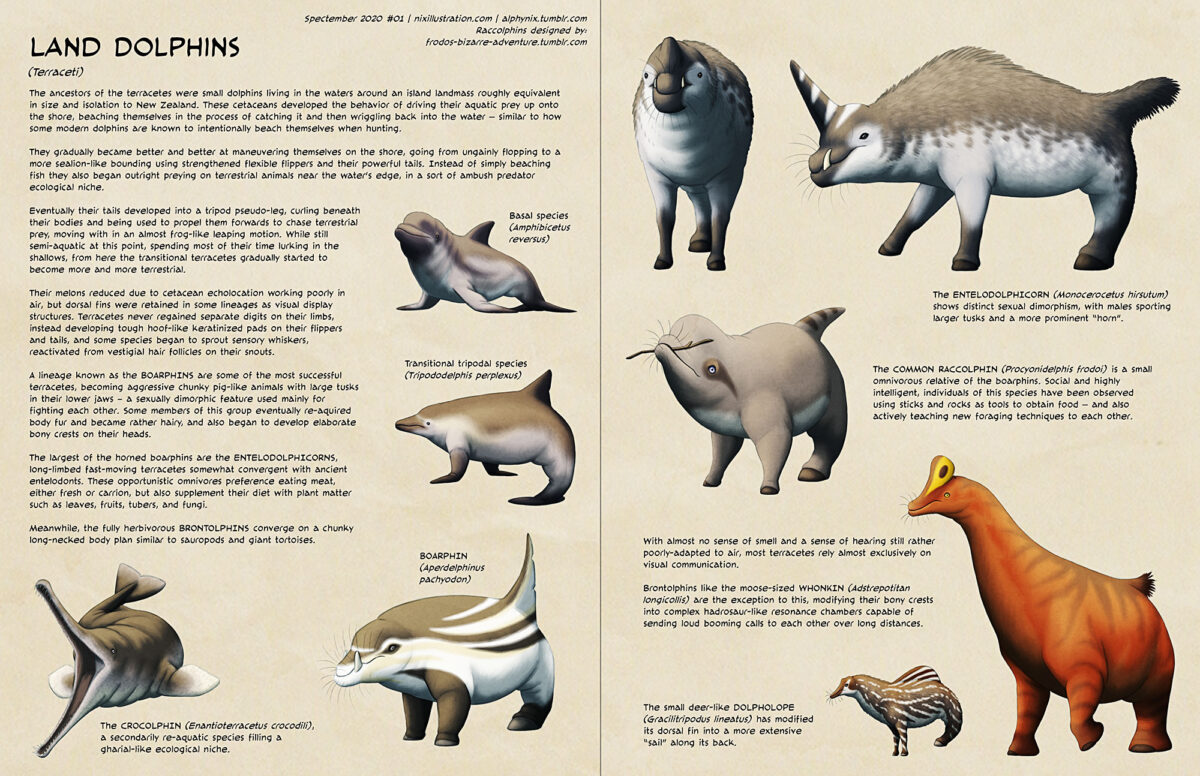
Welcome to SPECTEMBER!
This month we’ll be taking a break from real creatures to instead explore some “what if” scenarios for the evolution of life.
If you’re unfamiliar with speculative evolution, it’s basically a biology-focused type of science fiction exploring hypothetical evolutionary paths, whether as alternate histories for the ancient past, possible far future descendants of modern species, or even completely alien life on other worlds. The concept has been around for well over a century at this point, but Dougal Dixon’s 1981 book After Man was probably the biggest influence.
All this month, on weekdays I’ll be posting my own work based on the suggestions from earlier in the year, and on weekends I’ll highlight some of the history of the spec evo genre.
So let’s have some fun – and if you want to join in, #spectember is an open concept and anyone is welcome to take part!
Transcript for the text on the image under the cut:
Continue reading “Spectember #01: Land Dolphins”Thylacares
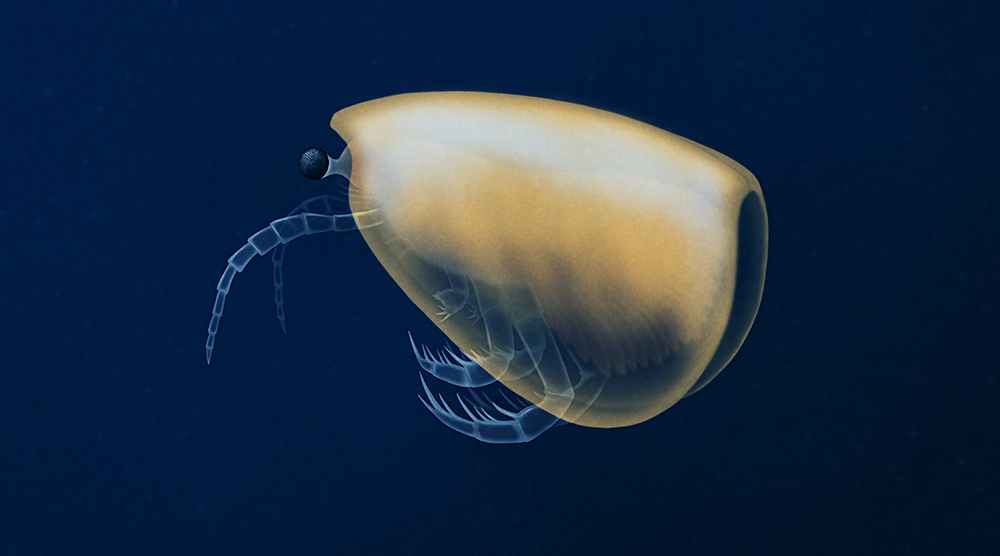
Thylacocephalans were a bizarre group of extinct marine arthropods that often looked like tiny alien creatures – and whose evolutionary relationships are still uncertain. Despite existing in oceans around the world for at least 350 million years, their fossil record is rather spotty and their internal anatomy is often poorly preserved, making it difficult to figure out anything more specific than “probably some sort of crustacean“.
Possible thylacocephalans are known from as far back as the Cambrian, but one of the earliest definite members of the group was Thylacares brandonensis.
Living during the early Silurian, around 436 million years ago, in the region that today is part of Wisconsin, USA (found in the same fossil formation as last week’s Venustulus), this species measured up to about 7.5cm long (3″). Its body was enclosed by a large bivalved carapace, with protruding stalked eyes and what may have been a pair of antennae, along with smaller raptorial limbs than its later relatives.
While it was less specialized than other thylacocephalans it was probably a similar sort of swimming predator, catching prey with its spiny limbs.