
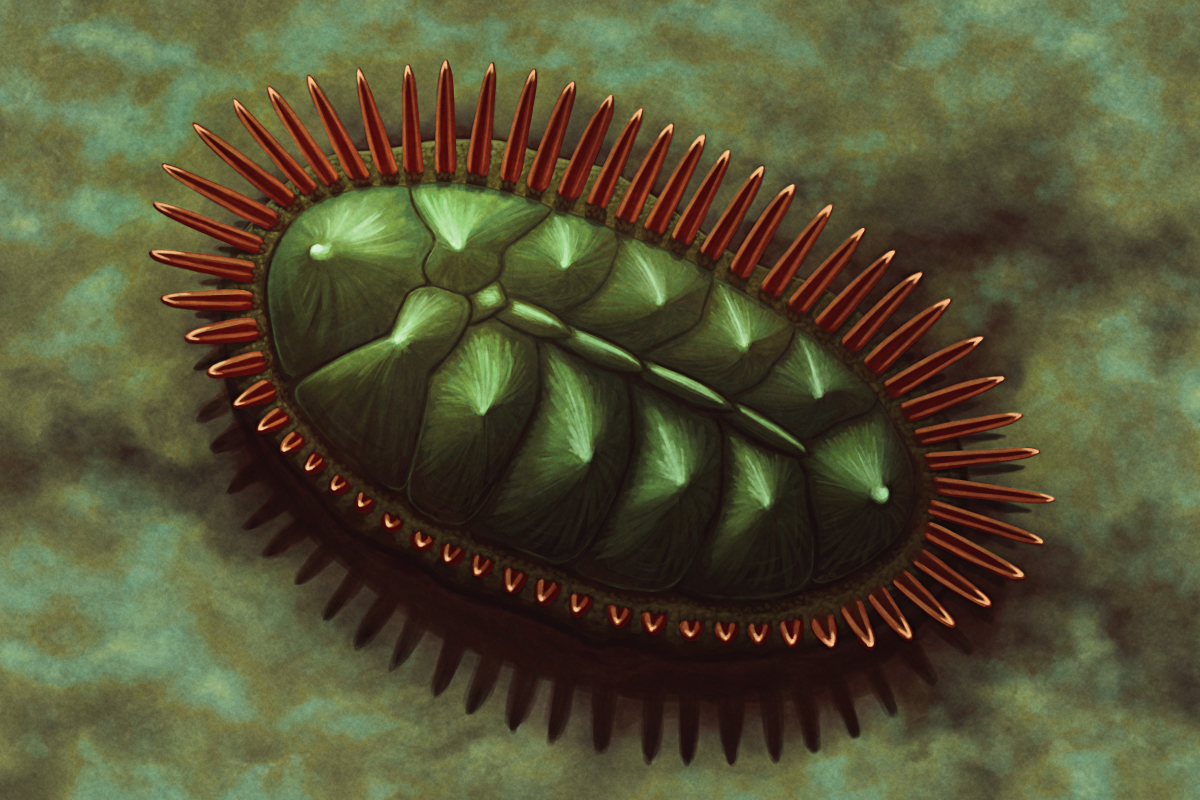
Polysacos vickersianum was a marine mollusc that lived during the early Carboniferous, around 345 million years ago, in what is now Indiana, USA.
It was part of a group known as multiplacophorans, which are usually considered to be close relatives of modern chitons — but may instead represent a much earlier branch of the aculiferan lineage that convergently evolved chiton-like anatomical features.
About 2.5cm long (~1″), Polysacos had seventeen shell plates surrounded by a fringe of long spines with concave upper surfaces. Like the modern chitons it resembled it was probably a grazer that scraped up algae from hard rocky surfaces.
Continue reading “Polysacos”