Clausocaris

While this might look like a sci-fi alien design, it was actually a very real Earth animal!

This strange-looking creature was Clausocaris lithographica, a member of a group of unique marine arthropods known as thylacocephalans. Only about 3.5cm long (1.4″), it lived in a shallow tropical lagoon environment during the Late Jurassic of Germany, about 150-145 million years ago.

Like most other thylacocephalans it had a narrow flattened shield-like carapace, three pairs of large grasping limbs, and a battery of swimming appendages further back – along with absolutely enormous bulbous eyes. Based on this anatomy it would have been a highly visual hunter, using its huge eyes to locate prey items and then snagging them with its long spiny limbs.

And we’re not even entirely sure what type of arthropods thylacocephalans actually were. They’re generally thought to be some sort of crustacean, but their highly modified anatomy makes linking up their exact evolutionary affinities very difficult. Whatever they were, they must have been incredibly successful as a group because they first appeared in the early Cambrian (~518 mya) and survived all the way into the Late Cretaceous (~94 mya).
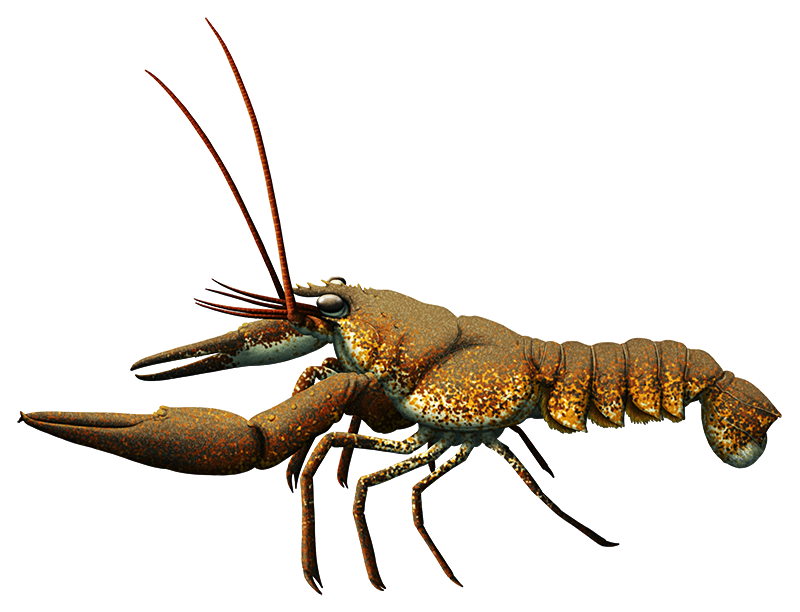
Almost-Living Fossils Month #08 – A Lot Of Lobsters

Hoploparia was a type of clawed lobster that first appeared in the fossil record in the Early Cretaceous about 140 million years ago. Many many different species within this genus have been found all over the world – over 100 of them have been described! – with quite a lot of anatomical diversity between them, showing that these lobsters were very good at adapting to a wide range of habitats and climates.

Although the vast majority of Hoploparia species lived just in the Cretaceous period, a small number of them did survive the end-Cretaceous mass extinction 66 million years ago. Hoploparia stokesi here was one of them, known from both the Late Cretaceous and Early Paleocene of Antarctica (~70-61 mya) – and was actually one of the first fossils ever described from the continent.

Specimens of this species are usually about 13cm long (5″), and show an evolutionary shift over time, developing much stronger claws and jaws, suggesting they were adapting their diet towards hard-shelled prey.

Various species of Hoploparia persisted on in North America, Europe, and Antarctica for the first half of the Cenozoic, but they never recovered to anywhere close to their Cretaceous levels of diversity. By the Early Miocene (~23-16 mya) there was just one known species left hanging on in Antarctica, and then they were gone.

(However, some modern lobster genera may in fact have originated from somewhere within the huge Hoploparia lineage back in the Cretaceous, so they might at least still have some close living relatives!)