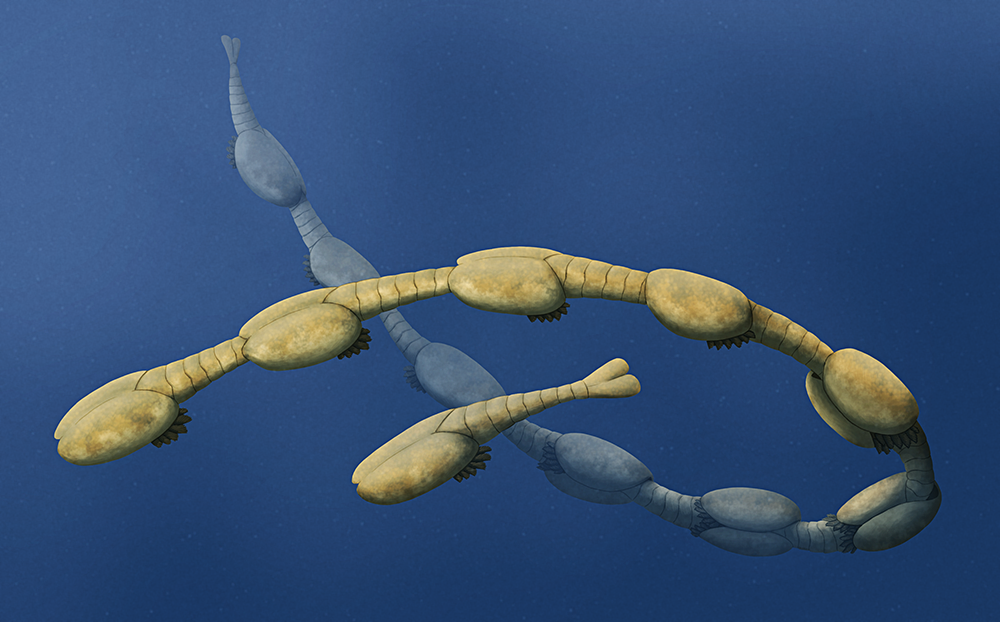
In the final stretch of this month we finally come to the last of the major groupings of euarthropods: the mandibulates, which include the modern myriapods (centipedes and millipedes) and pancrustaceans (crustaceans and insects), along with several extinct groups.
Characterized by possessing mandible mouthparts, mandibulates are by far the largest lineage of arthropods and the most successful group of animals on Earth. Over a million living species are known (most of of which are insects, particularly beetles) and an estimated six-to-ten times more than that are probably still undiscovered.
Mandibulates probably diverged from their chelicerate cousins around the start of the Cambrian 540 million years ago. If the trilobites and their artiopodan relatives were early or stem-mandibulates then the earliest known fossils of the group are about 521 million years old, otherwise the first records come from a few million years later in the Chinese Chengjiang fossil deposits (~518 million years ago).
Continue reading “Cambrian Explosion #55: Fuxianhuiida”