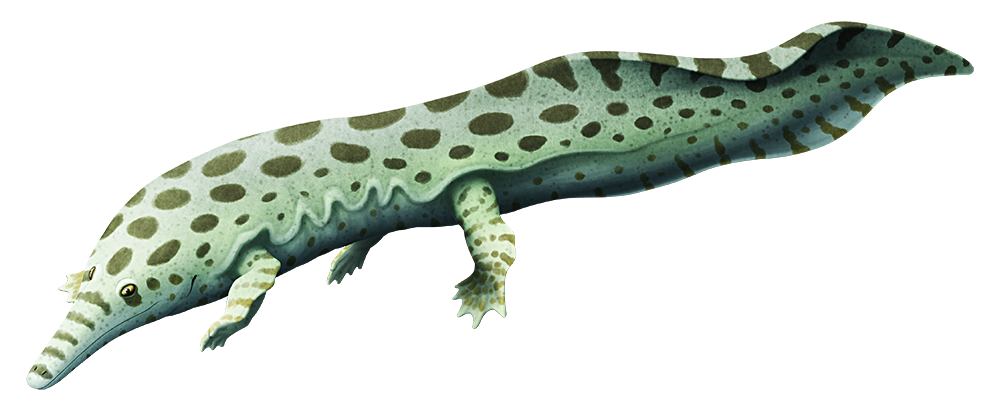
Archegosaurus

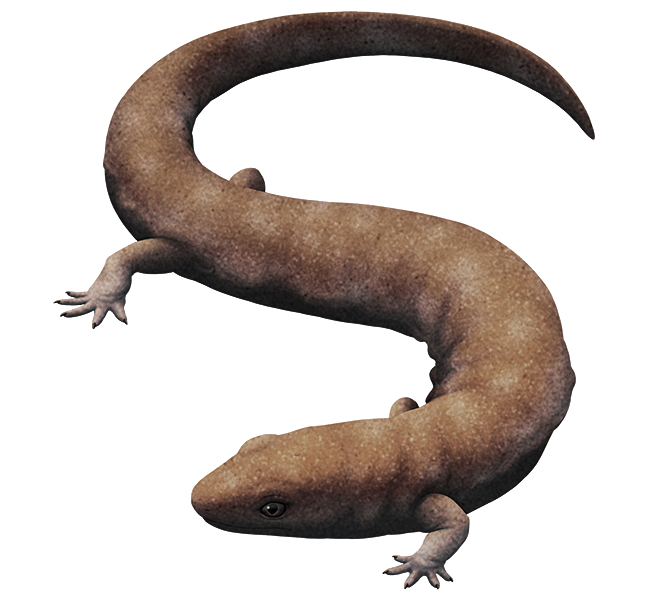
There’s something fishy about Archegosaurus decheni.

Living in the Czech Republic and Germany during the Early Permian, about 299-295 million years ago, this temnospondyl amphibian was a tropical freshwater predator occupying a similar ecological niche to modern crocodilians.

Hundreds of fossils have been found of this species, from 15cm long larvae (6″) all the way up to 1.5m long adults (5′), so we’ve got a very good idea of its life history and anatomy. Larvae had external gills and shorter blunter skulls, and as they matured they developed internal gills and lungs, and their snouts elongated into more crocodile-like shapes. Every life stage was fully aquatic, with very limited ability to venture onto land, and gut contents show their favored prey was Acanthodes fish.

But despite how much Archegosaurus looked like a salamander-croc, a detailed study of its physiology has estimated that its metabolism and body functions were actually much more similar to those of air-breathing fish like bichirs and lungfish than any modern amphibian.

This suggests that its whole evolutionary lineage had retained a lot of physiological traits from their earlier fish-like tetrapod ancestors, and many other early aquatic temnospondyls may also have been much less amphibian-like than we usually think of them.

(And since one hypothesis places modern caecilians as the descendants of this fishy lineage of amphibians, they may even still have living representatives around today!)
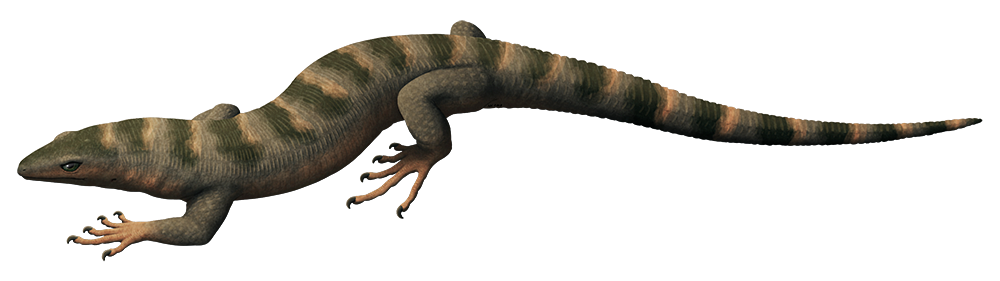
Ascendonanus

The recently-described Ascendonanus nestleri from the Early Permian of Germany (~290 mya). This 40cm long (1′4″) animal was a member of a group called varanopids – which may have been an early branch of the synapsid lineage and distantly related to modern mammals*.

Known from several near-complete fossils that include rare soft tissue impressions, it’s the first varanopid to show preserved skin details – revealing a pattern of very lizard-like rectangular scales. If it is a synapsid this is a pretty big deal, since early synapsids were previously thought to have had scale-less leathery skin.

It also had unusual mosaic-like patches of tiny osteoderms above its eyes, a feature previously known only in some temnospondyl amphibians. Whether this was the result of convergent evolution or the trait actually being ancestral to most tetrapods is unclear.

Its slender body, long digits, and highly curved claws indicate it was an agile climber. It probably mainly lived up in the treetops, feeding on insects, making it one of the earliest known tetrapods specialized for an arboreal lifestyle.

(*Maybe. There’s apparently an upcoming study that suggests varanopids might actually be sauropsids instead.)

Westlothiana

Westlothiana lizziae from the Early Carboniferous of Scotland (~338 mya).

About 20cm in length (8″), this superficially lizard-like creature (nicknamed “Lizzie” by its discoverer) had a long slender body with relatively small legs, which may have been adaptations for burrowing similar to modern skinks.

Its anatomy shows a mixture of both amphibian and reptilian characteristics, suggesting it may have been a close relative of the first true amniotes. But exactly where it fits in that area of the evolutionary tree is still uncertain, with different paleontologists classifying it as either an early amniote, a reptilomorph, or a lepospondyl.

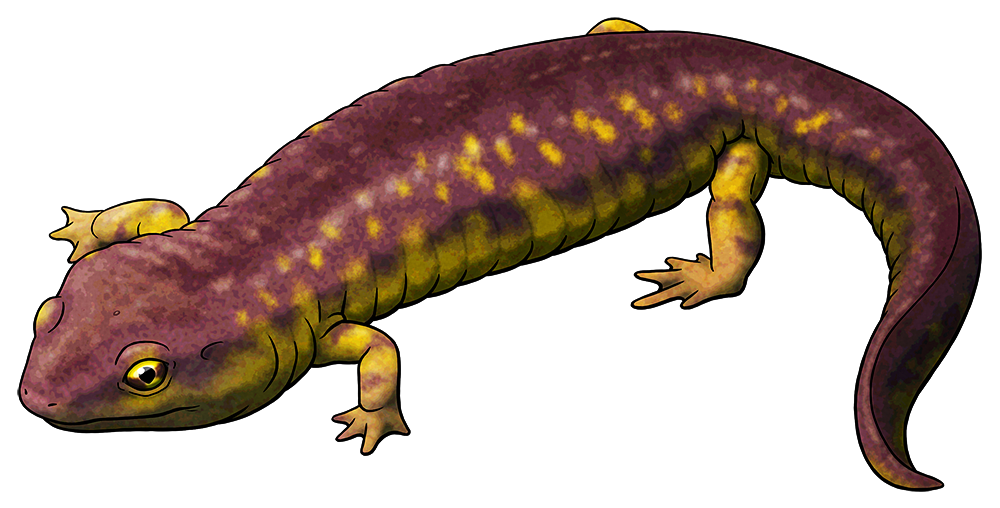
Chinlestegophis

The newly-named Chinlestegophis jenkinsi, in the style of last year’s Amphibian August illustrations.

Living during the Late Triassic of Colorado, USA, (~220 mya), this 30cm long (1′) amphibian had a skull showing a mixture of features shared with both temnospondyls and modern caecilians – providing a vital “missing link” in their evolutionary history. Previously the oldest known caecilian-relative was the Jurassic-aged Eocaecilia, which already had much more modified anatomy making it harder to definitively link to other known groups.

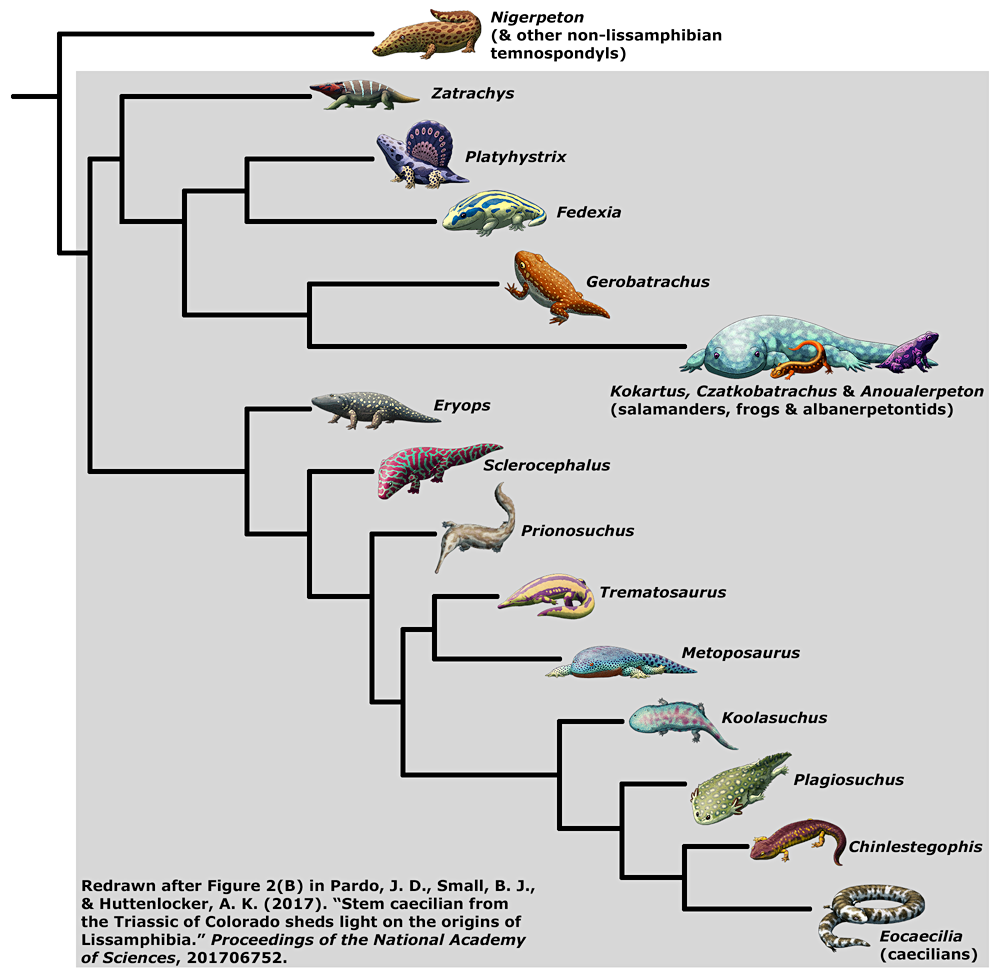
Chinlestegophis seems to have been part of the stereospondyl branch of the temnospondyls – and an unexpected side effect of adding caecilians into this group is that many temnospondyls could now potentially also be classified as true members of Lissamphibia.

An example family tree showing this new version of amphibian relationships. If we define Lissamphibia as including all living amphibians and their extinct relatives back to their last shared common ancestor, then everything within the grey box is a lissamphibian!

Of course, this is still just one hypothesis of amphibian evolution among several other competing ideas. Maybe it’s right, maybe it isn’t – as always, we need more fossil evidence! – but it’s certainly an interesting and surprising new development in the ongoing saga of “what are lissamphibians? we just don’t know”.

2023 Update: …But the discovery of Funcusvermis suggests Chinlestegophis isn’t a caecilian at all, but instead an unrelated case of convergent evolution!