Tiarajudens

Synapsids just keep evolving saber teeth.

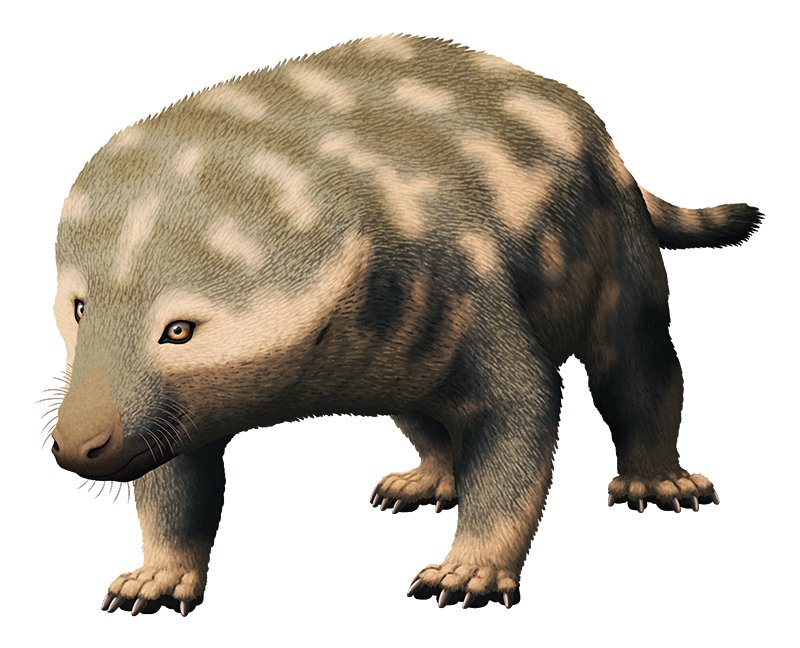
Both proto-mammals and true mammals have independently evolved oversized fangs quite a few different times in a lot of different lineages over the last few hundred million years (even in some modern ones), and one of the first to experiment with such a feature was Tiarajudens eccentricus.

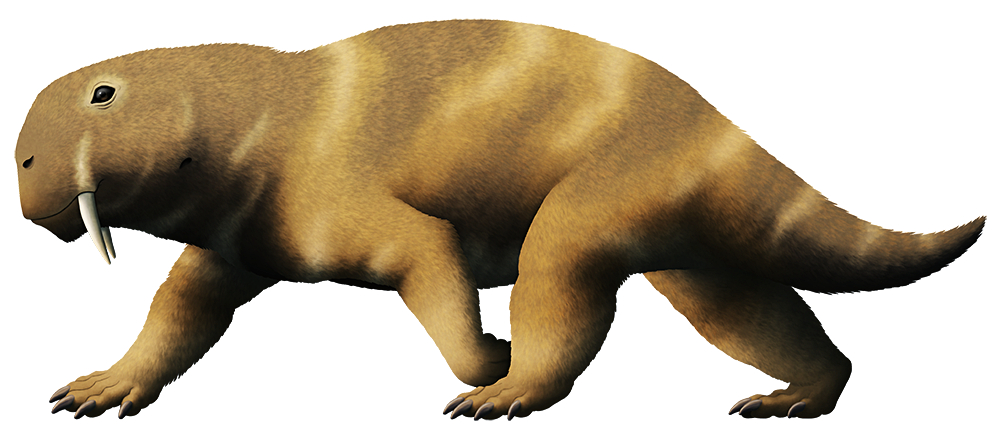
Living in southern Brazil towards the end of the Permian period, about 265-260 million years ago, Tiarujudens was an early member of a group of known as anomodonts. These chunky herbivorous synapsids weren’t directly ancestral to modern mammals, but were instead evolutionary cousins, and their lineage eventually included tusked dicynodonts like the world-conquering Lystrosaurus.

Tiarajudens was around 1-1.2m long (3’3″-3’11”) and sported a pair of very long blade-like canine teeth in its upper jaw. Since the rest of its teeth were clearly adapted for eating plants – with one of the the earliest known examples of flat grinding molars that would have allowed it to chew up tough vegetation – these fangs probably served more of a display or defensive function.

The saber teeth may even have been a sexually dimorphic feature like in modern musk deer. Another anomodont from South Africa, Anomocephalus africanus, is incredibly similar to Tiarajudens except for a lack of fangs – and since South America and Africa were connected as part of Pangaea at the time, it’s possible that these two actually represent males and females of the same species.

Without finding a larger number of fossils we can’t know for certain, but it’s an interesting possibility at least.
Remigiomontanus

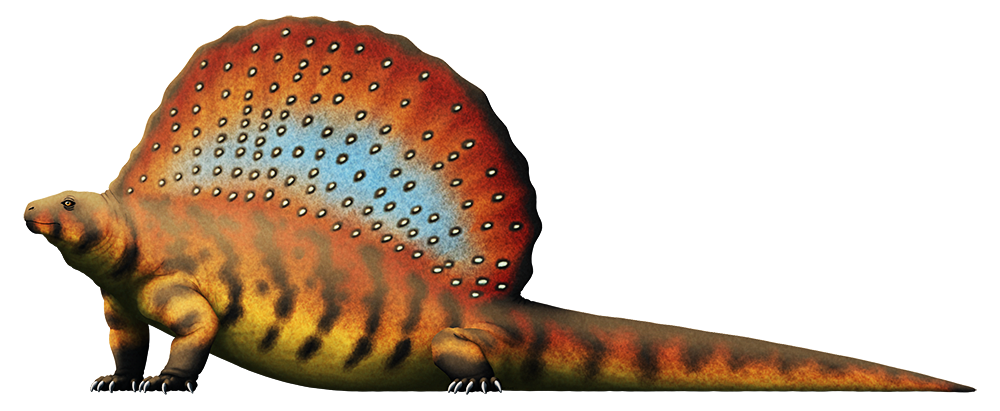
Edaphosaurids were a fairly early branch of the synapsids – the evolutionary lineage whose only surviving members are modern mammals – and were some of the earliest known tetrapods to develop into large specialized herbivores. They also had huge spiny sails on their backs resembling those seen in their cousins the sphenacodontids (including the famous Dimetrodon), but the two groups actually evolved those features completely independently of each other.

Although their fossils are known from both North America and Europe, their European remains are very rare and fragmentary. Currently the best-known specimen is made up of a recently-discovered partial spinal column and a few hand and tail bones.

Given the name Remigiomontanus robustus, this edaphosaurid lived in western Germany during the end of the Carboniferous and the start of the Permian, around 300-298 million years ago. About 1.2m long (3’11”), it seems to represent an intermediate form between small insectivorous-or-omnivorous edaphosaurids like Ianthasaurus and the huge herbivorous Edaphosaurus.

(Interestingly the paper that names Remigiomontanus also makes a brief mention that the protruding cross-bars on edaphosaurid sails may have anchored larger keratinous coverings, which could have made them look even more spectacularly spiky and suggests their sails may have served an anti-predator function. Hopefully if this is true we’ll see further information get officially published about it sometime!)

Diademodon

Modern mammals are the only surviving members of a much larger evolutionary group known as the synapsids – which back in the Permian period were the dominant land vertebrates.

But much like all other life on Earth at the time, the synapsids were absolutely devastated in the “Great Dying” mass extinction at the end of the Permian, 252 million years ago. Only three lineages survived into the Triassic: the dicynodonts (who briefly took over the world), the therocephalians (who went extinct not long afterwards), and the cynodonts (who eventually gave rise to early mammals).

Diademodon tetragonus here lived right in the wake of the extinction during the Early and Middle Triassic, about 251-242 million years ago. Around 2m long (6′6″), it was one of the largest known cynodonts, and it must have been a fairly successful species since it ranged across a large chunk of Pangaea, known from modern southern Africa, South America and Antarctica.

It had pig-like cheekbones and enormous jaw muscles, along with sharp incisors and canine teeth at the front of its jaws and grinding molars at the back. This arrangement suggests that much like modern pigs it may have been an opportunistic omnivore, occasionally snacking on smaller animals and carrion – although an isotope analysis of its teeth indicates the vast majority of its diet was probably still vegetation in shady damp environments.

Lisowicia

Dicynodonts were a group of herbivorous animals with toothless beaks and protruding tusks, part of the synapsid lineage and much closer related to mammals than to reptiles. They were some of the most successful and widespread land vertebrates from the Late Permian to the Middle Triassic, with one genus even briefly taking over the world in the aftermath of the End-Permian mass extinction event.

And it turns out some of them got very big.

Fossils of a surprisingly large dicynodont were first reported in 2008, but it wasn’t until just recently (in late 2018) that this giant creature was finally given an official name – Lisowicia bojani.

Close in size to a modern elephant, at around 2.6m tall (8′6″) and 4.5m long (14′9″), it was by far the largest known example of its kind to have ever lived. And while most other dicynodonts had upright hindlimbs and sprawling forelimbs, Lisowicia seems to have developed a fully upright posture much more similar to that of quadrupedal dinosaurs and modern mammals.

It was also one of the very last of its kind, living during the Late Triassic of Poland, about 208 million years ago (although there was a possible later survivor in Australia). This was around the same time that early sauropod dinosaurs were likewise first starting to experiment with gigantism, suggesting that both groups were convergently evolving to exploit newly-available ecological niches.

Procynosuchus

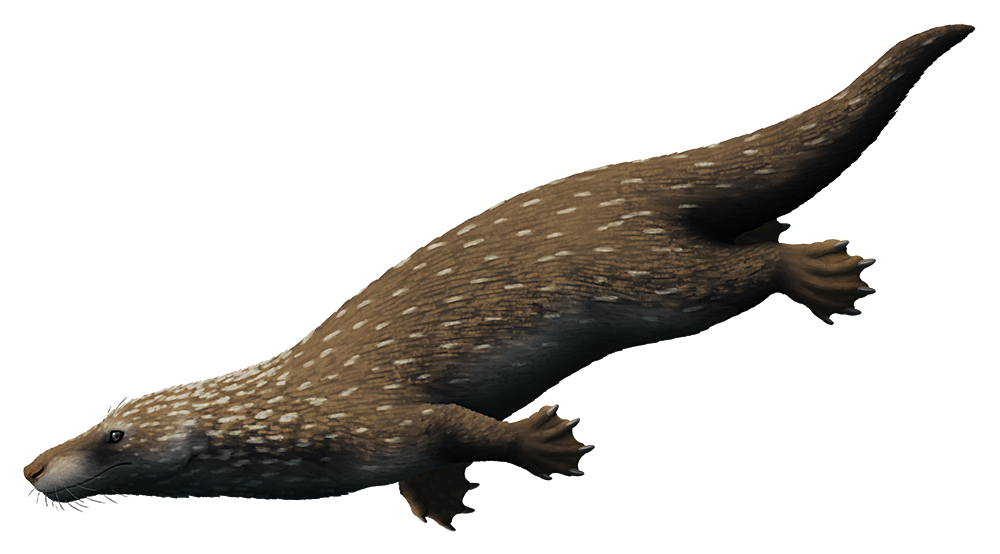
Procynosuchus delaharpeae, a synapsid from the Late Permian (~259-252 mya). Measuring about 60cm long (2′), it was one of the earliest members of the cynodonts, the lineage that would eventually lead to mammals.

Its fossils are mostly known from southern Africa, but similar remains have also been found in Europe and Russia, suggesting it was actually quite widespread across the supercontinent of Pangaea that existed at the time.

It had a long vertically-flattened tail, strong leg muscles, and paddle-like feet – all adaptations that suggest it was a semi-aquatic otter-like animal capable of agile swimming. It also had forward-facing eyes, giving it good binocular vision and depth perception while pursuing fish underwater.

Ascendonanus

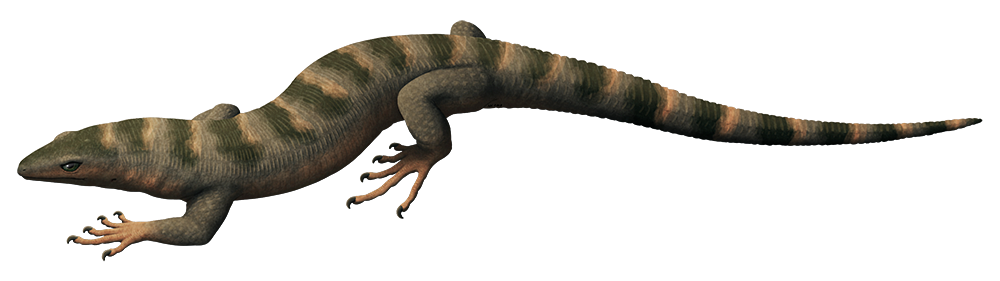
The recently-described Ascendonanus nestleri from the Early Permian of Germany (~290 mya). This 40cm long (1′4″) animal was a member of a group called varanopids – which may have been an early branch of the synapsid lineage and distantly related to modern mammals*.

Known from several near-complete fossils that include rare soft tissue impressions, it’s the first varanopid to show preserved skin details – revealing a pattern of very lizard-like rectangular scales. If it is a synapsid this is a pretty big deal, since early synapsids were previously thought to have had scale-less leathery skin.

It also had unusual mosaic-like patches of tiny osteoderms above its eyes, a feature previously known only in some temnospondyl amphibians. Whether this was the result of convergent evolution or the trait actually being ancestral to most tetrapods is unclear.

Its slender body, long digits, and highly curved claws indicate it was an agile climber. It probably mainly lived up in the treetops, feeding on insects, making it one of the earliest known tetrapods specialized for an arboreal lifestyle.

(*Maybe. There’s apparently an upcoming study that suggests varanopids might actually be sauropsids instead.)

Month of Mesozoic Mammals #31: The Survivors

Purgatorius

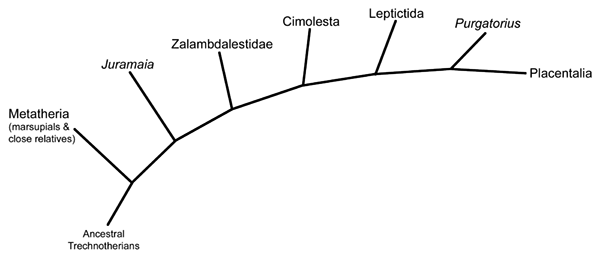
Quite a few groups of Mezozoic mammals actually made it into the Cenozoic – including multituberculates, dryolestoids, various different metatherians, cimolestans, leptictidans, and possibly another unknown lineage in New Zealand – but most of them eventually declined and died out, and only monotremes, marsupials, and placentals still remain alive today.

We don’t know exactly when placentals originated. The first definitive fossils come from the start of the Cenozoic, but a few early ancestral forms probably already existed during the Late Cretaceous (estimated up to 90-75 mya) and only got their chance to rapidly diversify immediately after the mass extinction event.

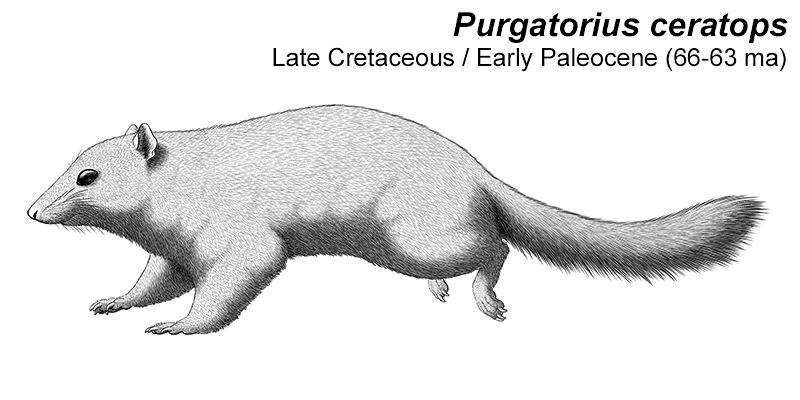
One of the closest fossils we have to the earliest placentals is Purgatorius. Known mainly from teeth from the Early Paleocene of North America (66-63 mya), it’s not entirely clear whether it actually existed in the Mesozoic, but its remains have been found very close to the K-Pg boundary and one fossil might actually be from the end-Cretaceous.

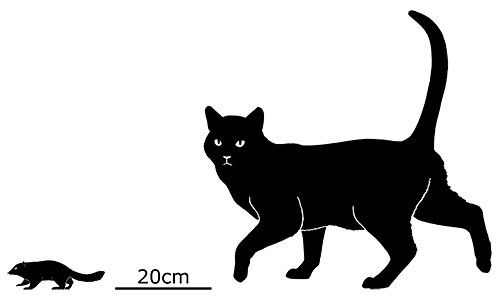
A few foot bones have been associated with some of the fossil teeth, and if they do belong to Purgatorius then they show that it had very flexible ankles, a characteristic typical of tree-climbing animals. It would likely have been a squirrel-like creature, about 15-20cm long (6-8″), eating an omnivorous mixture of insects, seeds, and fruit. It may also have been capable of burrowing similar to modern chipmunks.

It’s often been interpreted as a placental mammal, specifically a very early type of primate, but more recent studies suggest it might not even be a true placental at all  – although it was probably still a very close relative of the common ancestor of all living placentals.

Month of Mesozoic Mammals #30: Strange Relations

Gypsonictops

A group known as the leptictidans were probably some of the weirdest early eutherians. With their tiny forelegs, big hindlegs, and long counterbalancing tails, they somewhat resembled jerboas or small kangaroos – except they also had long slender snouts that probably ended in sengi-like proboscises, and their feet were structured more like those of running animals than jumping ones. They’re also thought to have been mainly bipedal, convergently evolving a similar posture and movement style to non-avian theropod dinosaurs.

Leptictidium (Eocene, 50-35 mya) by Tim Bertelink || CC BY-SA 4.0

First appearing in the Late Cretaceous, they made it through the end-Cretaceous extinction and survived up until the mid-Cenozoic across the northern hemisphere, going extinct around 33 million years ago. They were probably omnivores, eating a mixture of insects, small vertebrates, and soft plant matter such as fruit and leaves.

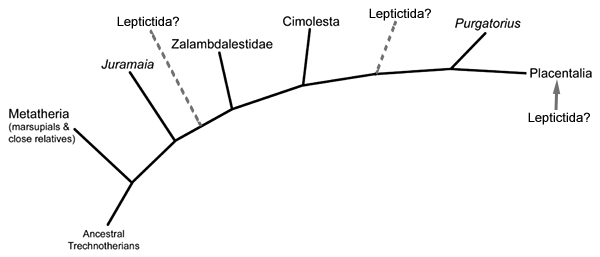
Their mix of “primitive” skull features and highly specialized skeletons makes classifying them particularly difficult. They’ve been proposed to be placentals related to primates and rodents or afrotheres, a very early branch of the eutherians, or close to placentals but not quite true members themselves. The latter interpretation currently seems most likely, but they could also be a paraphyletic group at the base of placentals (suggesting that they could even be ancestral to placentals, and therefore all placentals would technically be leptictidans).

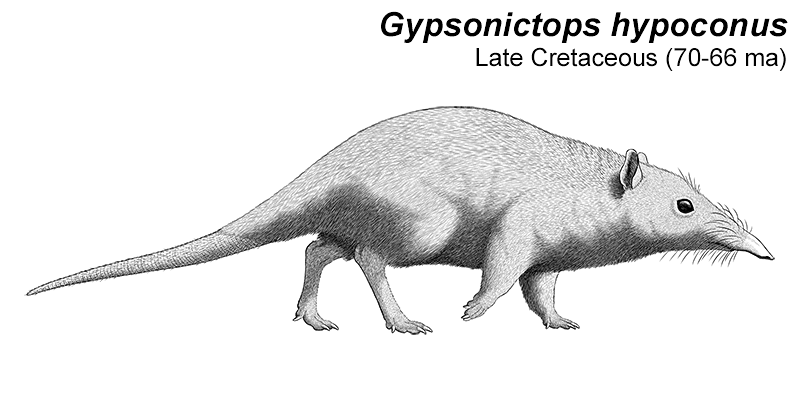
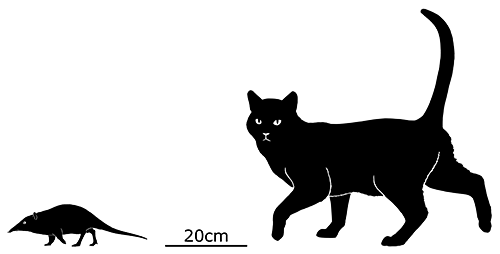
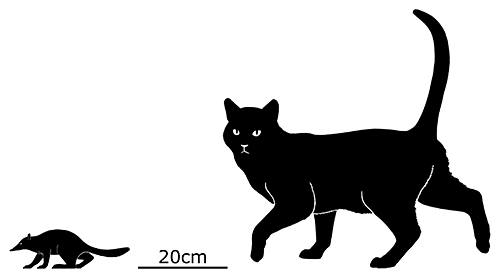
Gypsonictops was one of the earliest leptictidans, living during the Late Cretaceous of North America (70-66 mya). Known only from teeth and jaw fragments, we don’t know much about its appearance or full size – although it was probably smaller than its later relatives, perhaps about 35cm long (1′2″).

Any reconstruction of such fragmentary remains is going to be very speculative, but I’ve restored it here as a sort of transitional form, not yet quite as specialized. A more sengi-like animal, mainly quadrupedal but able to run and hop on its hind legs to flee from danger or chase after small fast-moving prey.

Month of Mesozoic Mammals #29: Rooting Around

Schowalteria

First appearing in the Late Cretaceous, a widespread and diverse group of mammals known as cimolestans were once thought to be early members of placental groups like pangolins and carnivorans. But more recent studies have shown them to be part of a different branch of the eutherian family tree altogether, more like cousins to the earliest placentals and leaving no living descendants.

However, they did make it through the end-Cretaceous mass extinction and were quite successful during the early Cenozoic, evolving into forms ranging from giant herbivores to fanged squirrel-like climbers to otter-like swimmers, with the latter surviving until about 33 million years ago.

One group of North American cimolestans, the taeniodonts, were specialized for digging up tough roots and tubers, with large claws, strong blunt jaws, and big front teeth that became ever-growing in some species.

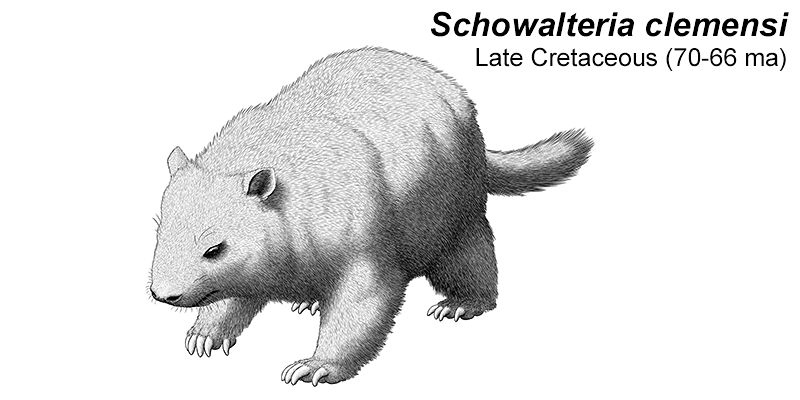
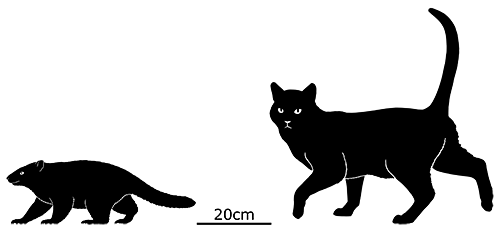
Schowalteria was the earliest known member of this group, living during the Late Cretaceous of Canada (70-66 mya). Only represented by partial skull material, its full size is unknown – some estimates put it at a similar size to giants like Repenomamus, but it was likely closer to half that size at around 50cm in length (1′8″). Still one of the larger Mesozoic mammals around, but not nearly as big as some of the Cenozoic taeniodonts would later become.

Month of Mesozoic Mammals #28: Hop To It

Zalambdalestes

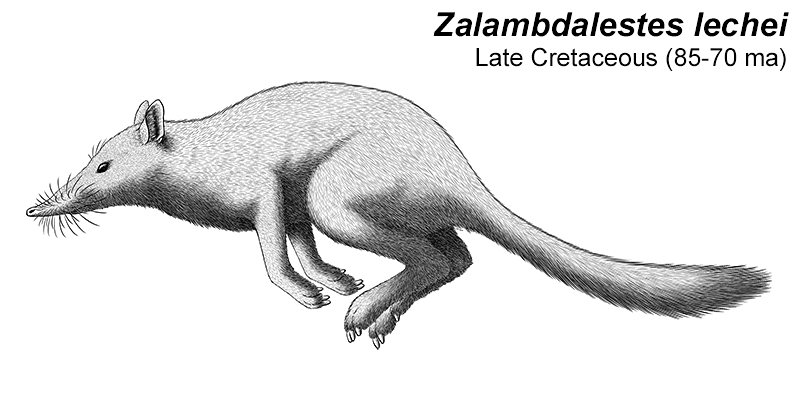
Living during the Late Cretaceous of Mongolia (85-70 mya), Zalambdalestes was part of a highly specialized group of mammals that it lends it name to – the zalambdalestids – which were an early branch of the eutherian evolutionary tree.

About 20-25cm in length (8-10″), it had relatively long limbs with especially strong hindlegs that show adaptations for rabbit-like hopping. Its long narrow snout may have ended in a flexible proboscis similar to those of modern sengi, and sharp interlocking teeth indicate a carnivorous or insectivorous diet.

Its long rodent-like incisors grew continuously throughout its life, suggesting it was gnawing on something tough enough to constantly wear down its front teeth.

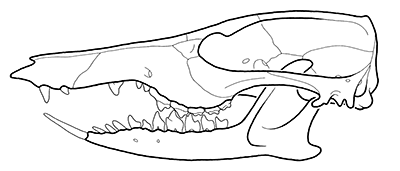
Skull of Zalambdalestes || from fig 51 in Wible JR, Novacek MJ, Rougier GW (2004) New data on the skull and dentition in the Mongolian late Cretaceous eutherian mammal Zalambdalestes. Bulletin Of The American Museum Of Natural History 281:1-144 uri: http://hdl.handle.net/2246/449

Some studies have proposed that zalambdalestids were actually very basal members of placental mammal groups such as rodents or rabbits, but the presence of epipubic bones in front of their pelvises (bones not found in placentals) shows they were a much earlier type of eutherian that still reproduced more like marsupials. Any anatomical similarities to later placentals were probably just the result of convergent evolution.