Thanahita

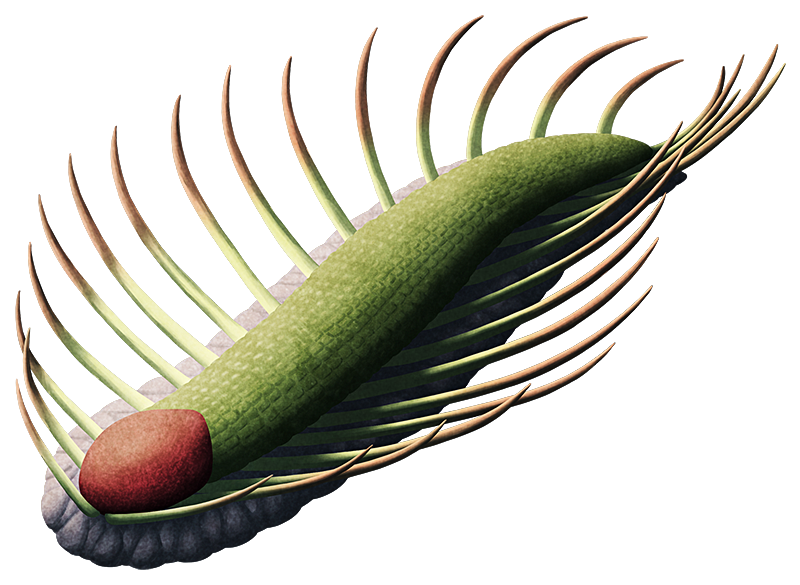
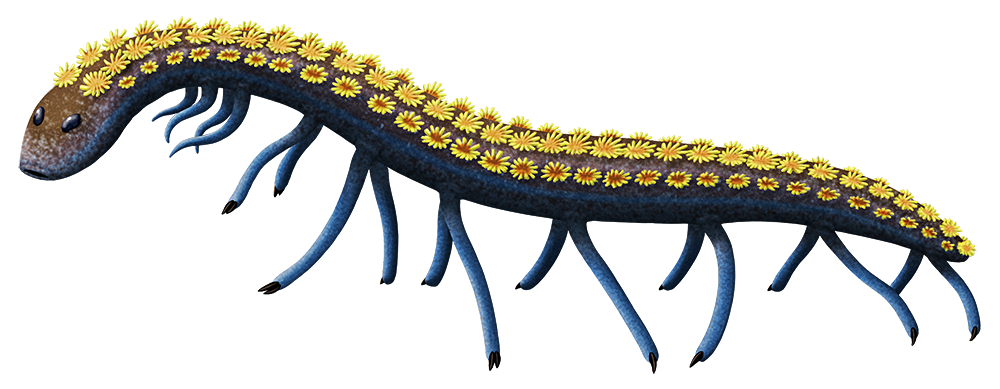
Thanahita distos, a recently-named species from the mid-Silurian of the UK (~430 mya).

This little lobopodian was very closely related to the famous Cambrian Hallucigenia, but it lived over 70 million years later – giving us the first evidence that these weird worms weren’t just short-lived “evolutionary experiments”, but must have actually been a very successful lineage that thrived for quite a long time.

Measuring around 3.5cm long (1.4″), it had seven pairs of legs tipped with one or two claws each, and at least two pairs of shorter tentacles on its neck. The head region of the only known fossil specimen wasn’t preserved, so it’s unclear exactly what its front end looked like – but it would have probably been quite similar to Hallucigenia with a slender oval head, two simple eyes, and a small round mouth ringed by tiny teeth.

Unlike its spiky relative, however, Thanahita’s back was covered in rows of numerous small raised soft-tissue “tufts”. I’ve reconstructed it here with them brightly warning colored, mimicking stinging coral polyps.

Almost-Living Fossils Month #16 – Fancy Triangle Clams

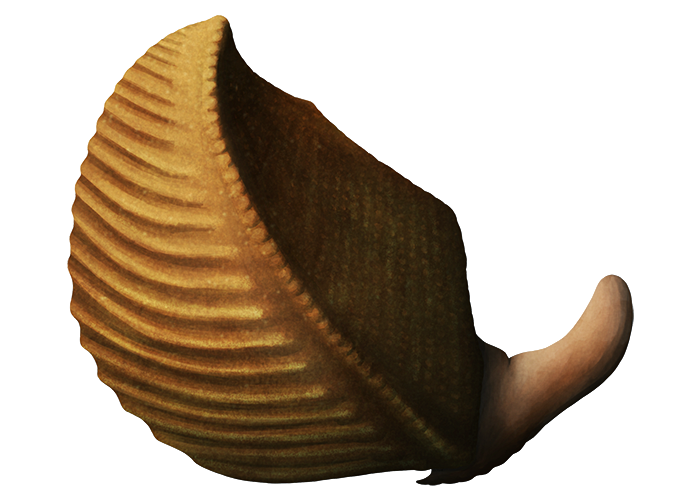
Trigonia was a genus of bivalve mollusc that first appeared in the Middle Triassic, around 245 million years ago. Part of a much older lineage (the trigoniidans) that originated over 400 million years ago in the Late Silurian or Early Devonian, and distantly related to modern freshwater mussels, these bivalves have been found in marine deposits all around the world.

Their triangular shells had complex internal hinges, and often featured elaborate patterns of ribs and tubercules (which may have been adaptations to increase burrowing efficiency) that made them very visually distinctive. They lived mainly in shallow coastal environments, and in some places their fossils are so common that they must have been very numerous animals in their ecosystems.

Trigonia costata was a species living in Europe during the Early-to-Middle Jurassic (~174-166 mya), around the time when the trigoniidans were exploding in diversity. Usually around 5-7.5cm in length (2-3″), it was one of the longest-lasting individual species of Trigonia and one of the most common at the time.

Along with their other trigoniidan relatives, various Trigonia species continued to evolve throughout the entire rest of the Mesozoic, and while almost all of them went extinct at the end of the Cretaceous a few did manage to hang on into the Cenozoic.

The last record of an actual Trigonia comes from Argentina at the very end of the Paleocene, about 56 million years ago. After a nearly 200-million-year run, this long-lived genus finally disappeared – but although Trigonia itself was gone, that wasn’t quite the end of the trigoniidans altogether.

A single remaining lineage quietly continued on all the way into modern day, either descended from one of the Trigonia species or very closely related to the genus, living in waters off the coast of Australia and Tasmania. Known as Neotrigonia, they’re not quite as elaborately ornamented as some of their ancient relatives, but their complex shell hinges give them away as the only living trigoniidans – and their anatomy can give us some hints about what Trigonia’s soft tissue parts may have looked like, such as the presence of an unusual boot-shaped muscular foot that helps them burrow rapidly into the seafloor.

Almost-Living Fossils Month #12 – The Other Nautiluses

Nautiloids are represented today by just two living genera (Nautilus and Allonautilus), but they have a lengthy evolutionary history going back almost 500 million years.

The peak of their diversity was during the first half of the Paleozoic, with many different shapes of shells from coiled to straight, then they began to decline when their relatives the ammonites and coleoids appeared and began to compete for similar ecological niches. Although a few groups of nautiloids survived through the end-Permian mass extinction, most of them had disappeared by the end of the Triassic, leaving just one major remaining lineage known as the Nautilina (or Nautilaceae).

During the mid-to-late Jurassic (~165 mya) two new groups split away from the ancestors of the modern nautiluses – the cymatoceratids and the hercoglossids.

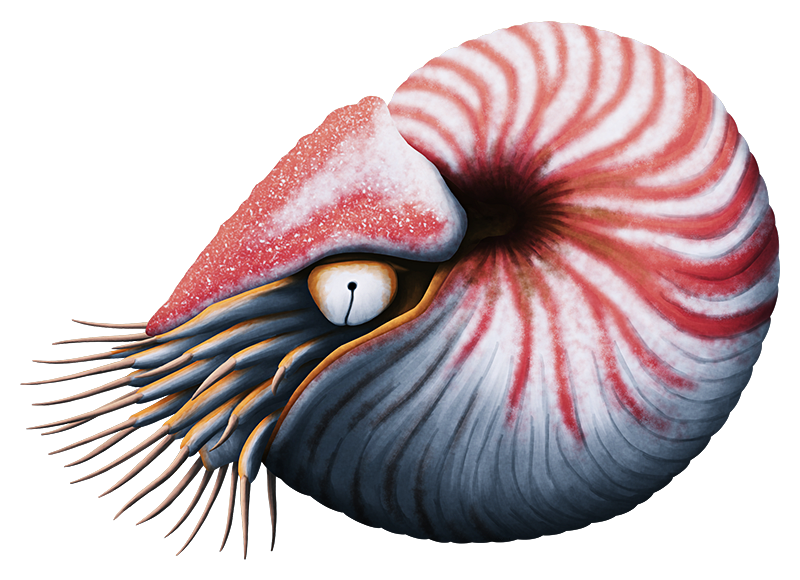
Cymatoceratids such as Cymatoceras sakalavum here had shells with a ribbed texture. Living during the Early Cretaceous, about 112-109 million years ago, this particular species is known from Japan and Madagascar and could reach a shell diameter of over 15cm (6″).

Hercoglossids, meanwhile, were much more smooth in appearance, but both groups also had more complex undulating sutures between their internal chambers than modern nautiluses do.

These nautiluses made it through the end-Cretaceous mass extinction and had a brief period of renewed success, filling the ecological roles left vacant by the extinct ammonites. But by the end of the Oligocene (~23 mya) both the cymatoceratids and hercoglossids vanished, possibly unable to deal with cooling oceans and the evolution of new predators.

Some of the hercoglossids’ Cenozoic descendants, the aturiids, managed to last a little longer into the Early Pliocene (~5 mya) before another period of cooling seems to have finished them off. Past that point, all that was left of the once-massive nautiloid lineage were their cousins the nautilids, who gave rise to today’s few living representatives.

(It’s also worth noting that the classification of the cymatoceratids seems to be in flux right now. Some paleontologists currently don’t consider Cymatoceras itself to actually be part of the group, instead being a nautilid much closer related to modern nautiluses. If this is the case then the cymatoceratids may not have actually survived past the Late Cretaceous – but the Cymatoceras genus alone still counts as an “almost-living” fossil since its various species ranged from the Late Jurassic to the Late Oligocene.)

Almost-Living Fossils Month #08 – A Lot Of Lobsters

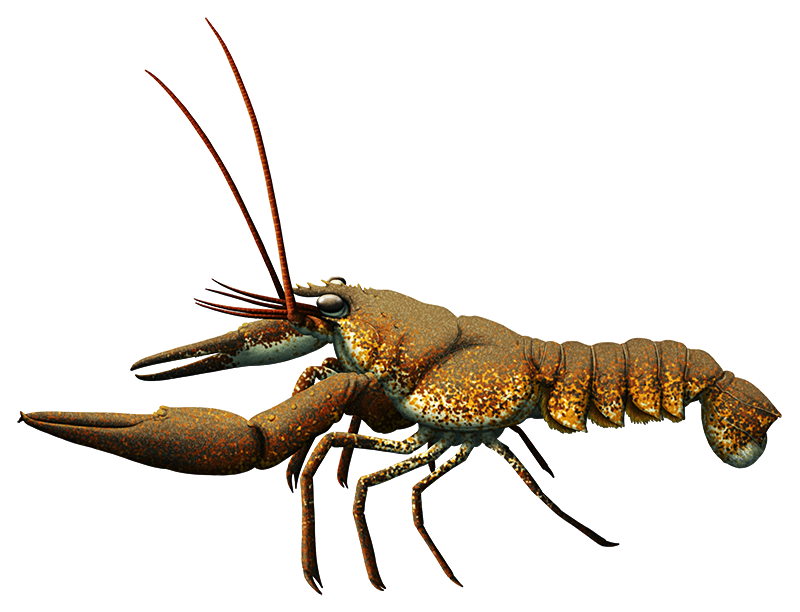
Hoploparia was a type of clawed lobster that first appeared in the fossil record in the Early Cretaceous about 140 million years ago. Many many different species within this genus have been found all over the world – over 100 of them have been described! – with quite a lot of anatomical diversity between them, showing that these lobsters were very good at adapting to a wide range of habitats and climates.

Although the vast majority of Hoploparia species lived just in the Cretaceous period, a small number of them did survive the end-Cretaceous mass extinction 66 million years ago. Hoploparia stokesi here was one of them, known from both the Late Cretaceous and Early Paleocene of Antarctica (~70-61 mya) – and was actually one of the first fossils ever described from the continent.

Specimens of this species are usually about 13cm long (5″), and show an evolutionary shift over time, developing much stronger claws and jaws, suggesting they were adapting their diet towards hard-shelled prey.

Various species of Hoploparia persisted on in North America, Europe, and Antarctica for the first half of the Cenozoic, but they never recovered to anywhere close to their Cretaceous levels of diversity. By the Early Miocene (~23-16 mya) there was just one known species left hanging on in Antarctica, and then they were gone.

(However, some modern lobster genera may in fact have originated from somewhere within the huge Hoploparia lineage back in the Cretaceous, so they might at least still have some close living relatives!)

Almost-Living Fossils Month #03 – The Crowned Starfish

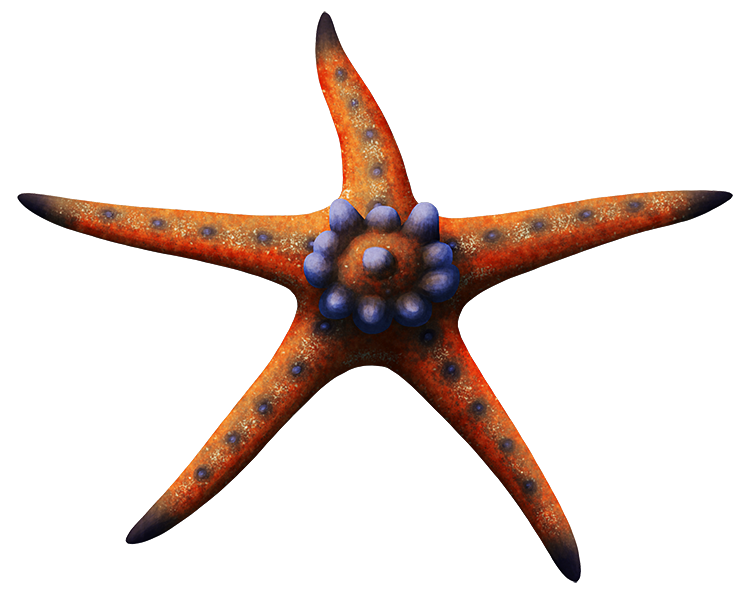
Known mainly from around Europe – with a few records from the Atlantic coast of North America and the Caribbean – the stauranderasterids were a family of starfish that first appeared about 190 million years ago in the Early Jurassic.

Not much is known about their life ecology, although they seem to have inhabited shallow tropical seas and like many other starfish would probably have preyed on various slow-moving marine invertebrates. Complete specimens are very rare compared to just isolated elements, making their maximum size difficult to estimate, but they likely grew to at least 5-10cm across (2″-4″).

They had enlarged ossicles forming a bumpy “crown” over their central disc, with five arms that could be either narrow and elongated (such as in Stauranderaster coronatus here) or shorter and club-shaped (like Manfredaster bulbiferus). This gave them some visual similarities to modern starfish like Protoreaster, and since they were both part of a larger grouping of starfish called valvatids it’s unclear whether these features mean that they were very closely related to each other or if it was simply due to convergent evolution.

The stauranderasterids survived until at least the Late Paleocene/Early Eocene (~56 mya), but some possible remains from Cuba date to as recently as the Early Micoene (~23-16 mya).

Capinatator

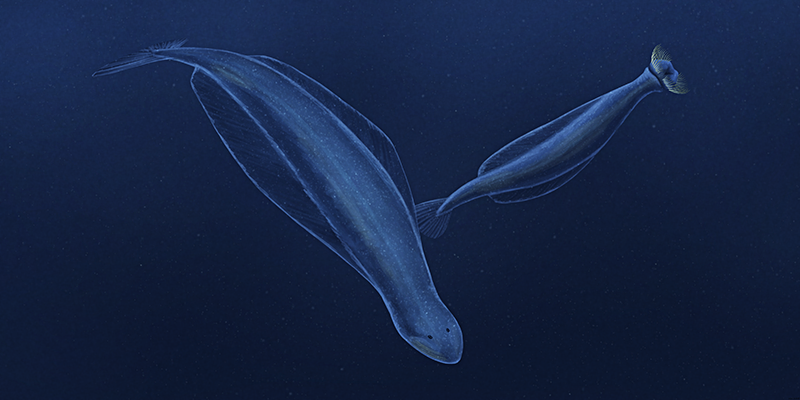
Capinatator praetermissus, an arrow worm from the Mid-Cambrian of Canada (~508 mya). Discovered in the famous Burgess Shale fossil deposits, it was one of the earliest known arrow worms and also much larger than most modern forms, measuring around 10cm in length (4″).

Its mouth was surrounded by 50 hooked spines, which could be extended out to grasp onto its prey – probably feeding on whatever smaller animals it could catch – but when not in use these spines would have been kept folded up inside a fleshy “hood” around its head.

It may have been a transitional form between early large-predator arrow worms and the smaller plankton-feeders that the group later became.

Syringocrinus

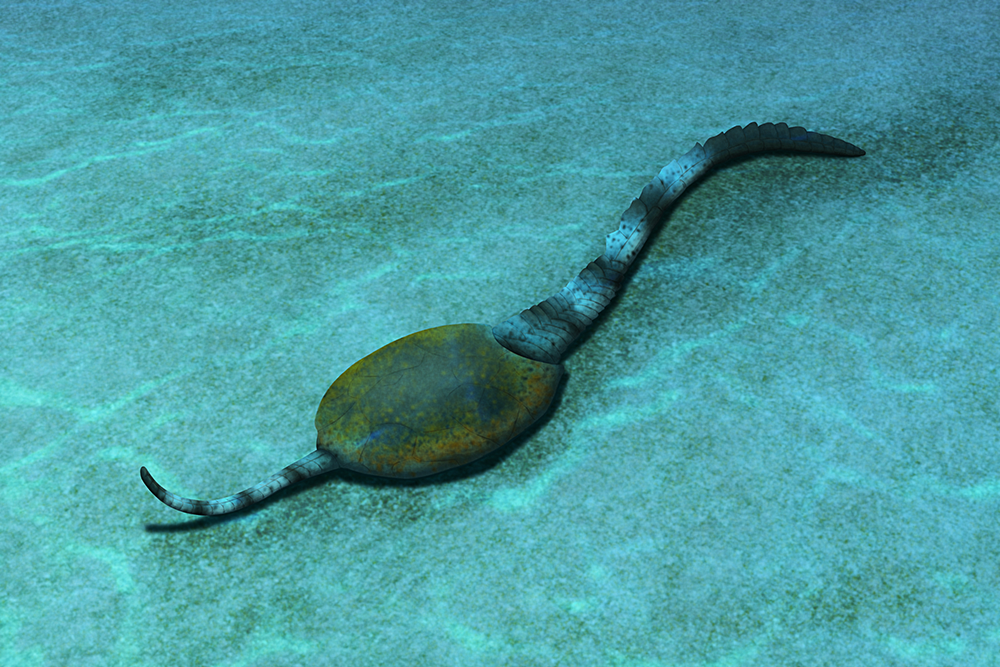
Syringocrinus paradoxicus from the Upper Ordovician of North America (~450 mya). Measuring up to around 6cm long (2.3″), it was part of an extinct group of marine animals known as solutes – characterized by irregularly-shaped bodies covered in calcite armor plates, the structure of which suggest they were echinoderms despite their complete lack of any proper symmetry.

It had two appendages, one a short “arm” that was probably used for feeding on food particles suspended in the water, and the other forming a longer stalk-like “tail” that may have served to propel it along the seafloor.

Solutes were once thought to be closely related to the equally weird-looking stylophorans, but some versions of the echinoderm family tree place them much further apart, suggesting their superficial similarities may have been due to convergent evolution instead.

Orthrozanclus

Orthrozanclus elongata, from the mid-Cambrian of China. Only about 2cm long (~0.8″), this tiny creature was covered in both long spines and extensive armor – with tile-like scales on its back, overlapping dagger-shaped plates around its sides, and a small shell on its head.

It’s the second species of Orthrozanclus to be discovered, extending the genus’ range about 10 million years older than the Canadian O. reburrus.

Although it would have been a member of the Lophotrochozoa (the group that contains modern molluscs, annelid worms, and brachiopods), its exact evolutionary relationships are still uncertain. It might have been a transitional form between Wiwaxia and the halkieriids, or it could be closer related to the brachiopods.

Linguamyrmex

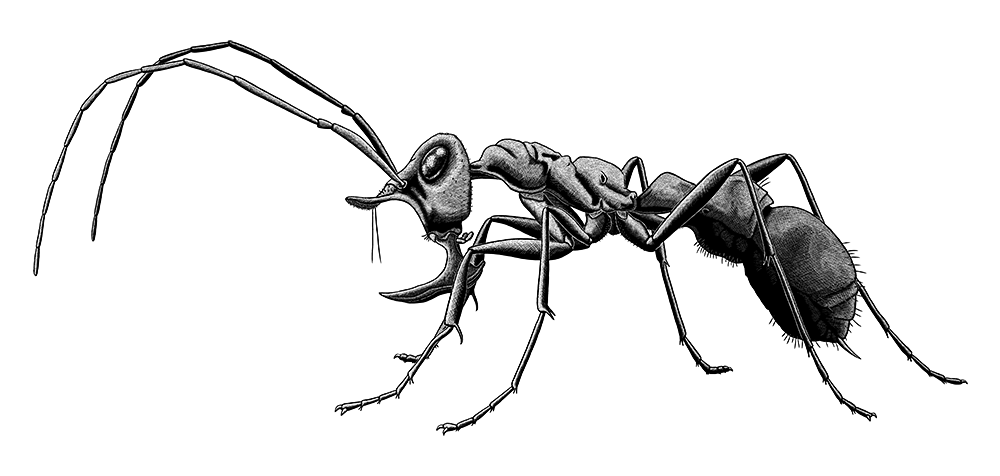
Linguamyrmex vladi, an ant from the Late Cretaceous of Myanmar (~99 mya). Part of an extinct group known as the Haidomyrmecini, or “hell ants”, it measured about 5mm long (0.2″) and is known from several individuals in amber.

It had huge scythe-shaped mandibles and a horn-like appendage on its head which together formed a powerful trap-jaw mechanism, snapping vertically shut when a pair of long sensitive trigger hairs touched against a target. One specimen was preserved close to a large soft-bodied beetle larva, which may have been an intended prey item.

When closed, the mandibles formed a tube-like channel to Linguamyrmex’s mouth, allowing it to suck out the “blood” from its impaled victims – and inspiring its species name, referencing Vlad Dracula.

The horn was also reinforced with metal particles in the chitinous exoskeleton, strengthening it against the impact of its closing jaws.

Synophalos

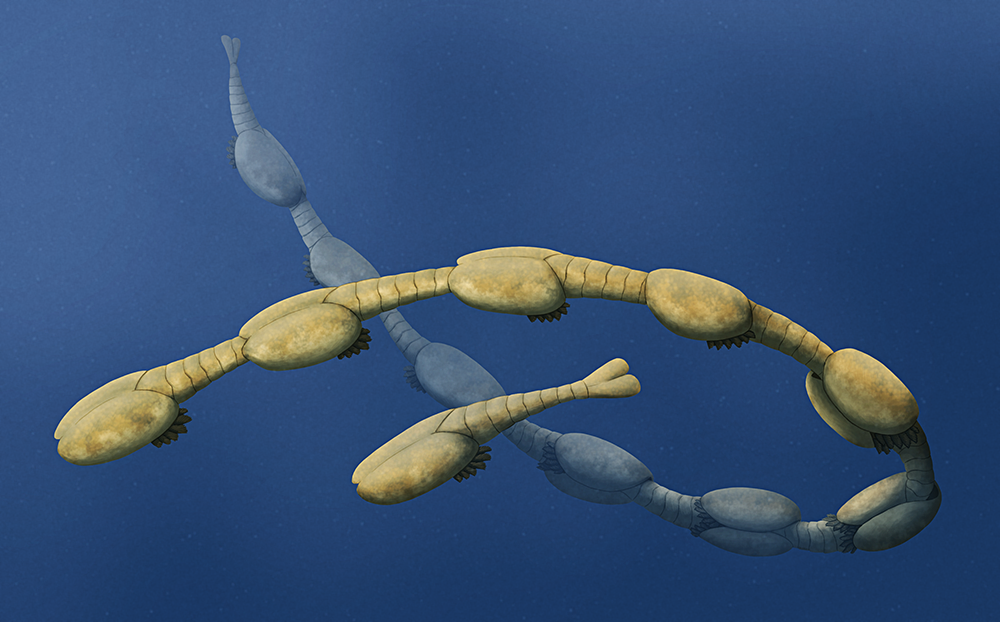
Synophalos xynos, a shrimp-like arthropod from the Early Cambrian of China (~515 mya). Thought to be closely related to stem-crustaceans like Waptia, it was about 2cm long (0.75″) and had a bivalved carapace with a segmented body ending in a forked tail.

Unlike any other known arthropods, however, it formed long “conga line” chains of up to twenty individuals, with the tail of each animal locking securely into the shell of the next. The function of the these chains is unknown, although suggestions include some sort of mating behavior, migration, or defense against predators.

Only one specimen was found completely on its own, and its slightly longer carapace suggests it may represent a different solitary life stage of these strange little creatures.