Ergilornis

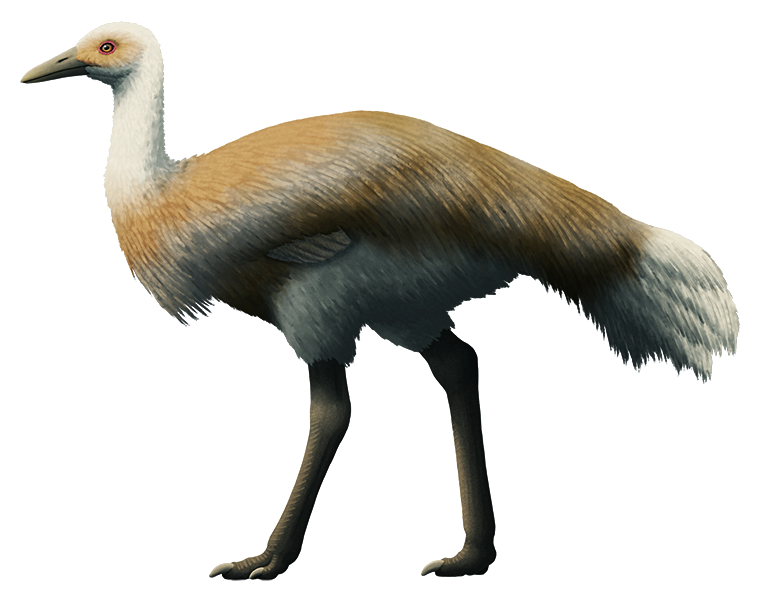
Ergilornis rapidus, a 1.2-1.5m tall bird (4′-5′) from the Early Oligocene of Mongolia (~33-28 mya). Closely related to modern cranes, trumpeters, and limpkins, it was part of an extinct group called eogruids – flightless birds which existed across Eurasia for a large portion of the Cenozoic from roughly 40-3 million years ago.

Although the earliest known eogruids were smaller and less specialized, and may even have still been somewhat capable of flying, later forms like Ergilornis had highly reduced wings, long legs adapted for running, and convergently ostrich-like feet with only two toes each.

Longipteryx

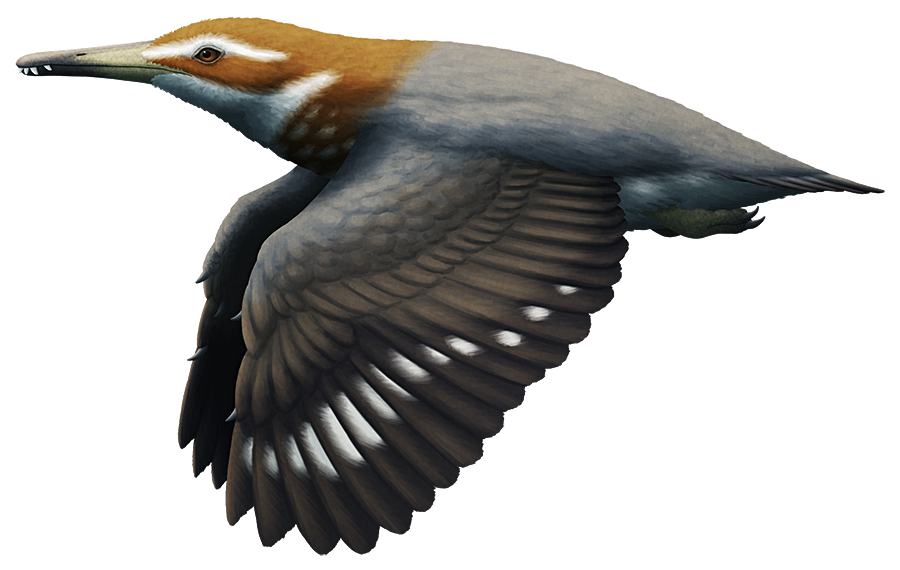
Longipteryx chaoyangensis, an enantiornithine from the Early Cretaceous of China, about 120 million years ago. With a body length of only around 15cm (6″), it had a long snout tipped with a few hooked teeth and feet capable of perching – features that indicate it may have lived very similarly to modern kingfishers, feeding on fish and small invertebrates in its swampy forest habitat.

The enantiornithines were a sort of “cousin” lineage to modern birds. Most had toothy jaws and clawed wings, and the wide variety in their skull shapes suggests that they were specialized for many different dietary niches. The entire group went extinct during the K-Pg mass extinction and left no living descendants, but during the Cretaceous they were the most widespread and diverse group of birds*, with fossils currently known from every continent except Antarctica.

* Depending on how you define “bird”.

Halszkaraptor

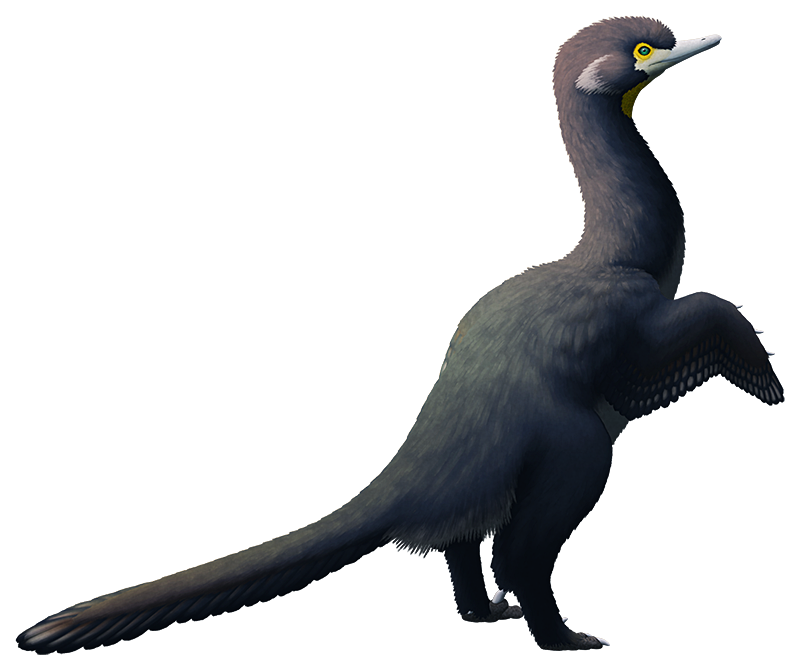
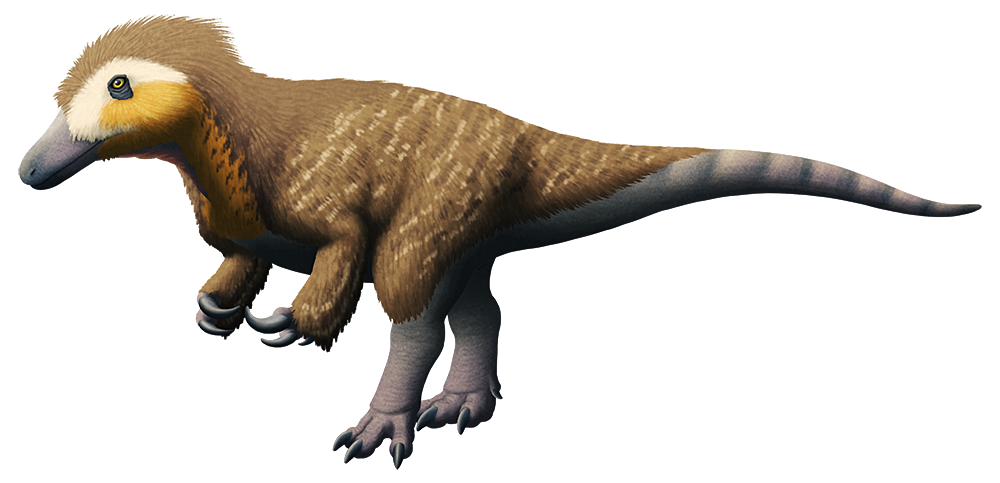
Halszkaraptor escuilliei, a dromaeosaurid (“raptor”) dinosaur from the Late Cretaceous of Mongolia (~75-71 mya). It’s known from a single near-complete skeleton and would have been about the size of a modern mallard duck, around 60cm long (2′).

It had some very odd features for a raptor, with many small sharp backwards-pointing teeth, crocodile-like sensory pits on its snout, a long flexible neck, small flipper-like arms, a relatively short tail, and a more upright body posture than its other relatives. All these traits together suggest it may have been semi-aquatic, which is a pretty big deal since the only other group of non-avian dinosaurs known to have developed adaptations for life in the water were the spinosaurids.

The fossil was originally illegally excavated by fossil poachers and was owned by private collectors for several years, but it has now been returned to science and is due to be repatriated to Mongolia. With its odd anatomy and the exact origin of the specimen being unknown, there’s some skepticism about whether Halszkaraptor represents a genuine animal or an elaborate fake chimera – but synchrotron scans of the fossil and its similarity to previously-discovered more fragmentary short-armed raptors like Mahakala suggest that it is real, and it really is that weird.

Jamaican flightless ibis

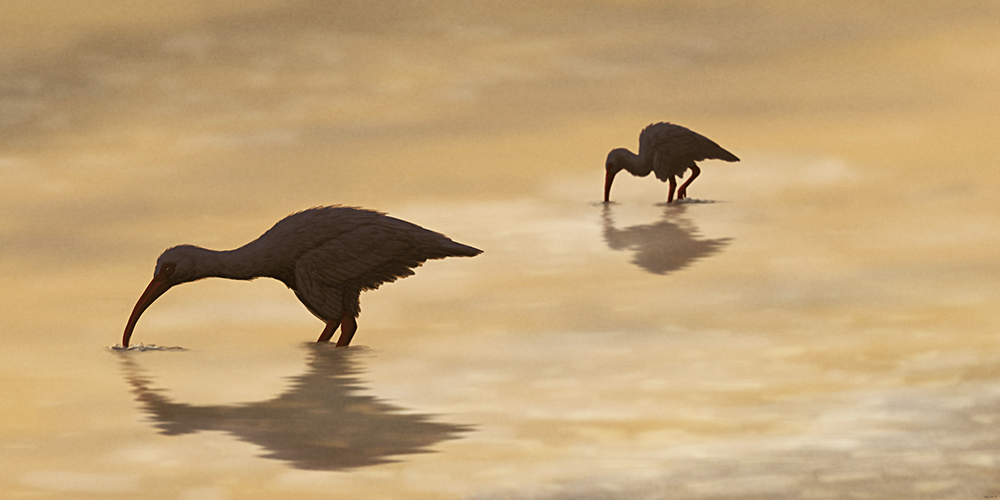
The Jamaican ibis (Xenicibis xympithecus) was a bird unique to the Caribbean island of Jamaica. One of only two known types of completely flightless ibises, it was similar in size to a chicken – probably around 75cm long (2′5″) and weighing 2kg (4.4 lbs).

It had some incredibly unusual wing anatomy, with strengthened bones, a proportionally short forearm, and the “hand” section modified into a thick club-like shape. Some remains show evidence of blunt-force injuries, suggesting these birds fought each other by swinging around their heavy wings like baseball bats.

Its bones have found in several cave deposits which are difficult to accurately date, but are likely to be somewhere between 10,000 and 2,200 years old. It’s unclear whether Xenicibis was still around when humans first colonized the island, but if so it was probably driven to extinction soon after.

Zuul

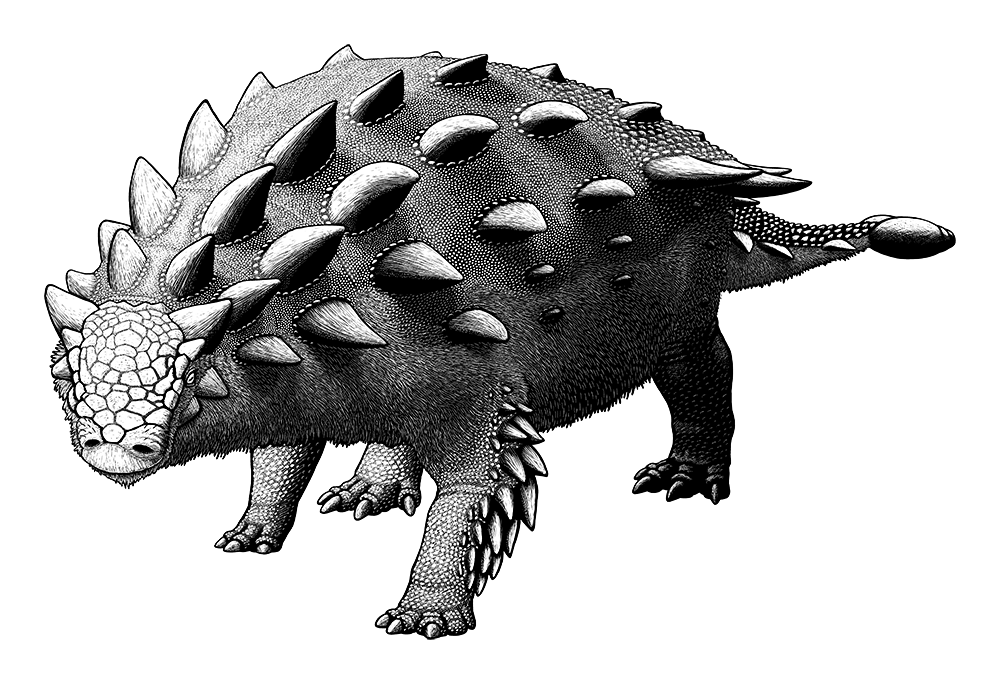
Zuul crurivastator, an ankylosaur from the Late Cretaceous of Montana, USA (~75 mya).

One of the most complete ankylosaurids ever found in North America, it’s known from a full skeleton about 6m long (20′). Much of its bony osteoderm armor is preserved in life position, along with skin impressions and the remains of keratinous scales and spike sheaths – although so far only the skull and tail have actually been fully prepared and described.

(The fuzz on this reconstruction is highly speculative, but since it’ll likely end up inaccurate anyway once of the rest of the body is fully described… why not have some fun with it?)

Its genus name was inspired by its skull’s resemblance to Zuul the Gatekeeper from the 1984 movie Ghostbusters, while its species name translates to “destroyer of shins” in reference to its especially large tail club.

Ceratopsian Month #31 – Triceratops horridus

Of course we’re ending this month with the most famous of the ceratopsians, the dinosaur superstar Triceratops (“three-horned face”).

Dating to the very end of the Cretaceous, between 68 and 66 million years ago, it was the most common ceratopsid in North America at the time, ranging from Alberta, Canada down to Colorado, USA. Two different species are currently recognized within the genus – T. horridus in the older part of that time range, and T. prorsus in the younger rock layers.

It was one of the very largest ceratopsians, with the biggest individuals reaching sizes of about 7.9-9m (26’-29’6”). Many fossil remains have been found, representing growth stages from juveniles to adults (with Torosaurus speculated to represent the most fully mature individuals), and a lot of variation in exact horn and frill shape is seen between different skulls. One specimen nicknamed “Yoshi’s trike” had some of the longest brow horns of any ceratopsid, with the bony cores alone measuring 1.15m long (3′9″).

Unusually for a chasmosaur, it had a very short and solid frill with no weight-reducing holes, suggesting the structure served a much more defensive role than in other ceratopsids. Damage to the frill bones in some specimens appears to have been caused by other Triceratops, giving support to the popular depiction of these dinosaurs locking horns in fights.

Tooth-marks from the equally-famous Tyrannosaurus have also been found on Triceratops bones. Not all of these predator-prey encounters were fatal, however, with some specimens showing evidence of healing around the damaged areas.

Fossilized skin impressions show that Triceratops was scaly – but with scales unlike those of any other known dinosaur, showing large polygonal scales interspersed with even bigger knobbly scales with odd “nipple-shaped” conical projections in their centers. It’s possible that the “nipples” may have supported larger structures (as I’ve illustrated above), but unfortunately no official scientific description of this skin has been published yet and details about it are vague.


And with this final entry, here’s the chasmosaur evolutionary tree:

Continue reading “Ceratopsian Month #31 – Triceratops horridus”

Ceratopsian Month #30 – Torosaurus latus

Torosaurus (“perforated lizard”) was a particularly widespread member of the Triceratopsini, found across western North America. Fossils are known from Canada all the way down to New Mexico and Texas in the southern regions of the USA, although the southernmost specimens represent a second species within the genus, T. utahensis.

Living about 68-66 million years ago, it was one of the largest ceratopsids, reaching body lengths of around 7.5m (24’7″). The size and shape of its three horns varied between individuals, from short and straight to much longer and curving forwards.

It had one of the longest skulls of any known land animal, with some specimens’ heads measuring at least 2.5m long (8′2″). Around half of that length consisted solely of its frill, the shape of which was also quite variable – some were very flat while others curved upwards, and the top edge could be either rounded, straight, or have a “heart-shaped” notch.

In 2010 a study was published by John Scannella and Jack Horner, hypothesizing that Torosaurus wasn’t a unique genus and was actually the fully mature form of Triceratops. While poor media reporting briefly sent the internet into a panic about Triceratops “never existing”, further studies by other paleontologists have failed to come up with the same results, and the debate doesn’t seem to have come to any overall consensus yet.

Ceratopsian Month #29 – Regaliceratops peterhewsi

The Triceratopsini branch of the chasmosaurs first split off somewhere around 75 million years ago, with Titanoceratops being the earliest known member. But they don’t seem to have really diversified until several million years later, towards the very end of the Cretaceous 70-68 million years ago, around the time the centrosaurs had already mostly disappeared.

Regaliceratops (“royal horned face”) dates to about 68-67 million years ago, and is estimated to have measured around 5m long (16’4″). Known from a single near-complete skull discovered in Alberta, Canada, the fossil specimen was nicknamed “Hellboy” for both its stubby brow horns and the immense difficulty of removing it from the surrounding rock.

It had highly unusual ornamentation for a chasmosaur – a long nose horn, short brow horns, and large crown-like spikes ringing its relatively short frill – convergently resembling the sort of arrangement seen in many centrosaurs.

Ceratopsian Month #28 – Vagaceratops irvinensis

Vagaceratops (“wandering horned face”) was originally thought to be a species of Chasmosaurus, but was separated out into its own genus in 2010 after new studies suggested it was much more closely related to Kosmoceratops.

Measuring around 5m long (16’4”), it lived about 75 million years ago in Alberta, Canada – much farther north than its Utahn relative, inspiring its “wandering” genus name. It had a short nose horn, and brow horns reduced down to low bosses, along with a distinctive squared-off frill topped with a row of forward-curving spikes.

Ceratopsid forelimb posture has been a long-standing puzzle in paleontology. While the hindlimbs were clearly held straight under the body, the bones of the forelimbs are a lot more ambiguous, and various different arrangements have been proposed over the years from straight to heavily sprawled and lizard-like.

While the fully sprawled position mostly fell out of favor during the dinosaur renaissance, debate continued about whether ceratopsids had a fully straight forelimb posture or some sort of in-between arrangement with the elbows slightly bent out to the sides. In 2007, digital scans of Vagaceratops’ forelimb bones were used to model how it could have walked, suggesting the best fit was in fact the intermediate position.

Ceratopsian Month #27 – Kosmoceratops richardsoni

Kosmoceratops (“ornamented horned face”) was discovered in Utah, USA, and had one of the most ornate skulls of any known dinosaur.

Living about about 75 million years ago, it’s known from a partial skeleton and an almost complete skull and is estimated to have measured around 5m long (16’4”).

Its frill was relatively short and wide for a chasmosaur, topped with a “fringe” of eight long folded-over spikes and a pair of sideways-curving hooks. Its brow horns curved sideways, and its nose horn was thin and flattened into a blade-like shape.

Overall it had a total of fifteen large horns and spikes – ten big frill spikes, two brow horns, a nose horn, and two cheek spikes – along with sixteen additional scallops along the sides of its frill.