Island Weirdness #11 – Hilalia

During the mid-Eocene, about 43 million years ago, the Pontide region of modern day north-central Turkey was an island located between the Paratethys Sea to the north and the Tethys Ocean to the south.

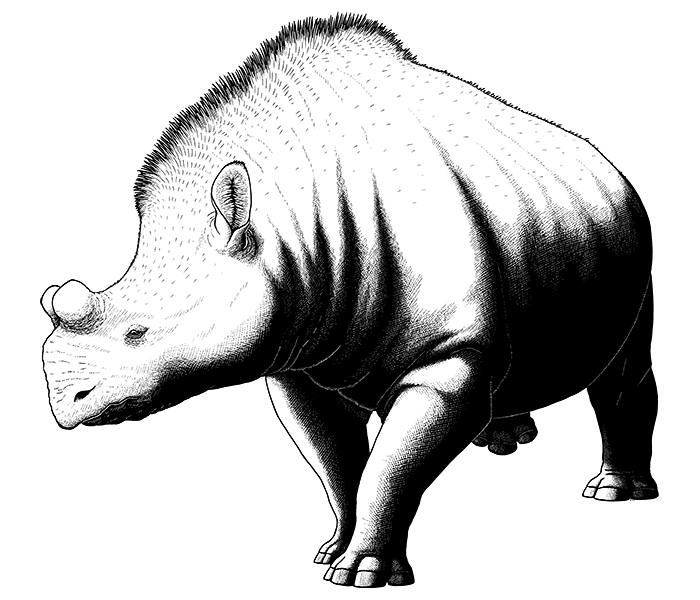
This island had an ecosystem of native mammals unlike anything existing today, with a unique mixture of species whose ancestors had arrived over several million years via island-hopping or temporary land connections with Europe, Africa, and Asia. There were large rhino-like embrithopods, cat-sized metatherian predators, early primates, early bats, and “enigmatic” small insectivores – but the island completely lacked any of the rodents, carnivorans, creodonts, perissodactyls, or artiodactyls which were dominating the rest of Eurasia.

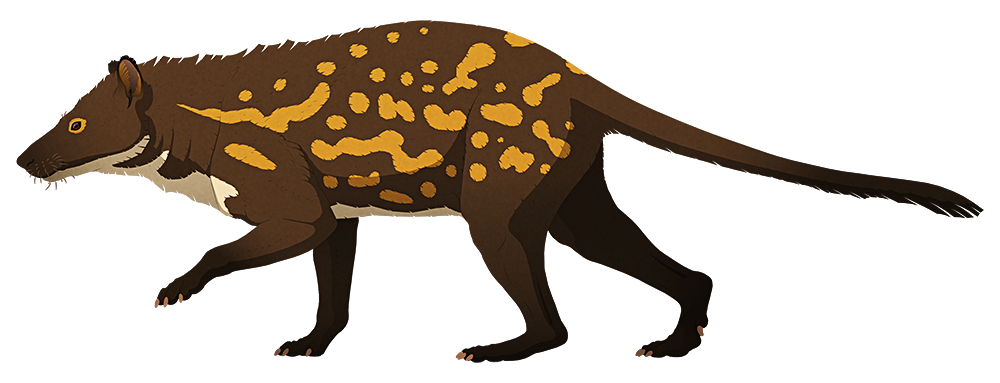
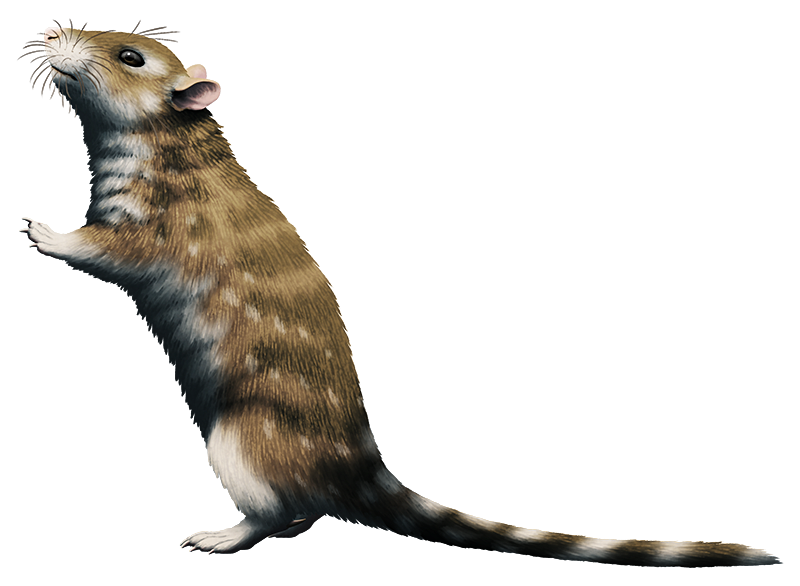
But one of the most surprising inhabitants of the island were the small herbivores – a genus called Hilalia that represented a type of early ungulate known as pleuraspidotheriids. Resembling deer-dogs, this group had originated in Europe during the Paleocene and had gone extinct there around 13 million years earlier than the date of the Pontide remains, making them living fossils at the time.

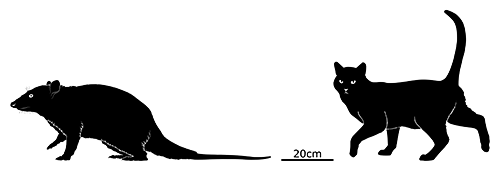
These survivors of an archaic lineage thrived on their isolated island refuge and there were at least four or five species of Hilalia at different sizes, suggesting they’d diversified to each occupy a slightly different niche in their ecosystem. It’s hard to accurately measure their body size from their very fragmentary remains, but they may have ranged from around 25cm to 60cm in total length (~10″- 2′).

Island Weirdness #10 – The Kogaionids

Multituberculates were a group of rodent-like mammals that originated back in the Early Jurassic, at a point on the mammalian family tree between the origin of monotremes and the earliest therians (represented today by marsupials and placentals).

While they were an incredibly successful group, found around the world in large numbers, in Late Cretaceous Europe multis had become incredibly rare and restricted to just a single place: Hațeg Island.

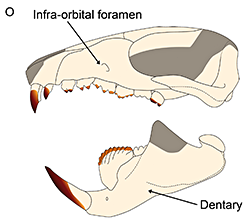
Isolated there, they evolved into a unique family known as the kogaionids, diverging from their ancestral mostly-herbivorous diet to instead become specialized insectivores with distinctly red iron-pigmented teeth and huge blade-like lower premolars.

Skull of Barbatodon, from fig 2 in Smith T, Codrea V (2015) Red iron-pigmented tooth enamel in a multituberculate mammal from the Late Cretaceous Transylvanian “Haţeg Island.” PLoS ONE 10(7): e0132550. doi: 10.1371/journal.pone.0132550  | CC-BY-4.0

Some of them also had oddly domed skulls and proportionally tiny brains, along with highly acute senses of smell, eyesight, balance, and motor control.

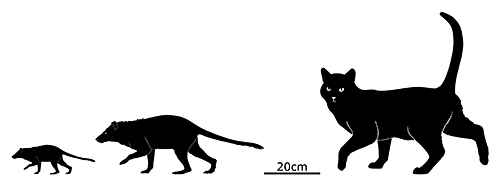
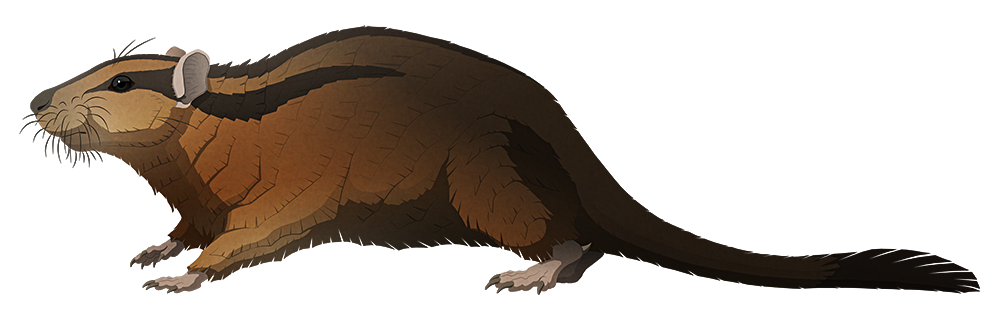
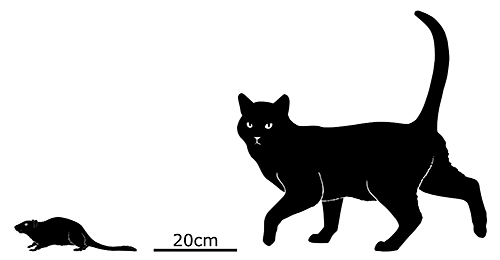
Kogaionon ungureanui was one of the first kogaionids to be discovered, and gives its name to the group as a whole. Although known only from a skull, it was probably rat-sized, around 30cm long (~12″).

Unusually for island species, which are often ecologically fragile and vulnerable, the kogaionids’ insectivorous habits allowed them to successfully survive through the end-Cretaceous mass extinction 66 million years ago while the Hațeg dinosaurs and pterosaurs perished. And when conditions changed and their island home became reconnected to the rest of Europe they rapidly spread out and became common across the entire region for a further 10 million years, only finally disappearing in the early Eocene about 56 million years ago.

Rayanistes

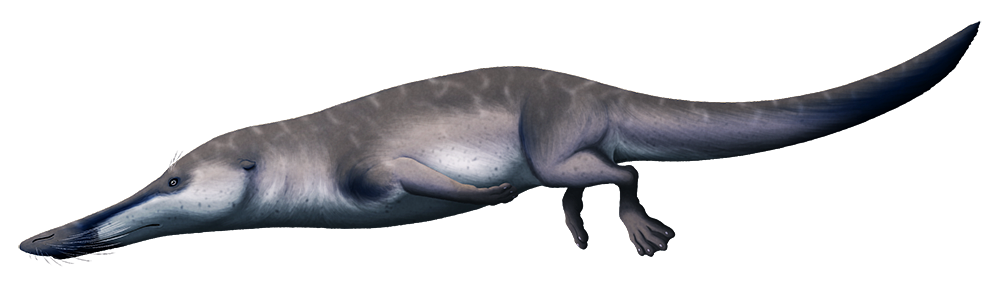
Remingtonocetids were an early branch of the whale evolutionary family tree, known from about 49-41 million years ago and splitting off somewhere between the famous “walking whale” Ambulocetus and the more oceanic protocetids. With otter-like bodies, tiny eyes, and long gharial-like snouts, they lived in near-shore shallow marine habitats and probably swam using a combination of their hind feet and tails.

They were initially found only in Pakistan and India, but then Rayanistes afer here was discovered all the way over in Egypt – suggesting that these early whales were much more widespread than previously thought, dispersing through the Tethys Sea at about the same time as their protocetid cousins.

Dating to the Middle Eocene (~45-41 mya), Rayanistes was probably about 2.5m long (8′2”). It had powerful hindlimb musculature that would have given it a very strong kicking swimming stroke, but it probably couldn’t actually support its own weight on land since its femur wasn’t very well anchored into its pelvis.

Eons Roundup

This year I’ve been lucky enough to have some of my work featured in several PBS Eons videos – and I even recently got the opportunity to do some custom images for them! Since I didn’t show any of these off at the time, here they are now:

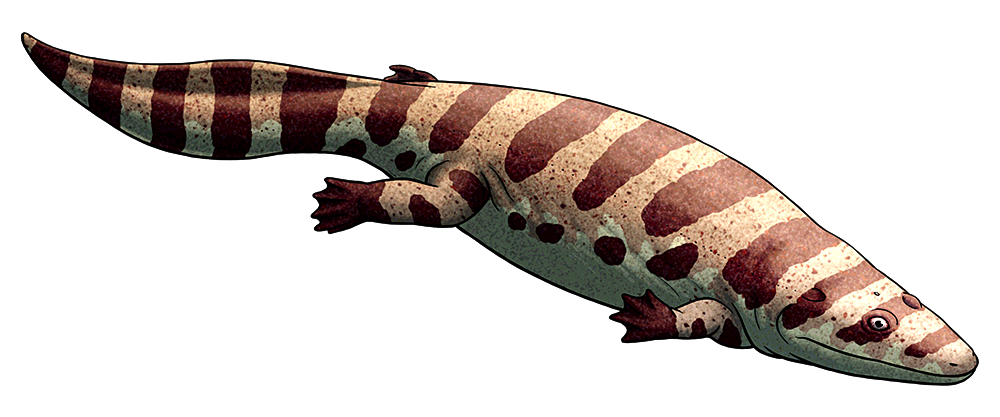
The basal temnospondyl amphibian Iberospondylus, from “When Giant Amphibians Reigned
https://www.youtube.com/watch?v=rGthtRZl8B0


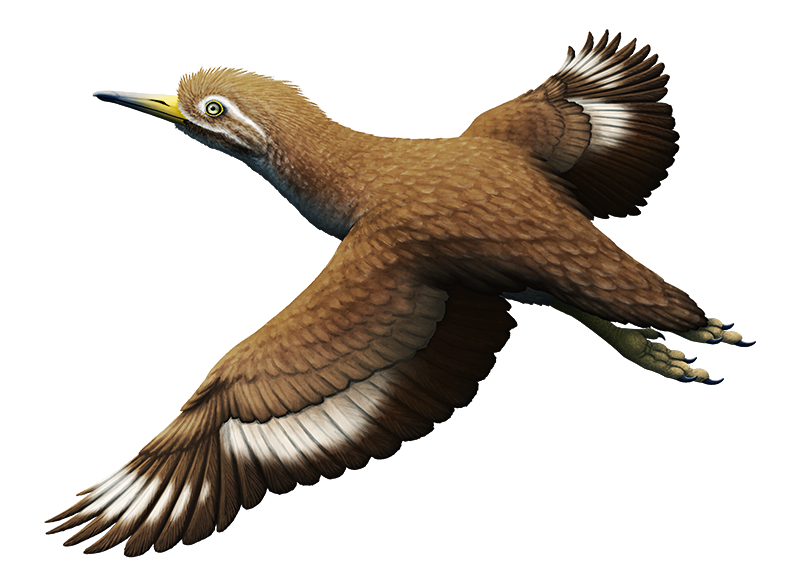
The flying paleognath bird Lithornis, from “When Birds Stopped Flying
https://www.youtube.com/watch?v=M3h05ajJw0o


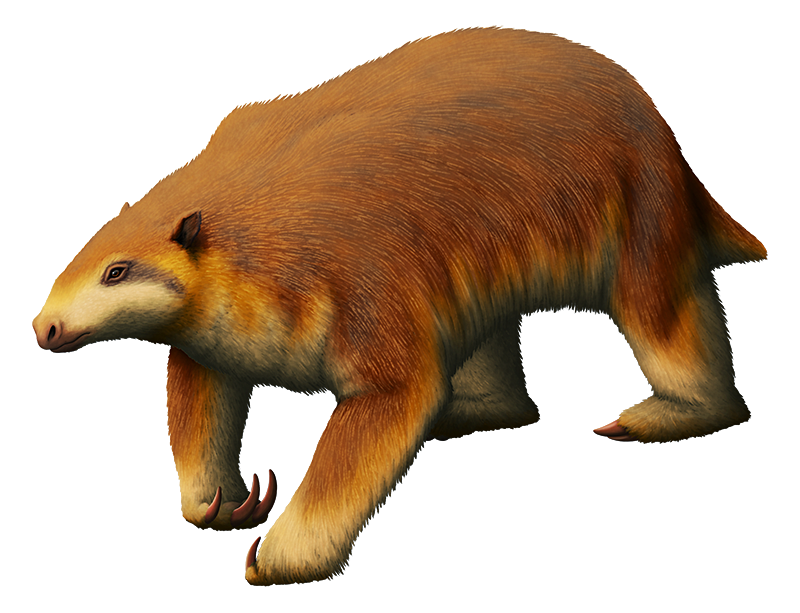
The ground sloth Nematherium, from “How Sloths Went From the Seas to the Trees
https://www.youtube.com/watch?v=pt9tBtQoAHo

Happy new year, everybody!

Peltephilus

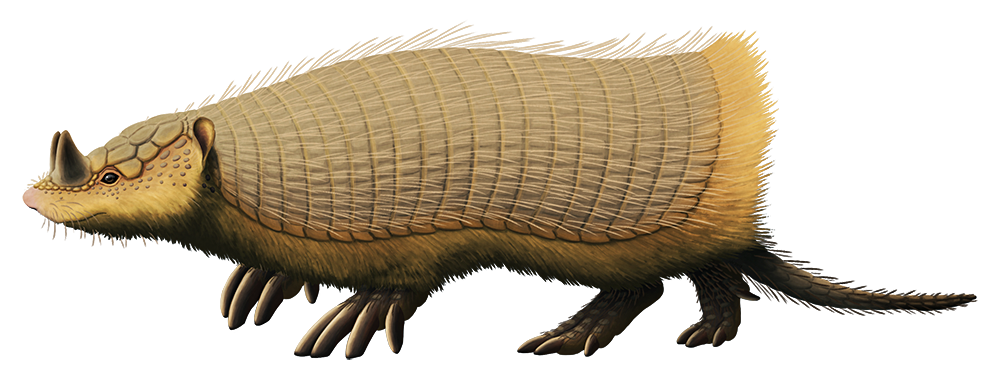
Peltephilus ferox, an armadillo from the Early Miocene of Argentina (~17-16 mya) that was similar in size to a large dog, probably around 1.5m long (5′). It had less solid armor than its modern relatives, with its bony osteoderms being arranged more like chain mail, loosely connected to each other and slightly overlapping, creating a much more flexible body covering.

Its most unusual features were the horns on its snout, convergently resembling the later horned gophers of North America. But unlike other mammals Peltephilus‘ horns were actually modified plates of its face armor, enlarged pointed osteoderms that were only connected to its skull by soft tissue membranes – meaning that after death they tended to fall off, and the exact number and position of them is still a little uncertain.

Its unusually broad snout and large teeth were originally interpreted as evidence of it being an active carnivore, but more recent studies of its anatomy have suggested that it was much more likely to have been a herbivorous or omnivorous digger, mainly feeding on underground plant matter like roots and tubers.

Enaliarctos

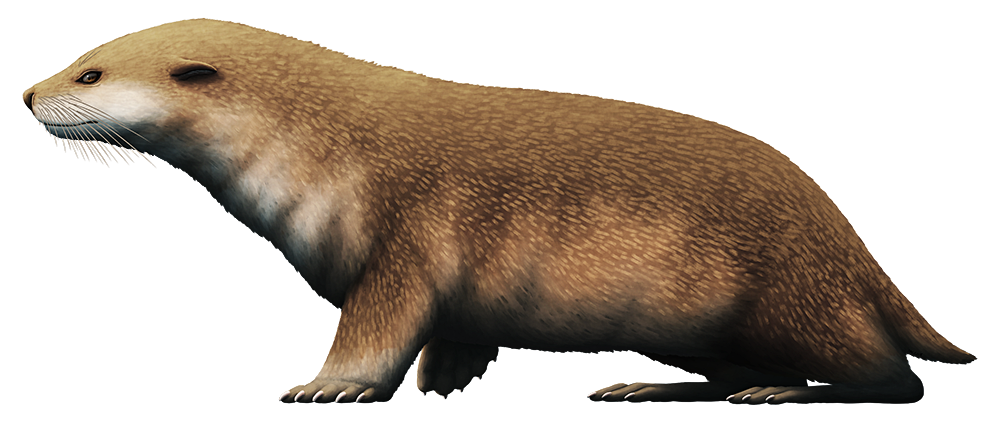
Enaliarctos mealsi, an early seal from the Late Oligocene and Early Miocene of California, USA (~23-20 mya).

Measuring about 1.5m long (5′), it was a transitional form between modern seals and their more otter-like ancestors. It was well-adapted for swimming with a flexible spine and flipper-like limbs, but unlike most modern pinnipeds it probably used both its front and hind flippers for propulsion.

Its teeth also still resembled those of terrestrial carnivores, with slicing carnassials at the back of its jaws. This suggests that it had to drag larger prey items back to shore in order to tear them apart and eat them, similar to the behavior of modern otters.

Diplacodon gigan

Diplacodon gigan, a brontothere from the Early Eocene of Wyoming, USA (~46-42 mya). Standing around 2.1m tall at the shoulder (~7′) it was named after the kaiju Gigan for its relatively large size – not quite as big as some later brontotheres, but still about 20% larger than other known species of Diplacodon.

It had a pair of blunt bony projections on its snout which would have been covered with skin in life, similar to the ossicones of modern giraffids, with males having larger “horns” than females.

Despite looking very similar to rhinos, brontotheres were actually much more closely related to horses, with the resemblance being a result of convergent evolution for the same sort of big-tanky-herbivore ecological niche.

Litovoi

Litovoi tholocephalos, a multituberculate mammal from the Late Cretaceous of Romania (~70-66 mya). Living on what was at the time the large offshore Hațeg Island, this rat-sized animal (about 25cm /10″ long) was part of a lineage of insectivorous multis called the kogaionids, with the same sort of red-colored enamel on its teeth as other species like Barbatodon.

Its brain was surprisingly tiny proportional to its size – one of the smallest known brain-to-body ratios of any mammal, and more similar to those of non-mammalian cynodonts – but it also seems have been highly specialized for processing sensory input, with relatively enormous regions associated with smell, eyesight, balance, and motor control. The olfactory bulbs of its brain were so enlarged, in fact, that they caused its skull to bulge out into an unusually dome-shaped forehead.

Its reduced brain size may have been due to limited food availability on its isolated island home. Brains are very metabolically expensive organs, and some other extinct island mammals like hippos, hominids, and goats are also known to have evolved smaller brain sizes. Modern shrews even seasonally shrink their own brains during winter for similar energy-saving reasons.

Almost-Living Fossils Month #24 – Sabertoothed Sparassodonts

Along with the marsupials and the polydolopimorphs, the sparassodonts were one of the lineages of metatherian mammals that inhabited South America during its “great isolation” for most of the Cenozoic. And despite having to share the large carnivore niches with both the terror birds and the sebecosuchian crocs, they still managed to become the main mammalian predators of the region.

Their first definite fossils come from the start of the Paleocene (~65 mya), but they probably actually originated sometime in the Late Cretaceous before the mass extinction. A currently-unnamed skull from Mongolia (~70 mya) appears to be either an early sparassodont or a very close relative, and a North American metatherian called Varalphadon (~90 mya) may also be linked to the group. It’s possible that, like the marsupials, they may have first evolved in North America and later spread into South America before it became isolated.

Like their marsupial relatives they would have given birth to tiny undeveloped young, although we don’t know for certain if they actually had pouches or not. Their epipubic bones were highly reduced, so it’s possible they didn’t have pouches – but they also might have had mostly cartilaginous epipubics (like thylacines) that just didn’t fossilize.

Over the course of the Cenozoic the sparassodonts convergently evolved many similar features to placental carnivorans, with carnassial teeth for shearing through flesh and a wide variety of body shapes ranging from small weasel-like forms to long-snouted ambush hunters to large hyaena-like bone-crushers.

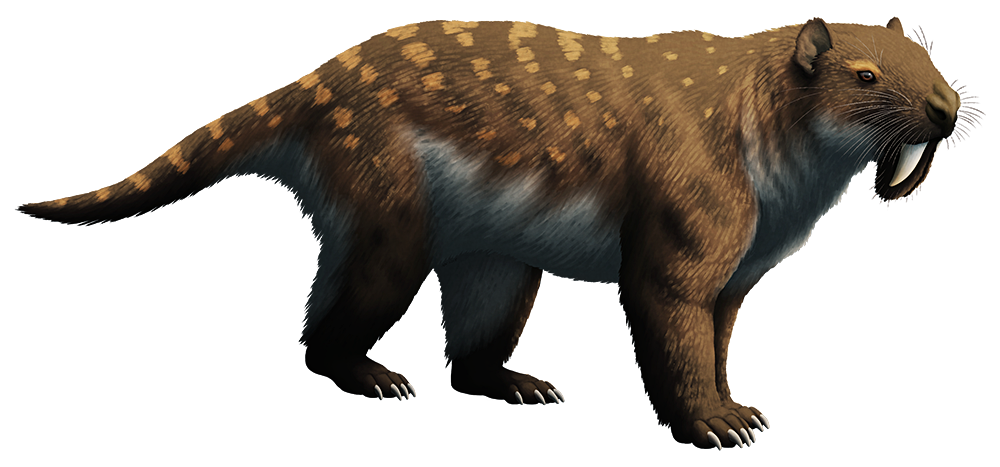
But by far the most famous members of the group were the thylacosmilids. First appearing in the Early Miocene, about 20-15 million years ago, these sparassodonts developed huge elongated canine teeth that resembled those of sabertoothed cats. Unlike the felid sabertooths, however, thylacosmilids’ fangs grew continuously and their lower jaws had long bony flanges that supported and protected their teeth when theirs jaws were closed.

Thylacosmilus atrox was the last and most highly specialized of the thylacosmilids, living from the Late Miocene to the Late Pliocene, around 9-3 million years ago. About 1.2-1.5m long (~4-5′) and standing 60cm tall at the shoulder (2′) it was similar in size to a modern jaguar – not huge compared to some placental predators, but still one of the largest of all known carnivorous metatherians.

Despite its huge fangs it actually had a fairly weak bite force, instead relying on its strong forelimbs to immobilize its prey before delivering precise deep stabs into soft body parts using powerful neck muscles. The structure of its limbs also suggests it wasn’t a fast runner, and it probably had to stalk or ambush its targets.

Although the extinction of Thylacosmilus and the other last sparassodonts is often blamed on being out-competed by similar placental carnivores arriving during the Great American Interchange, it seems like that wasn’t actually the case. Many of their northern placental equivalents such as Smilodon didn’t enter South America until the mid-Pleistocene (~1-0.7 mya), over 1.5 million years after the last record of any living sparassodonts. So it’s likely they never actually met each other, and the disappearance of the sparassodonts may be more linked to cooling climates in the Pliocene and early Pleistocene.

Almost-Living Fossils Month #19 – Even More Metatherians

While the opossum-like herpetotheriids and peradectids survived in the northern continents for most of the Cenozoic, a wider variety of metatherian mammals were found in the south. Alongside the true marsupials and the sparassodonts, a group known as the polydolopimorphs existed in South America for over 60 million years. Although most of the their fossil remains consist only of isolated teeth and jaw fragments, they seem to have been a very diverse group that adapted to a wide range of ecological niches including insectivores, herbivores, and fruit-eating and seed-eating specialists.

Their exact evolutionary position within the metatherians is still rather unclear and under dispute, with different studies giving different results. They were probably marsupialiformes, slightly less closely related to marsupials than the herpetotheriids, but some paleontologists instead consider them to have been true marsupials related to either the shrew opossums or the microbiotheres. (And some go with both options, proposing that they weren’t even a natural group but were polyphyletic, with some being marsupialiformes and others being true marsupials.)

The earliest definite polydolopimorph fossils come form the very start of the Paleocene in South America (~66 mya), but their lineage likely goes further back into the Late Cretaceous – possible remains from North America suggest they may have originated there at least 70 million years ago, with their ancestors migrating into South America shortly before the end-Cretaceous extinction. A few also reached Antarctica by the Late Eocene (~40-33 mya), before the continent had fully separated from its neighbors and frozen over, but it’s unclear whether any ever made it as far as Australia alongside their marsupial relatives.

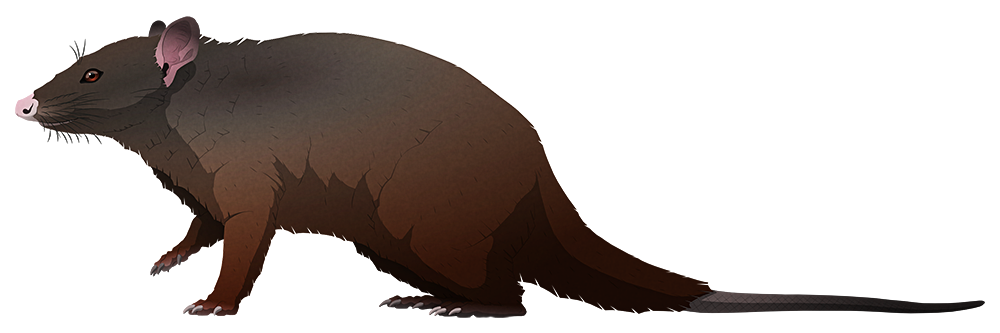
They were most diverse during the first half of the Cenozoic, and in the latter half they were represented mainly by a highly specialized lineage called the argyrolagids. Known from western and southern South America (Peru, Bolivia, Argentina, and Chile) from the Early Oligocene onwards, these polydolopimorphs were convergently rodent-like desert herbivores with short forelimbs and long hopping hindlimbs that gave them a resemblance to jerboas or springhares.

Argyrolagus palmeri here lived during the Early Pliocene of Argentina (~5-3.5 mya). About 40cm long (1′4″), it had only two toes on its feet, a long pointed snout, and large eyes and ears that indicate it was probably nocturnal.

These last polydolopimorphs survived until at least the end of the Pliocene, around 2.5 million years ago. Their disappearance coincides with the time of the Great American Interchange – when South America became connected to Central and North America – and they may have been some of the victims of the extinction caused by the influx of placentals from the north.