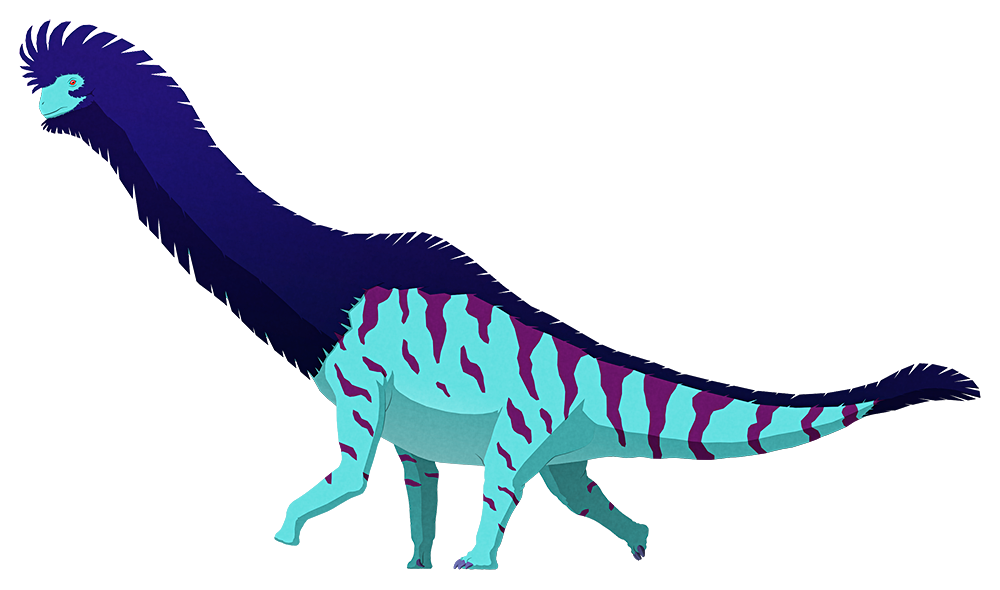
Island Weirdness #02 – Europasaurus holgeri

Sauropod dinosaurs are mainly known for being enormous, and so even some of the smallest members of the group were actually quite large compared to modern animals.

Europasaurus was an early brachiosaurid that lived during the Late Jurassic, about 154 million years ago, on a small island in the Lower Saxony region of northwestern Germany. It was an example of insular dwarfism in a sauropod, only growing to around 6.2m in length (~20′) – less than half the size of some of its other relatives.

A layer of rock just above the deposit of Europasaurus fossils also gives us a clue about their eventual fate. Footprints of large carnivorous theropods – bigger than the mini-sauropods themselves – suggest that at some point the sea level dropped and predators from the mainland were able to reach the island.

Since there were no large predators on the island before then,the small Europasaurus had no defenses against these new giant invaders. They very likely were literally eaten into extinction.
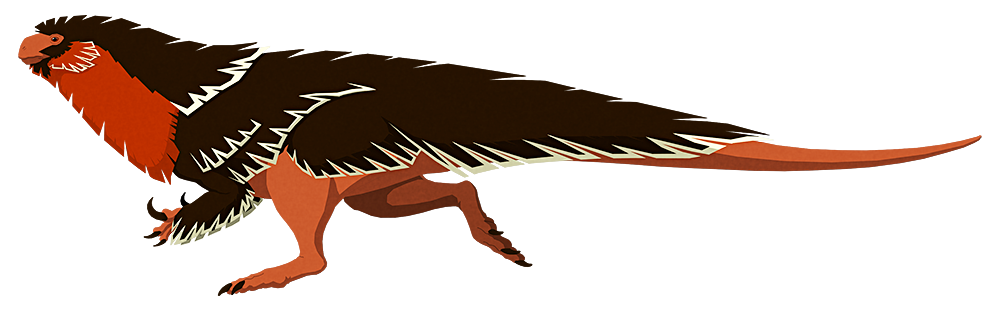
Island Weirdness #01

Islands are natural sites for evolutionary experiments. Their isolation and limited resources put a lot of selective pressure on their native species, often resulting in spectacular and unique adaptations. Big animals become small, small animals become big, and ecological niches can end up being filled in unexpected ways.

From the dodo becoming the first well-known example of human-caused extinction, to Darwin’s Galápagos finches being influential in the development of the theory of natural selection, to famous-but-endangered living examples like the kiwi and marine iguana, island species are fascinating and often fragile examples of how diverse life can get even in restricted conditions.

In fact, this theme ended up containing so many species I wanted to feature that I can’t possibly fit them all into just a single month. So, for the first time, a theme is going to need two months – with part 1 happening right now, and part 2 coming later this summer.


Thecodontosaurus antiquus

For much of the Mesozoic Europe was an archipelago of islands in a shallow tropical sea. During the Late Triassic, about 205-201 million years ago, some of the paleo-islands in this region existed around southern Wales and South West England, near the city of Bristol.

Thecodontosaurus was actually one of the first non-avian dinosaurs ever named by modern science, discovered in the mid 1830s – several years before the term “dinosaur” was even created to classify the “great ancient lizards”.

It was an early member of the herbivorous sauropodomorphs, the group that would eventually include the largest ever land animals. But unlike its enormous later cousins it was short-necked and bipedal, and was particularly small compared to other contemporary “prosauropods”, measuring only about 2m long (6′6″). This would make it one of the oldest known examples of insular dwarfism.

Rayanistes

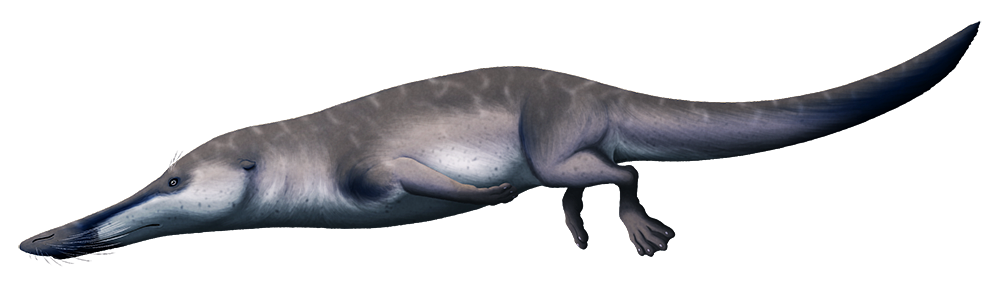
Remingtonocetids were an early branch of the whale evolutionary family tree, known from about 49-41 million years ago and splitting off somewhere between the famous “walking whale” Ambulocetus and the more oceanic protocetids. With otter-like bodies, tiny eyes, and long gharial-like snouts, they lived in near-shore shallow marine habitats and probably swam using a combination of their hind feet and tails.

They were initially found only in Pakistan and India, but then Rayanistes afer here was discovered all the way over in Egypt – suggesting that these early whales were much more widespread than previously thought, dispersing through the Tethys Sea at about the same time as their protocetid cousins.

Dating to the Middle Eocene (~45-41 mya), Rayanistes was probably about 2.5m long (8′2”). It had powerful hindlimb musculature that would have given it a very strong kicking swimming stroke, but it probably couldn’t actually support its own weight on land since its femur wasn’t very well anchored into its pelvis.

Cycnorhamphus

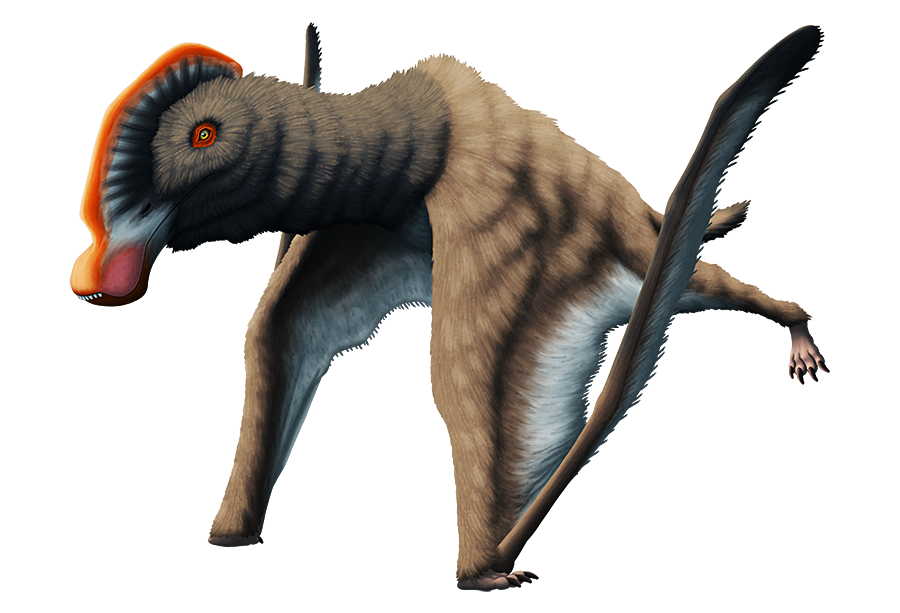
Cycnorhamphus suevicus, a pterosaur from the Late Jurassic of Germany and France (~150-145 mya).

It had a wingspan of about 1.3m (4′3″), and was originally thought to look similar to Pterodactylus with long straight jaws – but a well-preserved fossil nicknamed “the Painten Pelican” revealed its snout was actually much more oddly-shaped.

“Painten Pelican mount” by Mike Steele | CC BY 2.0 | cropped from original

It turns out Cycnorhamphus’s jaws arced outwards, creating an opening that seems to have become more pronounced as individuals reached adulthood. Soft-tissue impressions in the fossil also show some sort of stiff “flanges” on each side of the upper jaws, covering the gap and giving it a sort of bulldog-like appearance.

The function of this jaw structure is unknown for certain, but it’s been speculated to be a specialization for cracking open hard-shelled prey like molluscs.

Enantiophoenix

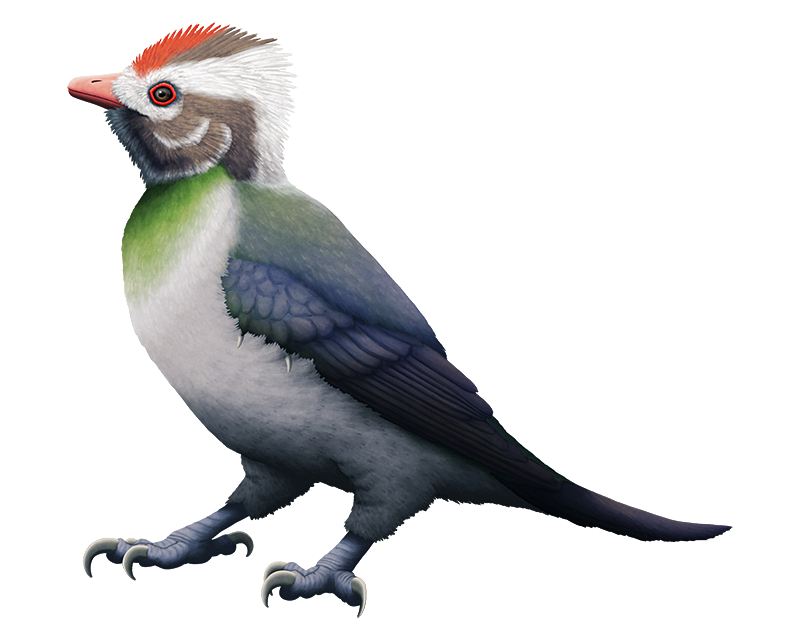
Enantiophoenix electrophyla, an enantiornithean bird from the Late Cretaceous of Lebanon (~95 mya).

It was similar in size to a modern starling, around 20cm (8″) long, and although only known from a fragmentary fossil it had fairly chunky leg bones with large claws. It was probably a strong percher like most other avisaurid enantiornitheans.

Several tiny pieces of amber were also found within the fossil, which have been suggested to be stomach contents. This could perhaps be evidence of Enantiophoenix feeding on tree sap like modern sapsuckers, but without a known skull it’s hard to tell for certain whether it was specialized for that sort of diet or not.

Eretmorhipis

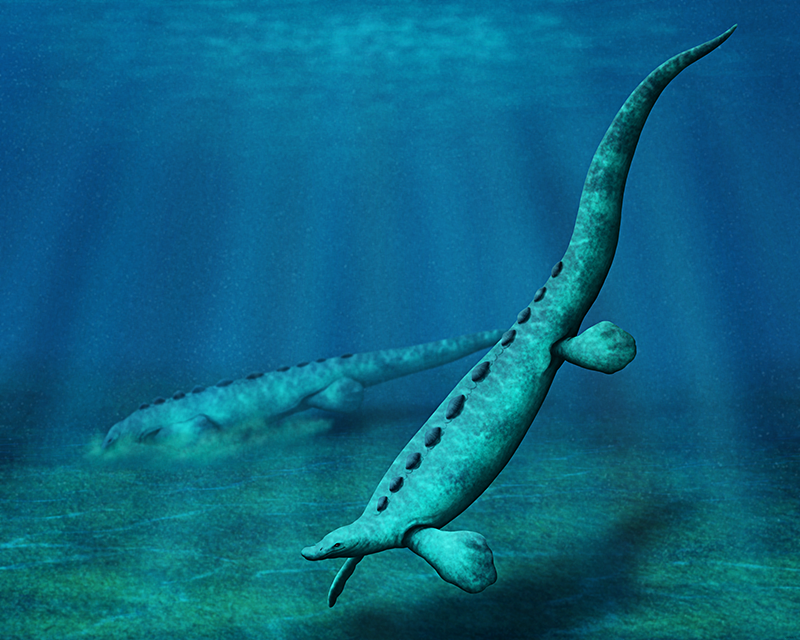
Eretmorhipis carrolldongi, a hupehsuchian marine reptile from the Early Triassic of China (~247 mya).

This species was originally named back in 2015, but at the time the only known specimens were missing their heads. It was assumed that its skull would have looked similar to those of other hupehsuchians… but now new fossils have been found, and it seems to have actually been much much weirder!

Eretmorhipis’ head was surprisingly tiny in proportion to its body – sort of like a marine version of Cotylorhynchus – and its shape convergently resembled the modern platypus, with a wide “duck bill” and very small eyes. It may have hunted for food along the seafloor in a similar manner to the platypus, using either a highly sensitive sense of touch or possibly even electroreception to locate small invertebrates like worms and shrimp.

It also had much larger bony osteoderms than its other known hupehsuchian relatives, forming a distinctive protruding spiky ridge down its back. At about 85cm in length (2′9″) it was one of the largest marine animals around at the time, so this structure probably wasn’t needed for defense – but as with other hupehsuchians its actual function is still unknown.

Triopticus

What Triassic animal has a name that sounds like a Transformers character?

Triopticus primus!

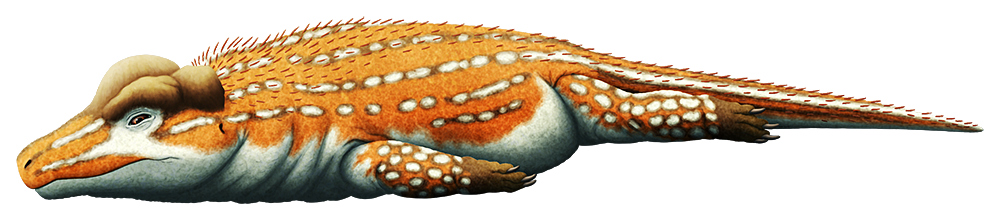
Living in Texas, USA, during the Late Triassic, about 229-226 million years ago, Triopticus was a type of archosauriform reptile (a “cousin” to crocodiles, pterosaurs, and dinosaurs). Classifying it any more specifically than that is rather difficult since it’s only known from a single partial skull.

It had five large bony bosses on its head that convergently resembled the domes of pachycephalosaurs, suggesting it may have engaged in similar headbutting or flank-butting behavior. At the back of its skull there was also a distinctive deep pit that looked like a “third eye socket”, inspiring it its name – although this feature probably wasn’t actually a parietal eye, instead just being the result of the way several of the bosses came together at that point.

The rest of its appearance is unknown, and this reconstruction is rather speculative as a result. But based on other archosauriformes it was likely to have been a small semi-sprawling quadruped, possibly around 80cm in length (2′7″).

Kulindroplax

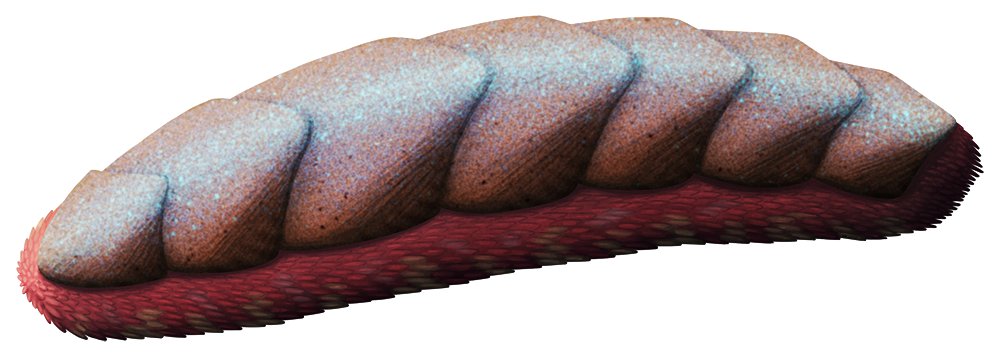
Kulindroplax perissokomos, a mollusc from the mid-Silurian of England (~428-423 mya).

About 4cm long (1.6″), it had a wormlike body covered in spicules (tiny spines) which suggests it was a member of the aplacophoran molluscs – but it also had a row of seven larger shells along its back resembling those of chitons.

Modern aplacophorans are all shell-less and were traditionally thought to be a very early branch of the mollusc lineage that retained a “primitive” ancestral body plan. More recently, however, a combination of genetic evidence and fossil discoveries of animals like Kulindroplax have revealed that they’re actually close relatives of the chitons and instead lost their shells much more recently during the course of their evolution.

Qianzhousaurus

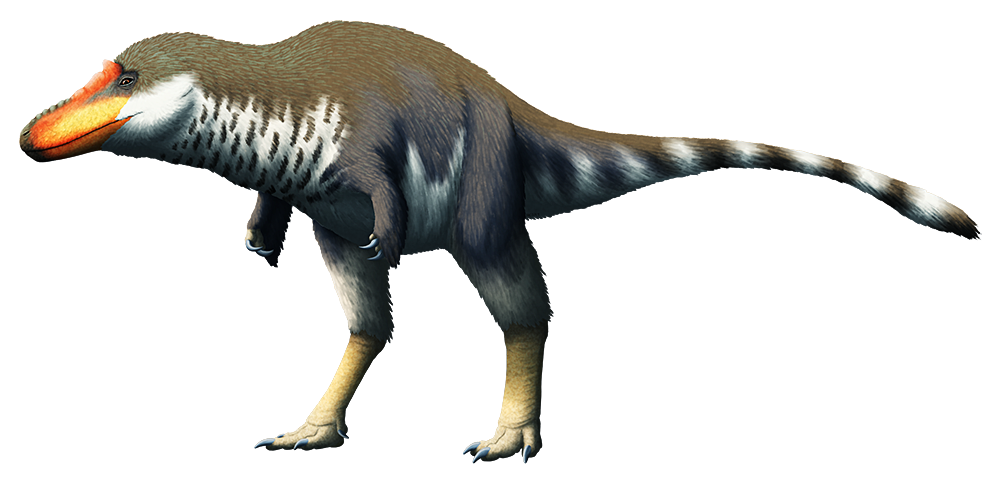
Qianzhousaurus sinensis, a tyrannosaur from the Late Cretaceous of southern China (~72-66 mya). Measuring about 9m long (29′6″) it had an unusually long and slender snout for a tyrannosaur, leading to its nickname of “Pinocchio rex”.

The only other known long-snouted tyrannosaur was the closely related Alioramus from Mongolia – but since only juveniles of that genus have been found so far, it’s also possible that Qianzhousaurus was actually just a fully-grown species of Alioramus.

Anomalochelys

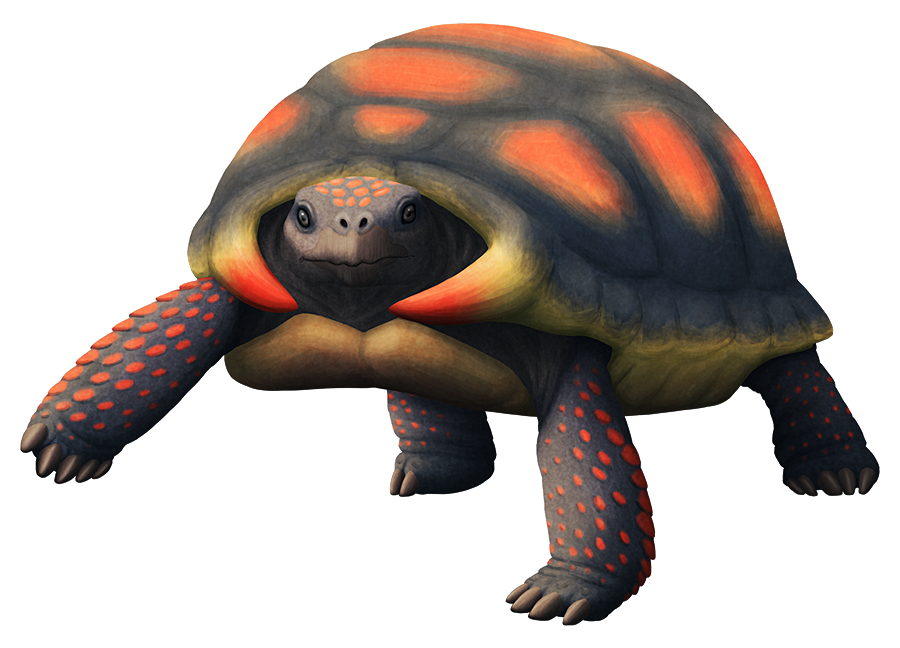
Anomalochelys angulata, a terrestrial turtle from the mid-Cretaceous of Hokkaido, Japan (~100-94 mya).

Measuring around 60cm long (2′), it had a pair of large forward-facing horn-like spikes at the front of its shell – the function of which isn’t clear, but they may have been useful for defense if it was incapable of fully retracting its head into its shell.

It was part of a family of turtles from Asia and North America known as nanhsiungchelyids, a group that adapted to live fully on land and ended up convergently closely resembling modern tortoises. Other members of this group included the larger Nanhsiungchelys (which was also recently found to have possessed “horns” on its shell!) and the very flat Basilemys.

They were also a rare example of a turtle family that didn’t survive through the end-Cretaceous mass extinction, with no known remains from the Cenozoic.