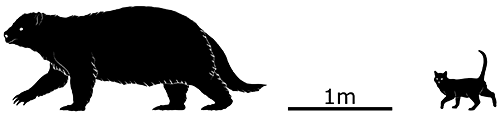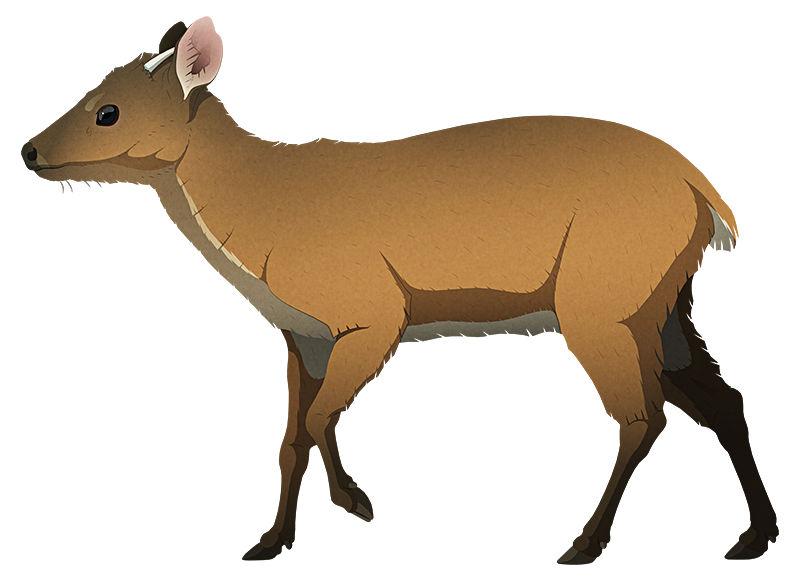
Island Weirdness #45 — The Pedro González Dwarf Deer

Isla Pedro González is part of the Pearl Islands in the Gulf of Panama, about 48km (30 miles) offshore. It was formed after the end of the last glacial period, as steadily rising sea levels cut it off completely from mainland Panama about 8500 years ago — and isolating the population of deer that lived there.

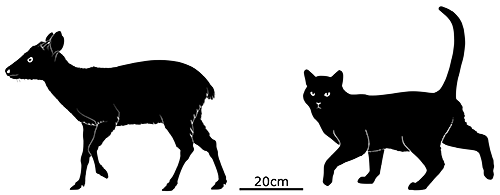
Although Pedro González is the third largest of the Pearl Islands it’s still fairly tiny, just 6.5km long (4 miles). As a result of this small space, limited available food supplies, and a lack of any large predators, these deer rapidly shrank down into a dwarfed form to survive. By 6000 years ago they were the size of a small dog, just 35-40cm tall at the shoulder (1’2″-1’4″) and weighing less than 10kg (22lbs).

The Pedro González dwarf deer haven’t been given any official scientific name just yet, but since they’re thought to be descendants of brocket deer they’d be a part of the genus Mazama, either as their own separate species or as a subspecies — similar to the larger native deer on nearby Isla San José, which are probably their closest living relatives.

Paleoindian settlers arrived on Pedro González just over 6000 years ago, and we know they hunted and ate the tiny deer because all the known remains come from a preserved trash heap and show signs of human butchering and chewing.

Younger deposits have gradually less and less deer bones, and although those particular settlers had left again by about 5500 years ago the damage was already done — layers from another group of people about 2300 years ago show no deer bones at all, so the dwarf deer had to be already extinct by that time.

Island Weirdness #44 — Tiny Elephants On Parade Part 4: Mammoth-Mimics & Mini-Mammoths

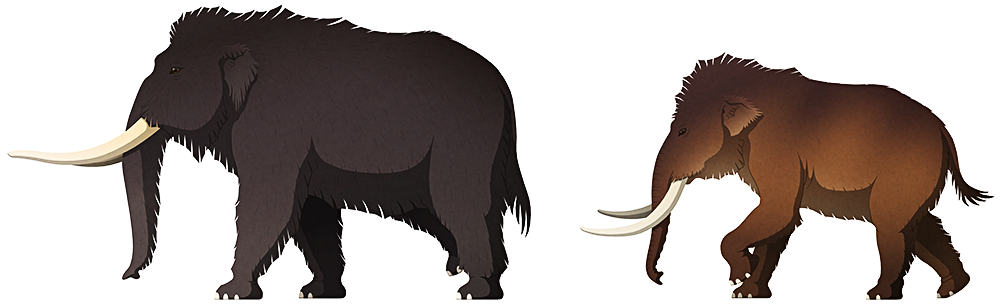
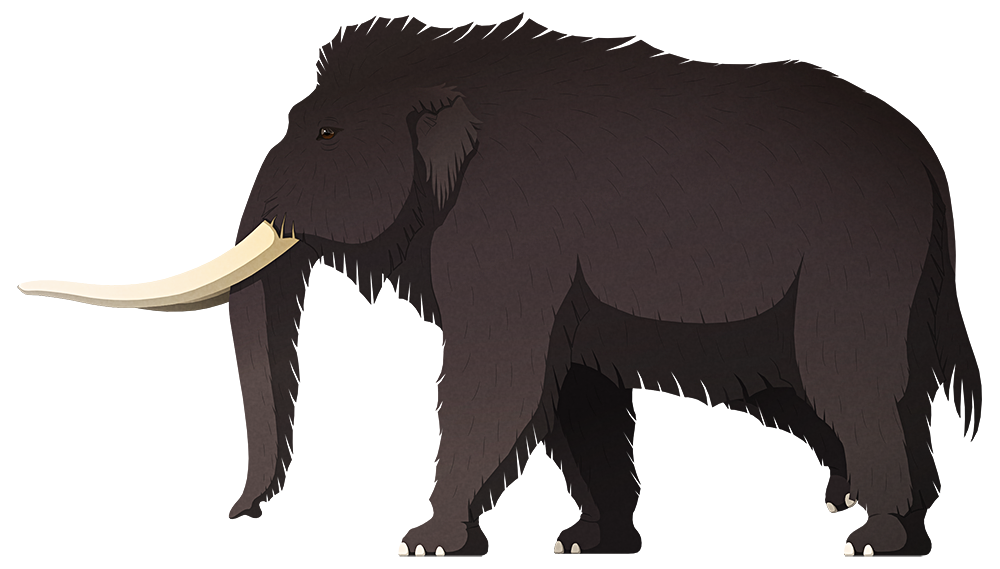
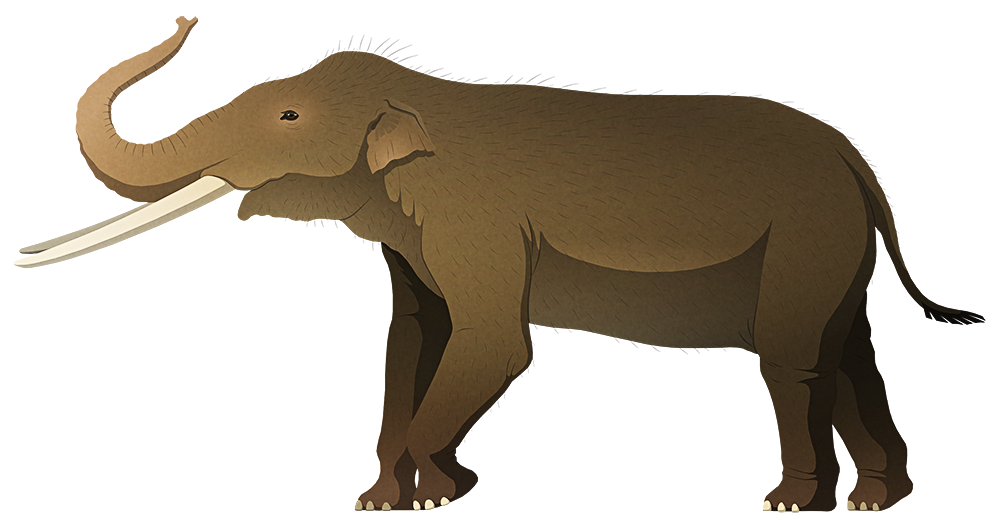
In the cool-temperate climate of Pleistocene Japan one type of small elephant seems to have convergently become somewhat of a mammoth-mimic, with twisting tusks and possibly even a thick coat of hair.

A stylized illustration of an extinct mammoth-like elephant. It has long twisting tusks, small ears, and a speculative coat of long hair.
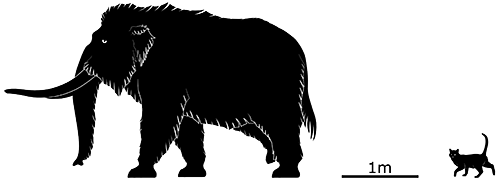
Palaeoloxodon naumanni

Palaeoloxodon naumanni lived during the late Pleistocene, between about 500,000 and 16,000 years ago. At about 2-2.5m tall at the shoulder (6’6″-8’2″) it was still fairly large, similar in size to the smallest living elephant species — but it was a dwarf in comparison to its immediate ancestors, the absolutely enormous Asian straight-tusked elephant (Palaeoloxodon namadicus). 

Actual woolly mammoths (Mammuthus primigenius) were also present in Japan, but the two similar-looking elephants inhabited different environments — Palaeoloxodon naumanni preferred the southern forests, while the true mammoths roamed the colder north.

Humans arrived in Japan around 40,000-30,000 years ago, so Palaeoloxodon naumanni actually coexisted with them for quite some time. Although it was hunted, it seems to have mainly been climate change towards the end of the last glacial maximum that led to its extinction.


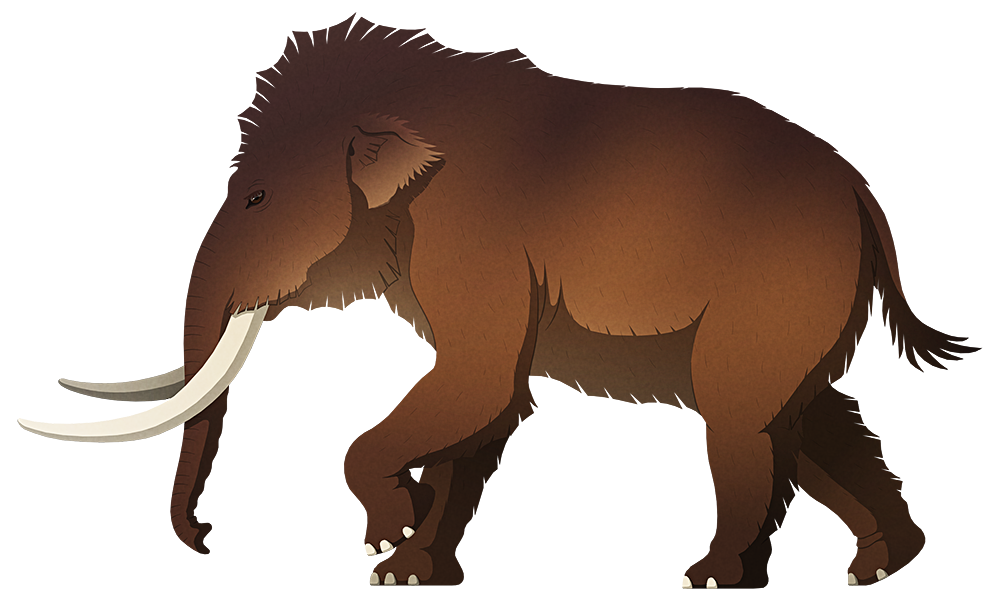
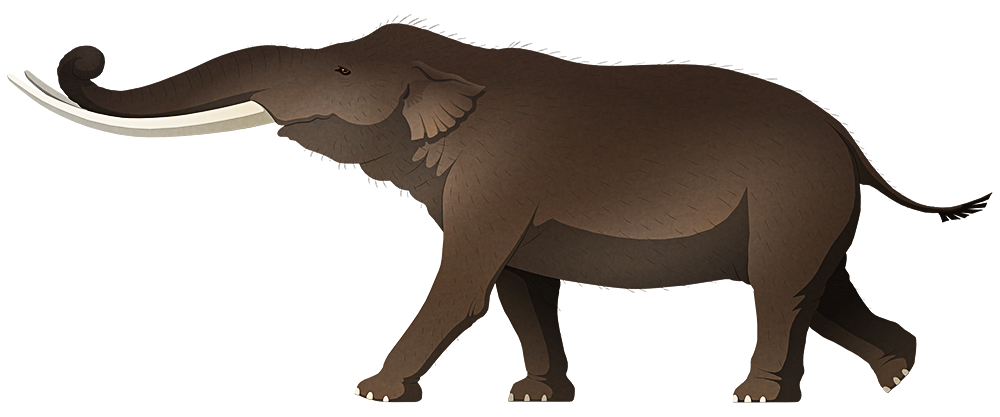
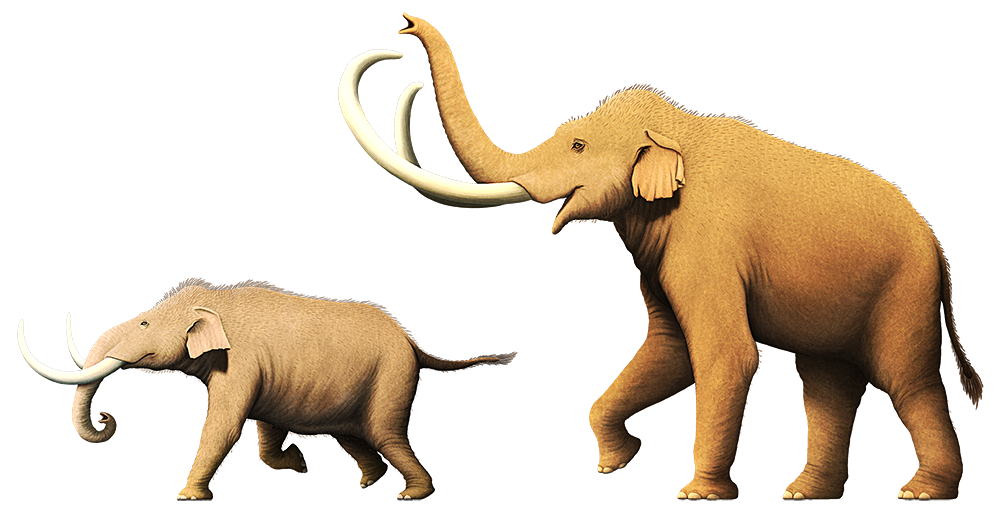
A stylized illustration of an extinct pgymy mammoth. It has curving tusks, small ears, and a speculative coat of hair.
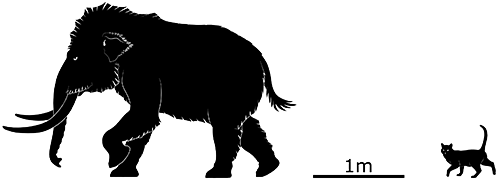
Mammuthus exilis

Over on the other side of the Pacific Ocean, at least 60,000 years ago, some huge Columbian mammoths (Mammuthus columbi) swam the 6.5km (4 miles) distance to the ancient island of Santa Rosae — a landmass that today is mostly submerged, with its remaining peaks forming the modern California Channel Islands.

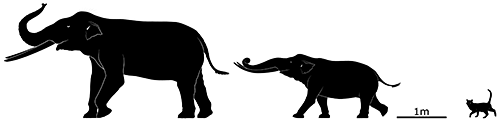
With a lack of large predators and then steadily rising sea levels reducing the available habitat on their new home, the mammoths shrank into a dwarfed species known as the Channel Islands pygmy mammoth (Mammuthus exilis). Standing around 1.75-2m at the shoulder (5’9″-6’6″), they were less than half the size of their ancestors and had only about 10% of the body mass.

The pygmy mammoths survived until about 13,000 years ago, around the same time that early Paleoindians arrived. While they may also have been hunted by humans, the warming post-glacial climate is currently thought to be the main factor in their extinction, changing the types of vegetation on their still-shrinking islands and reducing fresh water sources. 

(And if you prefer your pygmy mammoths less speculatively hairy, there’s always the version I did for PBS Eons earlier this year.)

Island Weirdness #32 — Tiny Elephants On Parade Part 3: More Indonesia

It’s finally time for part 2 of the Island Weirdness series!

(If you haven’t seen the previous installments, I suggest starting back at the beginning here.)


We left off last time with the dwarf stegodontids of Flores, but other Indonesian islands also had their own populations of unusually small elephant-relatives — so here’s a few more to start off this month!

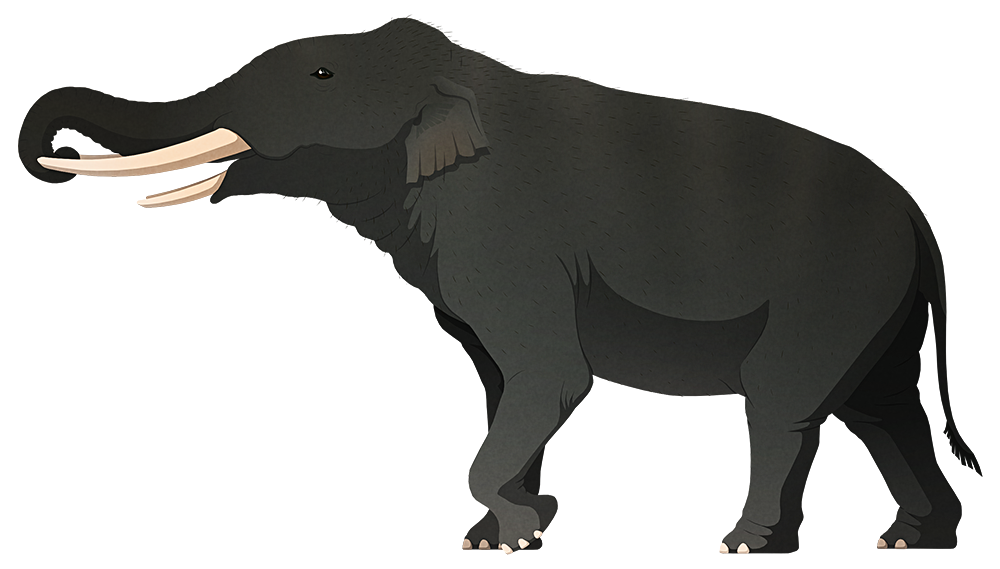
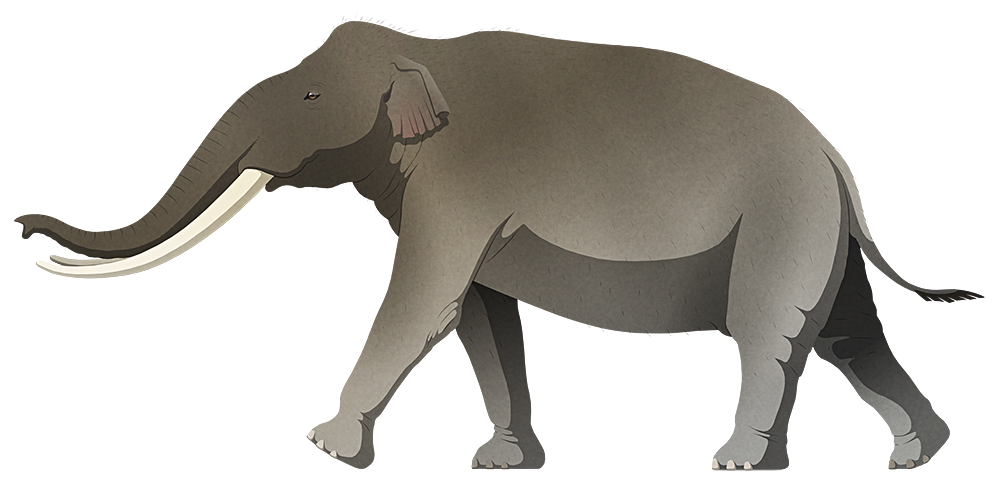
A stylized illustration of an extinct dwarf elephant. It has long straight tusks and small ears.
Sinomastodon bumiajuensis

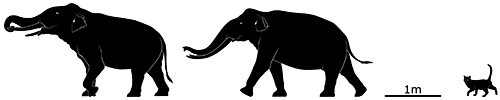
Sinomastodon bumiajuensis lived on the island of Java during the early Pleistocene, about 2-1.5 million years ago. It stood around 2m tall at the shoulder (6’6″), less than half the size of most other Sinomastodon species from mainland Asia. Although it looked convergently similar to modern elephants it was actually a member of the gomphotheres, much more closely related to the weird “shovel-tuskers” than to any living species.

A stylized illustration of an extinct dwarf elephant. It has long gently curving tusks and proportionalyl short legs.
Stegodon semedoensis

Stegodon semedoensis, also from the early Pleistocene of Java about 1.5 million years ago, is only known from a few isolated molar teeth — but the size of those teeth suggest it was one of the smallest known pygmy stegodontids. It was probably no more than 1.2m at the shoulder (3’11”), comparable in size to its close relative Stegodon sondaari over on Flores.


A stylized illustration of an extinct dwarf elephant. It has four straight tusks, two longer ones in its upper jaw and two shorter ones in its lower jaw.
Elephas celebensis

Meanwhile on Sulawesi, Elephas celebensis (sometimes called Stegoloxodon celebensis) was an actual true elephant closely related to the modern Asian elephant. Living during the late Pliocene and early Pleistocene, between about 2.5 million and 800,000 years ago, it was only 1.5m tall (5′) and had a second set of tusks in its lower jaw, a “primitive” feature retained from the gomphothere-like ancestors of modern elephants.

A stylized illustration of an extinct dwarf elephant. It has long curving tusks and small ears.
Stegodon sompoensis

At the same time Sulawesi also had yet another small stegodontid, Stegodon sompoensis, also around 1.5m tall.

Both of these dwarfs lived alongside a larger Stegodon species, as well as giant tortoises and large-tusked pigs.

The cooling climate of the Pleistocene and dropping sea levels eventually connected the islands of western Indonesia to the Sundaland landmass of mainland Asia. Influxes of new predators and competitors — and early humans — probably drove these endemic small elephants to extinction.

Antilohyrax

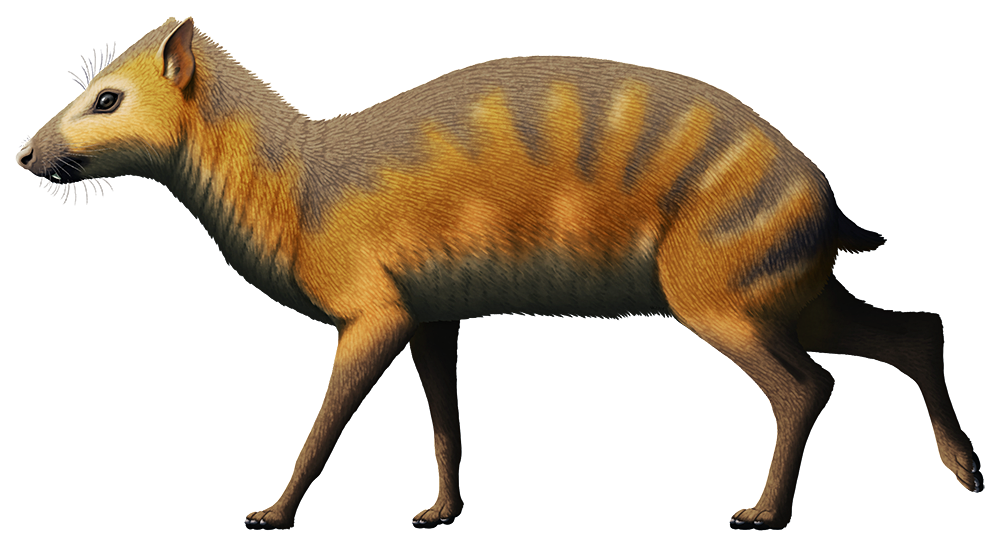
This is not a deer.

In Africa during the Eocene and Oligocene, the main terrestrial herbivores were a different type of mammal entirely: hyraxes, the close relatives of elephants and manatees. Although their only modern representatives are small climbing rodent-like animals, hyraxes were once a much more diverse and widespread group, filling a variety of ecological niches and ranging from the size of rats up to the size of rhinos.

Antilohyrax pectidens was a mid-sized example of these diverse hyraxes, standing about 50cm tall at the shoulder (1′8″) and living around 34-28 million years ago in Egypt. It had a deer-like snout and long slender limbs adapted for running and leaping, with leg bones incredibly similar in size and proportion to modern springbok.

Its incisor teeth were comb-shaped and resembled those of colugos, so it was probably a similar sort of selective browser eating soft leaves and shoots.

Eons Roundup 3

Some more recent work I’ve done for PBS Eons!

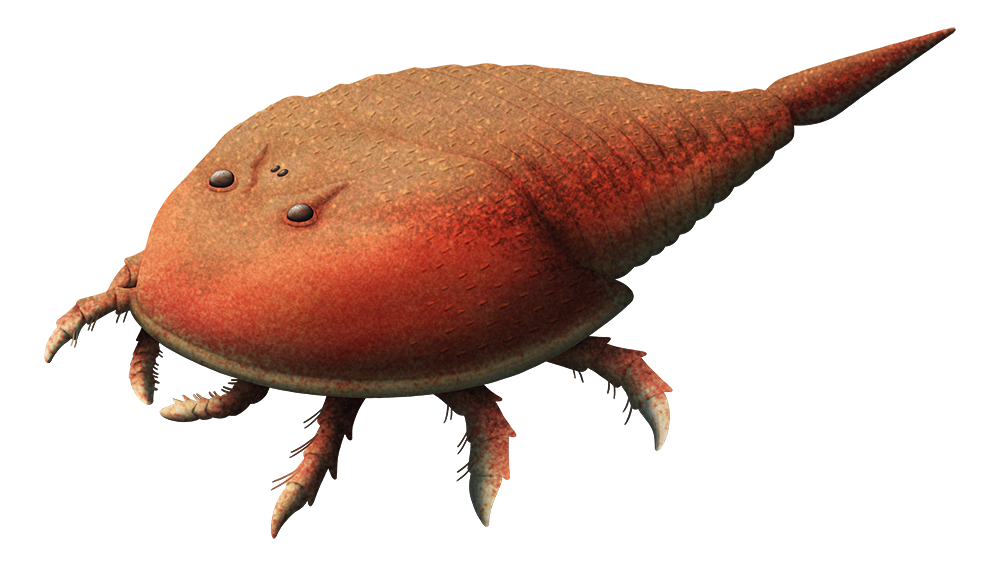
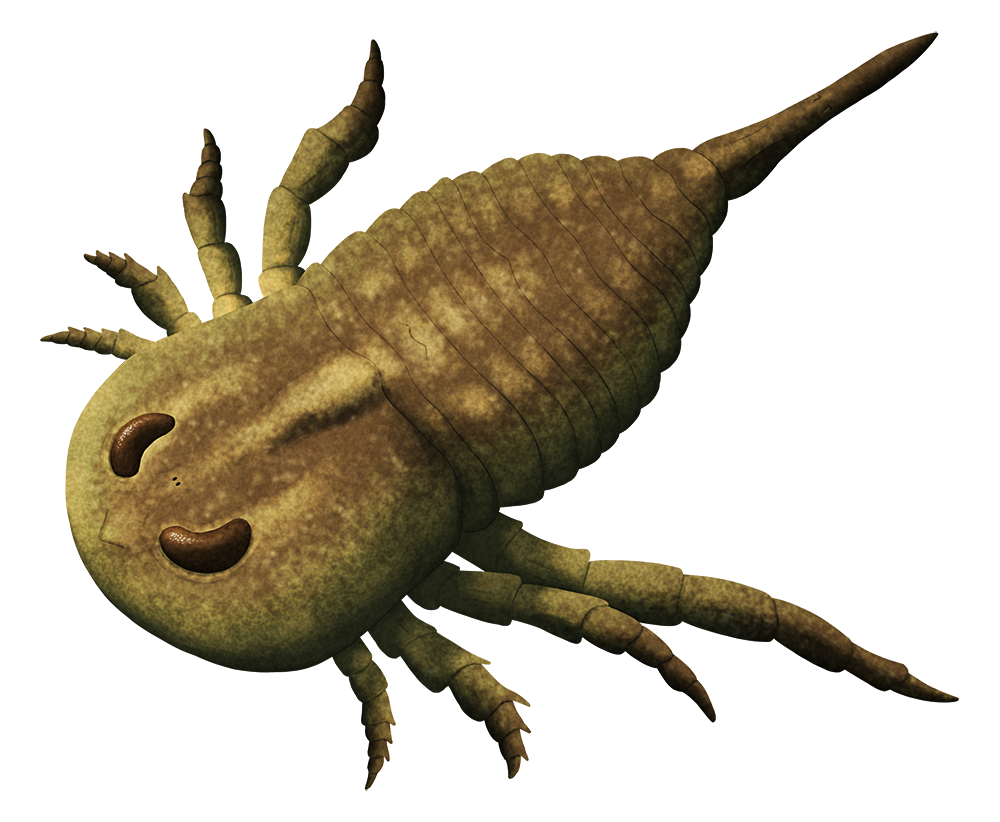
The eurypterids Hibbertopterus and Brachyopterus, from “When Giant Scorpions Swarmed the Seas
https://www.youtube.com/watch?v=1sQXTXbuLYo


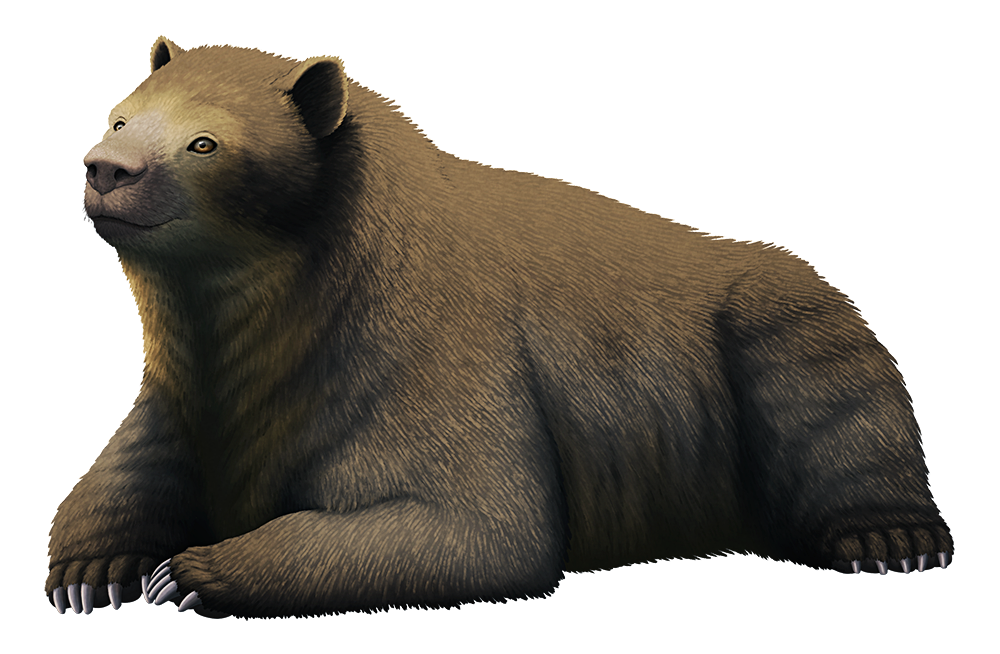
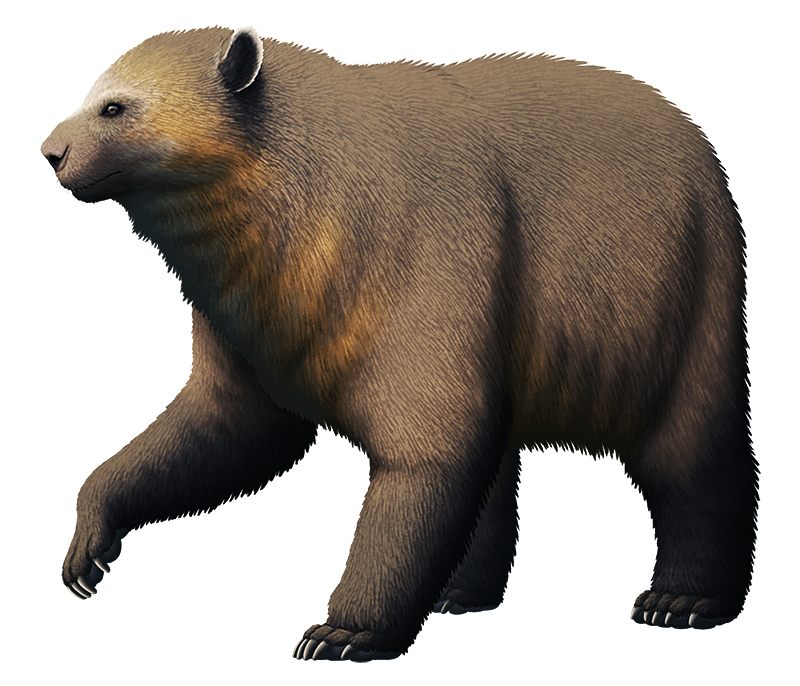
The short-faced bears Plionarctos and Arctotherium, from “The Mystery Behind the Biggest Bears of All Time
https://www.youtube.com/watch?v=KtsOhmBb92E


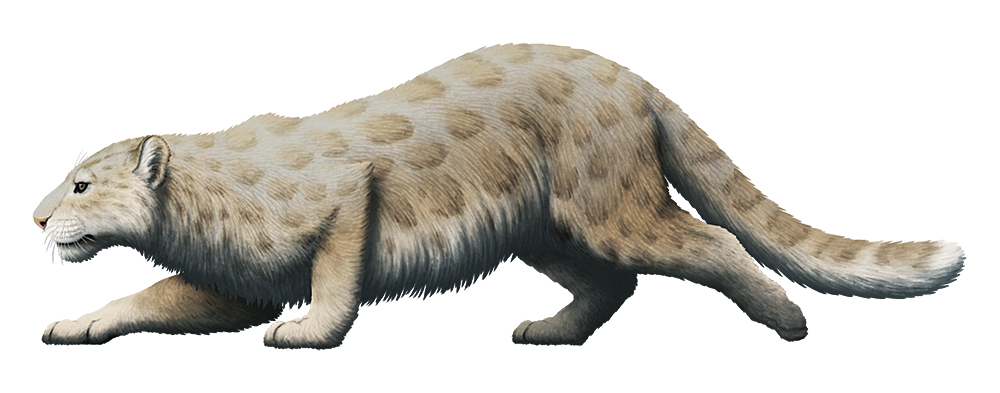
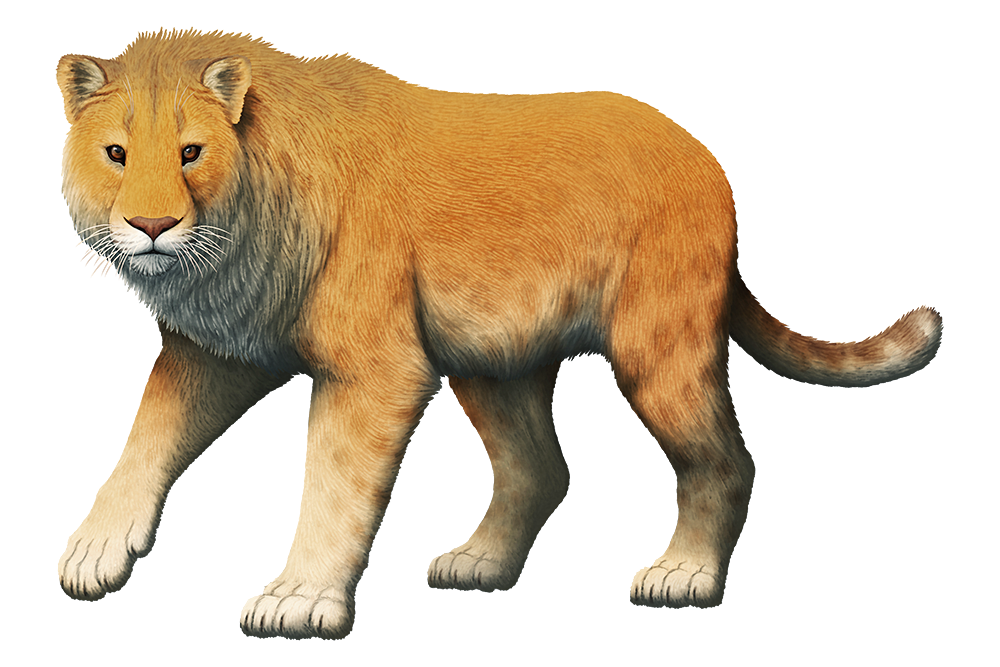
The big cats Panthera blytheae and Panthera atrox, from “The Ghostly Origins of the Big Cats
https://www.youtube.com/watch?v=oPJnqWke5n8

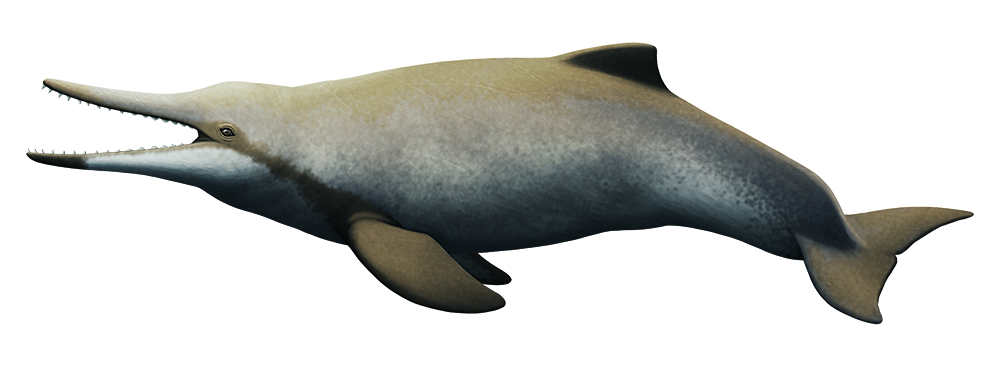
Inticetus

While most modern toothed whales have jaws full of teeth that are all the same simple pointed shape – an adaptation for better holding onto slippery prey – their ancient ancestors had teeth much more like other mammals, with differentiated incisors, canines, and molars.

In-between them were whales like Inticetus vertizi, which lived off the coast of southwestern Peru during the Early Miocene, about 18 million years ago.

At over 3.5m long (11′6″) it was one of the larger known toothed whales around at the time, but it wasn’t the direct ancestor of any living whales. Instead it was more of an evolutionary “cousin” to them, part of an older offshoot lineage that lived alongside the early members of modern toothed whale groups.

Inticetus had a long and unusually wide-based snout, somewhat croc-like in appearance, with sharp pointed teeth at the front and multi-lobed cheek teeth further back. A lack of obvious wear on its back teeth suggests it wasn’t using them to chew up its food, and it may have had a fairly specialized diet – possibly using those back teeth to sieve small prey out of the water in a similar manner to modern lobodontine seals.

An close-up view of Inticetus' jaws, showing the differences in tooth shape from front to back.
Closeup of Inticetus‘ jaws

Inticetus-like teeth have also been found in Miocene-aged deposits in the eastern USA, the Atlantic coast of France, and southeast Italy, indicating that this ancient whale lineage was quite widespread.

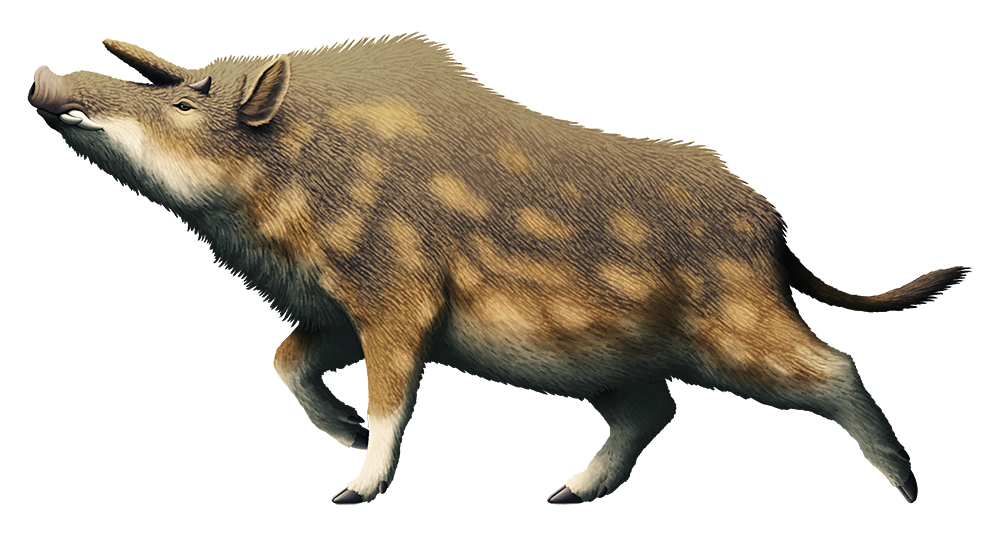
Kubanochoerus

Pigs were once unicorns.

Kubanochoerus gigas lived about 15-7 million years ago during the mid-to-late Miocene, and ranged across a large portion of Eurasia with fossils known from both Georgia and China.

It was one of the largest known pig species to ever live, slightly bigger than the modern giant forest hog at about 1.2m tall at the shoulder (3′11″). But its most distinctive features were its horns, with a small pair above its eyes and a single large forward-pointing one on its forehead.

A few specimens lack the large horn, and so some paleontologists consider it to be a sexually dimorphic trait possessed only by males. But it’s currently unclear whether this was actually the case, since at least one “hornless” skull has been reported with the distinctive larger tusks also associated with male pigs – so it’s possible that the horned and hornless Kubanochoerus were actually separate species!

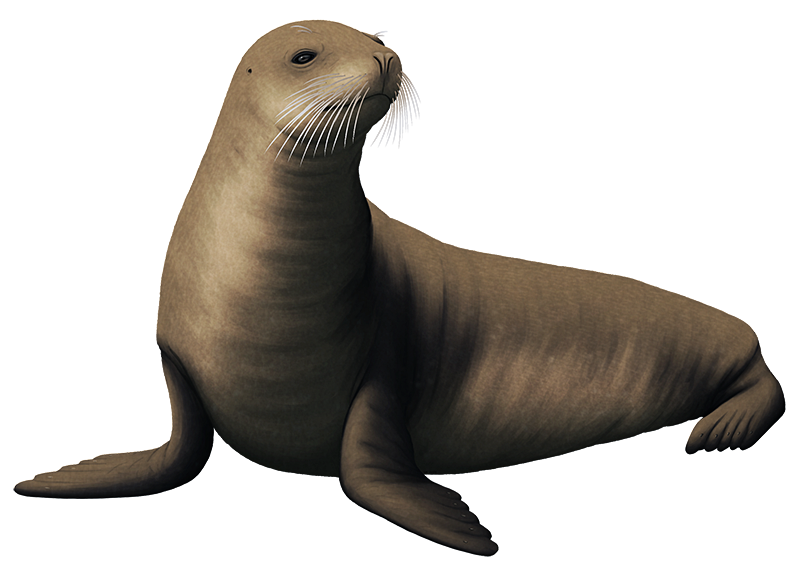
Nanodobenus

Nanodobenus arandai, a pinniped from the mid-to late Miocene (~16-9 mya) of Baja California Sur, Mexico. Although it would have looked very similar to a sea lion, it was actually an early member of the walrus lineage that lacked the specialized long tusks that characterize its modern relatives.

At just 1.65m long (5′5″) it was only about half the size of living walruses, making it the smallest member of the group ever discovered and leading to it being given the nickname “smallrus”.

It probably occupied a similar sort of fish-eating ecological niche as true sea lions – which eventually replaced it in the region after its extinction – and since it lived alongside several other larger species of walrus it may have become dwarfed to avoid direct competition with them.

Eons Roundup 2

And speaking of island elephants, I recently illustrated some for PBS Eons’ episode on the California Channel Island pygmy mammoths:

https://www.youtube.com/watch?v=dXwoKEDtdlM

Island Weirdness #31 – Tiny Elephants On Parade Part 2: Flores

Much like Japan, ancient Flores had a succession of dwarf stegodontids – close relatives of modern elephants that were capable of island-hopping through Indonesia by swimming.

A stylized illustration of an extinct dwarf elephant. It has curved tusks, small ears, and very proportionaly short stumpy legs.
Stegodon sondaari

Stegodon sondaari lived on Flores during the Early Pleistocene, about 900,000 years ago, and was the size of a small water buffalo at just 1.2m (3′11″) tall at the shoulder. It was probably descended from the larger Stegodon trigonocephalus, known from Java, and it had proportionally short legs which may have been an adaptation to clambering over rough terrain and steep inclines.

Around 850,000 years ago Stegodon sondaari disappeared from Flores, probably due to a large volcanic eruption, but a new wave of stegodontids quickly recolonized the island. The mid-sized Stegodon florensis probably originated from either Java to the west or Sulawesi to the north, and eventually evolved into a new dwarfed subspecies.

A stylized illustration of an extinct dwarf elephant. It has long gently curving tusks and small ears.
Stegodon florensis insularis

Stegodon florensis insularis wasn’t quite as small as its predecessor, standing around 1.8m tall (5′10″). It probably didn’t shrink quite so much due to the existing presence of various predators on Flores, since it was likely the main prey of large Komodo dragons, it was hunted by Homo floresiensis, and it may also have been occasionally targeted by giant storks.

It seems to have disappeared around the same time as several other unique endemic species, between 50,000 and 20,000 years ago, due to either climate change, another volcanic eruption, or the arrival of modern humans – or perhaps a combination of all of those factors.

And that’s all for this month… but Island Weirdness will be back later for part 2, with more giants, more dwarfs, and so many elephants.